
News List
SML Mahindra to Enter Electric Bus Segment in FY27

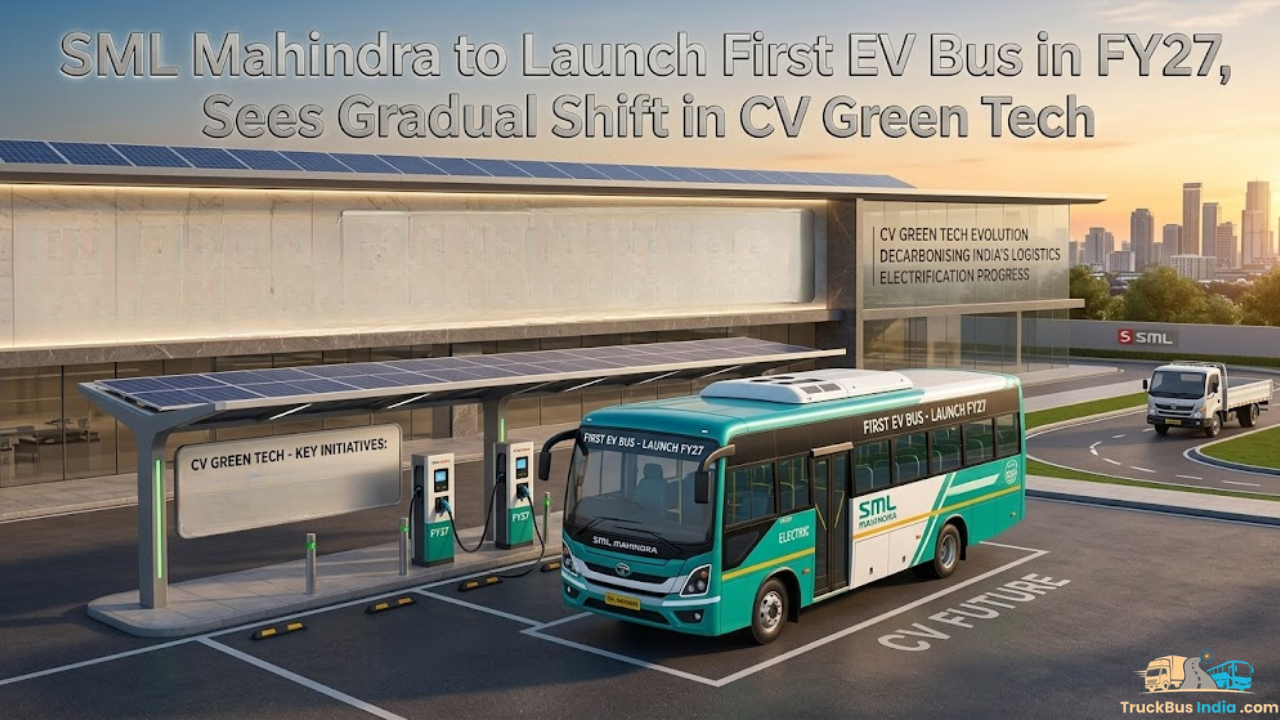
SML Mahindra Ltd is preparing to launch its first electric bus in FY27, marking its entry into the electric commercial vehicle segment. The company views this move as part of a long-term transition toward greener mobility, while maintaining a cautious stance on market readiness and profitability.
Despite growing interest in electric mobility, the company believes that adoption in the commercial vehicle space, especially buses, remains limited and largely dependent on government-driven demand.
Electric Bus Development and Strategic Market Entry
SML Mahindra has confirmed that its electric bus is currently under development and is expected to be launched within the ongoing financial cycle leading into FY27. The move represents the company’s first step into electric buses, a segment still at an early stage of development in India.
The company plans to evaluate future investments carefully after the launch, focusing primarily on commercial viability and return on capital before scaling production further.
Limited Private Sector Demand for Electric Buses
According to the company, private-sector adoption of electric buses remains extremely low. Demand is currently concentrated mainly in state transport undertakings, while segments such as employee transport and school transport have shown minimal interest due to cost and infrastructure challenges.
Industry Challenges Slowing Electric Bus Adoption
The electric bus segment continues to face multiple structural challenges that are limiting its growth. High acquisition costs, long payback periods, and inadequate charging infrastructure are among the key barriers affecting adoption.
The company estimates that electric buses currently account for less than one percent of the overall commercial bus segment, highlighting the early-stage nature of the market.
Cost and Infrastructure Constraints
High upfront costs and limited charging networks make it difficult for operators to justify large-scale investment in electric buses at present.
Dependence on Government Procurement
Most of the current demand is linked to government-backed procurement programs, rather than private fleet expansion.
Multi-Technology Approach to Green Mobility Transition
SML Mahindra has highlighted that the future of green commercial vehicles will not rely solely on electric technology. The company expects multiple powertrain solutions to coexist in the long term.
While electric vehicles are likely to dominate city buses and light commercial segments, heavier vehicles may increasingly adopt hydrogen fuel cells and other alternative technologies.
Hydrogen and Fuel Cell Focus for Heavy Vehicles
The company believes hydrogen fuel cell technology will play a significant role in heavy-duty transport applications, especially for long-distance trucking where battery-electric solutions may face limitations.
Electric Focus for Urban Transport
Electric buses are expected to remain more suitable for urban routes where shorter distances and predictable charging patterns support efficient operations.
Technology Readiness and Future Expansion Strategy
SML Mahindra has stated that it is already building strong technical capabilities in electric powertrains, allowing it to scale quickly when market conditions improve. The broader Mahindra group’s EV expertise provides additional support for its entry into this segment.
However, the company remains cautious about large capital investments until clearer demand signals emerge in the electric bus market.
Focus on Scalable Capability Development
The company is developing internal capabilities in EV systems and powertrains to ensure readiness when industry adoption accelerates.
Balanced Investment Strategy
Future expansion will depend on market evolution, ensuring that capital deployment aligns with sustainable demand growth.
Conclusion: Measured Entry into a Developing EV Segment
SML Mahindra’s planned electric bus launch in FY27 reflects a cautious but strategic approach to India’s evolving commercial vehicle market.
While the company recognises the long-term potential of electric mobility, it continues to prioritise financial discipline amid limited private-sector demand and infrastructure constraints.
By investing in technology readiness and monitoring market maturity, SML Mahindra aims to position itself for future growth in both electric and alternative fuel-based commercial transport solutions.