
News List
Ladakh Public Transport Set for Major EV Upgrade

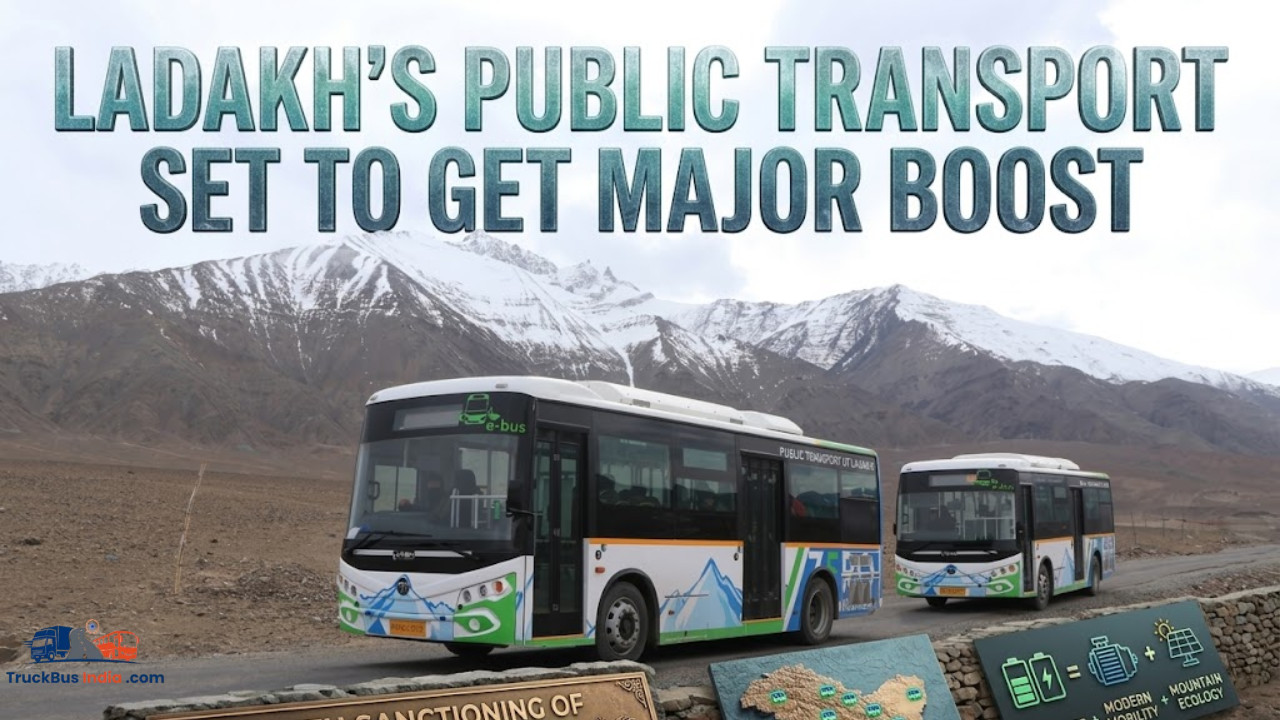
Ladakh is set for a significant public transport upgrade after the Government of India sanctioned 33 electric buses under the PM eBus Sewa scheme. The move, approved by the Ministry of Housing and Urban Affairs, aims to strengthen clean mobility and improve connectivity across the Union Territory.
The initiative aligns with Ladakh’s long-term vision of becoming a carbon-neutral region while addressing the need for reliable and affordable transport in its challenging terrain.
33 Terrain-Specific Electric Buses Approved
The approved fleet consists of 33 electric buses designed specifically for Ladakh’s high-altitude geography and difficult road conditions. These will be 7-metre compact electric buses, selected for their ability to navigate narrow and steep mountain routes effectively.
Officials have confirmed that the buses are expected to be delivered within a month, ensuring quick deployment to strengthen the region’s public transport network.
The compact design ensures better manoeuvrability, making them suitable for remote and far-flung areas where conventional buses face operational challenges.
Strengthening Clean Energy and Carbon Neutral Goals
The introduction of electric buses is a key step toward reducing dependence on fossil fuels in Ladakh. The initiative directly supports the Government of India’s vision of making the region carbon neutral while protecting its fragile Trans-Himalayan ecosystem.
By replacing conventional fuel-based transport, the new fleet is expected to significantly reduce carbon emissions and improve air quality across the region.
The shift to electric mobility also reflects a broader focus on sustainable development in ecologically sensitive zones.
Improved Connectivity for Remote Regions
The new electric bus fleet will enhance public transport access for residents living in remote and hard-to-reach areas of Ladakh. Affordable and reliable mobility has been a long-standing need in the region due to its difficult terrain and scattered population.
The deployment is expected to improve daily commuting options, making travel easier for students, workers, and residents across distant villages.
It will also strengthen intra-regional connectivity, supporting social and economic activity in underserved areas.
Government Focus on Sustainable Infrastructure
The Lieutenant Governor of Ladakh has welcomed the approval, highlighting its importance in improving both mobility and environmental sustainability. The administration has been actively working on initiatives that reduce dependence on fossil fuels and promote renewable energy adoption.
The electric bus rollout is part of a broader strategy that includes solar energy expansion and other eco-friendly infrastructure projects in the Union Territory.
This integrated approach aims to preserve Ladakh’s natural environment while modernising its essential services.
Step Toward Greener Public Transport System
The sanctioning of 33 electric buses marks an important milestone in Ladakh’s transition toward sustainable public transport. The initiative not only improves connectivity and affordability but also strengthens the region’s commitment to environmental conservation.
With terrain-adapted electric buses and strong policy support, Ladakh is moving closer to building a cleaner, more efficient, and future-ready mobility system.