
News List
India Truckers Brace For First Major Diesel Price Hike In Four Years

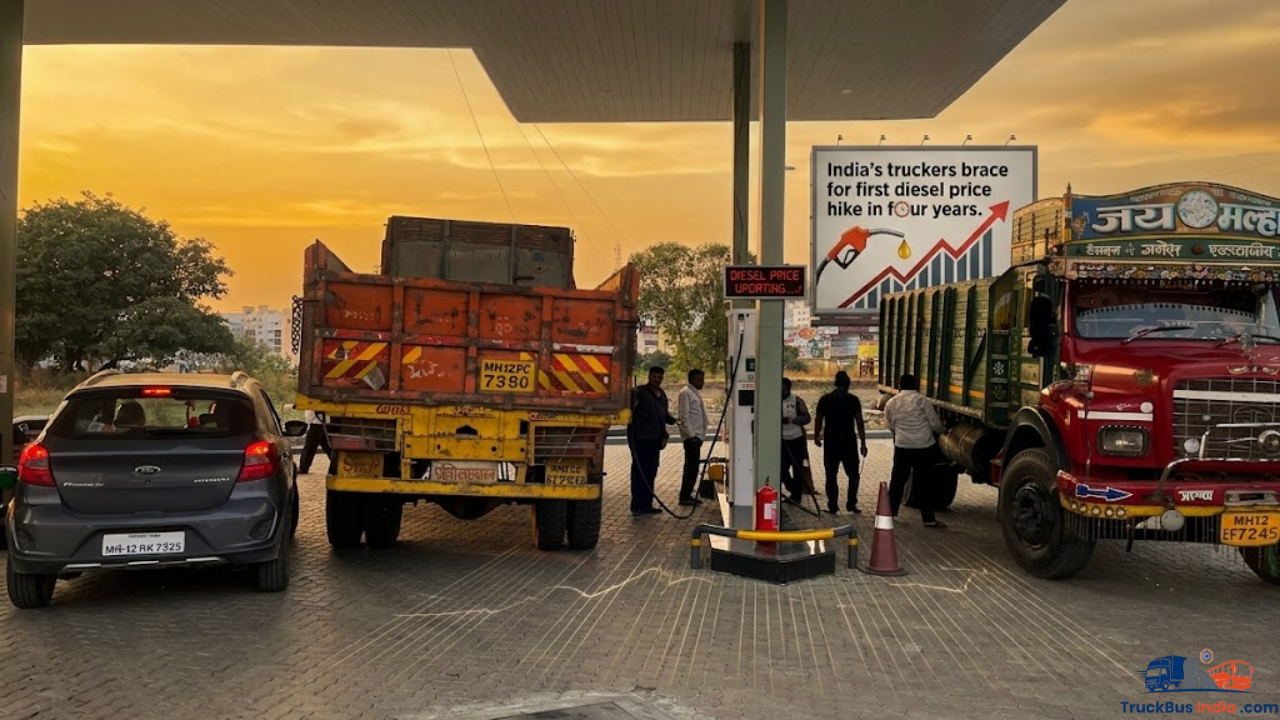
India’s transport sector is preparing for a potential diesel price hike India 2026, with fleet operators warning of fuel rationing and rising costs after years of stability. The concerns come amid escalating tensions in the Middle East, which have disrupted global oil supply chains and increased pressure on fuel import-dependent economies like India.
The expected increase could mark the first significant upward revision in diesel prices in four years, ending a prolonged period where government intervention had largely shielded consumers from global volatility.
Diesel Price Hike India 2026 Driven By Global Oil Shock
The risk of a diesel price hike India 2026 has intensified as the conflict in the Persian Gulf continues into its eighth week, sending Brent crude prices close to $96 per barrel. India, the world’s third-largest oil importer, remains highly exposed to such global supply shocks.
Despite rising international prices, state-run refiners have so far absorbed losses to maintain stable retail fuel prices. However, industry experts believe this approach may not be sustainable for much longer, especially with inflationary pressures building in the economy.
Private refiners such as Nayara Energy have already increased pump prices, while Reliance Industries and BP’s joint network has reportedly begun rationing supplies in some areas.
Fuel Rationing India Trucking Sector Faces Operational Pressure
The fuel rationing India trucking sector is already experiencing early signs of disruption. Truck fleet operators report informal rationing at several fuel stations, forcing vehicles to refuel more frequently and increasing delivery times across supply chains.
Truck transport remains critical to India’s logistics system, with nearly 70 percent of freight movement handled by road. Even minor disruptions in diesel supply directly impact the movement of goods and overall economic efficiency.
- Around 10 percent of trucks are currently idle due to operational pressures
- Fleet inactivity could rise up to 30 percent if diesel prices increase
- Fuel station discounts on bulk purchases have been withdrawn in many locations
- Private refiners have tightened supply, increasing demand at state-run outlets
- Some fuel stations are experiencing temporary dry-outs due to demand spikes
India Diesel Price Impact Inflation Transport Costs Economy
The potential India diesel price impact inflation transport costs economy is expected to be significant, given diesel’s central role in freight and logistics. Any increase in pump prices would immediately raise transportation costs, which could then pass through to food and essential goods inflation.
Economists warn that if crude oil averages around $95 per barrel, diesel prices in India may need to rise by ₹8 to ₹15 per litre. Even at lower crude levels of $85 to $90, a price increase of ₹3 to ₹7 per litre could still be required to balance costs.
The government has so far urged citizens to avoid panic buying and stated that retail outlets are operating normally. However, pressure is mounting on state refiners as global oil volatility persists.
India Fuel Price Stability Policy Under Strain Middle East Crisis
The India fuel price stability policy Middle East crisis has tested the government’s long-standing approach of shielding consumers from global oil shocks through subsidies and tax adjustments. While petrol and diesel taxes were reduced in earlier interventions, sustained high crude prices are making continued absorption of losses difficult.
The broader economy is also facing risks from a weak currency and rising import costs, both of which add to fuel pricing pressures. Analysts suggest that once political cycles stabilise, fuel price adjustments may become more likely if global crude remains elevated.