
News List
India To Introduce Ethanol 85 Fuel Under New Draft Rules

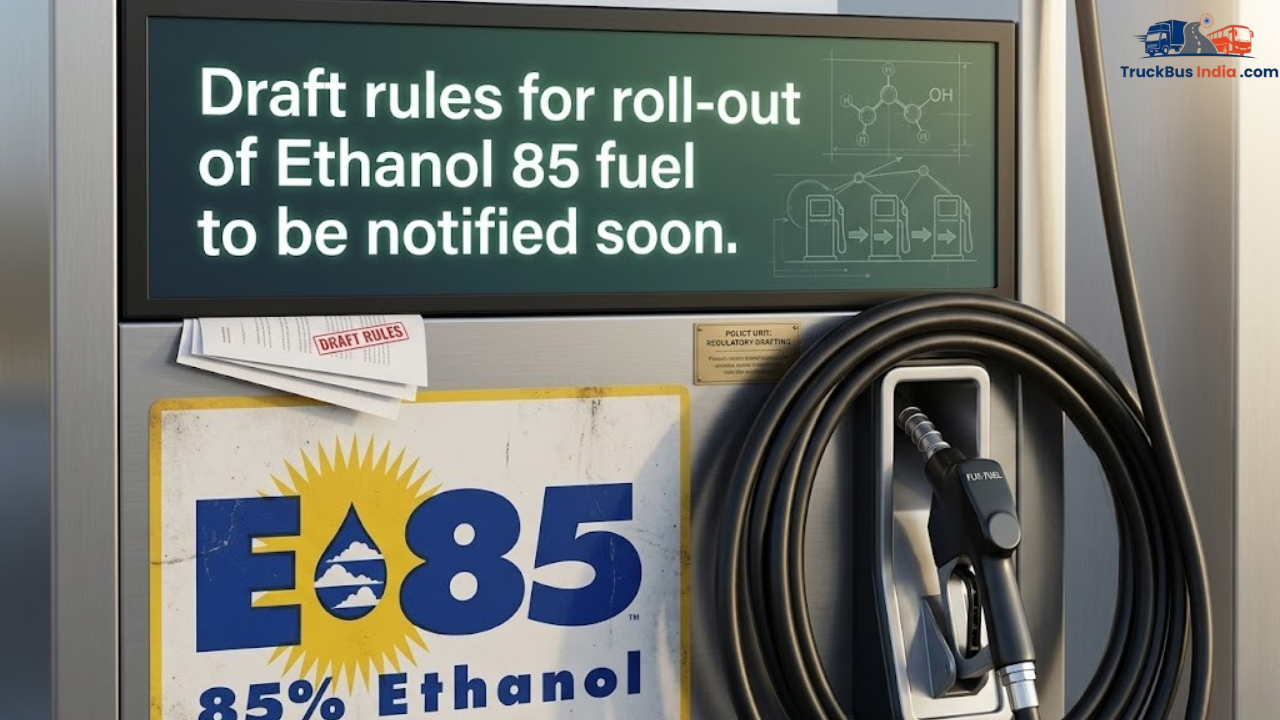
The government is preparing to issue draft regulations for the rollout of Ethanol 85 fuel India policy, marking a major step in expanding high-blend biofuels in the country. The move comes amid global energy supply concerns, including disruptions linked to geopolitical tensions in West Asia, which have strengthened India’s push toward alternative fuels.
E85, a blend containing up to 85 percent ethanol and 15 percent petrol, is expected to be introduced as a separate fuel category alongside existing ethanol blends. Officials indicated that although the final rollout timeline is not confirmed, the fuel could be introduced within the next couple of years.
Ethanol 85 Fuel India Policy Focuses On Energy Security
The upcoming Ethanol 85 fuel India policy is aimed at improving energy security while reducing dependence on imported crude oil. A senior official said there is broad internal consensus, supported by preliminary testing and market readiness for the transition.
High ethanol blending is also expected to help reduce vehicular pollution due to cleaner combustion compared to conventional petrol. Ethanol, produced from sugarcane, maize, and grains, is a renewable and domestically available fuel source that supports sustainability goals.
Government Confirms Strong Policy Consensus
Officials have stated that there is strong agreement within the government regarding the introduction of E85, with preparatory work already underway.
Ethanol Availability Supports Expansion Plans
India currently has surplus ethanol availability, which strengthens the feasibility of scaling up high-blend fuels like E85 without supply constraints.
E85 Fuel India Compatibility And Infrastructure Requirements
The E85 fuel India rollout will require changes in both vehicle engineering and fuel retail infrastructure. Engines designed for E85 can also operate on lower blends such as E60 and E50, offering flexibility in adoption.
However, widespread implementation will need dedicated engine compatibility and separate fuel dispensing systems at petrol pumps. E85 will be introduced as a distinct fuel grade, separate from E20 petrol, which already permits ethanol blending up to 27 percent.
Separate Fuel Dispensing Systems Needed
Fuel stations will require additional infrastructure to manage multiple ethanol blends like E20 and E85 simultaneously.
Vehicle Engineering Adjustments Required
Automakers will need to ensure engines are compatible with higher ethanol concentration fuels for safe and efficient performance.
Ethanol Blending India Expansion Supports Clean Energy Goals
The ethanol blending India expansion is part of a broader strategy to reduce fossil fuel dependence and promote cleaner energy use. India has already mandated petrol with up to 20 percent ethanol blending nationwide from April 1, 2026.
Ethanol is also being explored for aviation use, with India targeting a 1 percent blending level in aviation turbine fuel for international flights under global net-zero commitments.
Road Transport Fuel Transition Progressing
India’s transport fuel system is steadily shifting toward higher ethanol blends to reduce emissions and improve energy independence.
Aviation Sector Exploring Ethanol Use
The aviation industry is also being included in ethanol adoption plans as part of long-term decarbonisation efforts.
The planned rollout of Ethanol 85 fuel India policy marks a significant step in India’s clean energy transition. By combining energy security goals with emissions reduction efforts, the government aims to expand high-blend ethanol fuels across transport sectors.
If successfully implemented, E85 could redefine India’s fuel landscape, supporting both environmental objectives and reduced reliance on imported crude oil.