
News List
HD Hyundai Construction Equipment Targets Europe Diesel Generator Growth

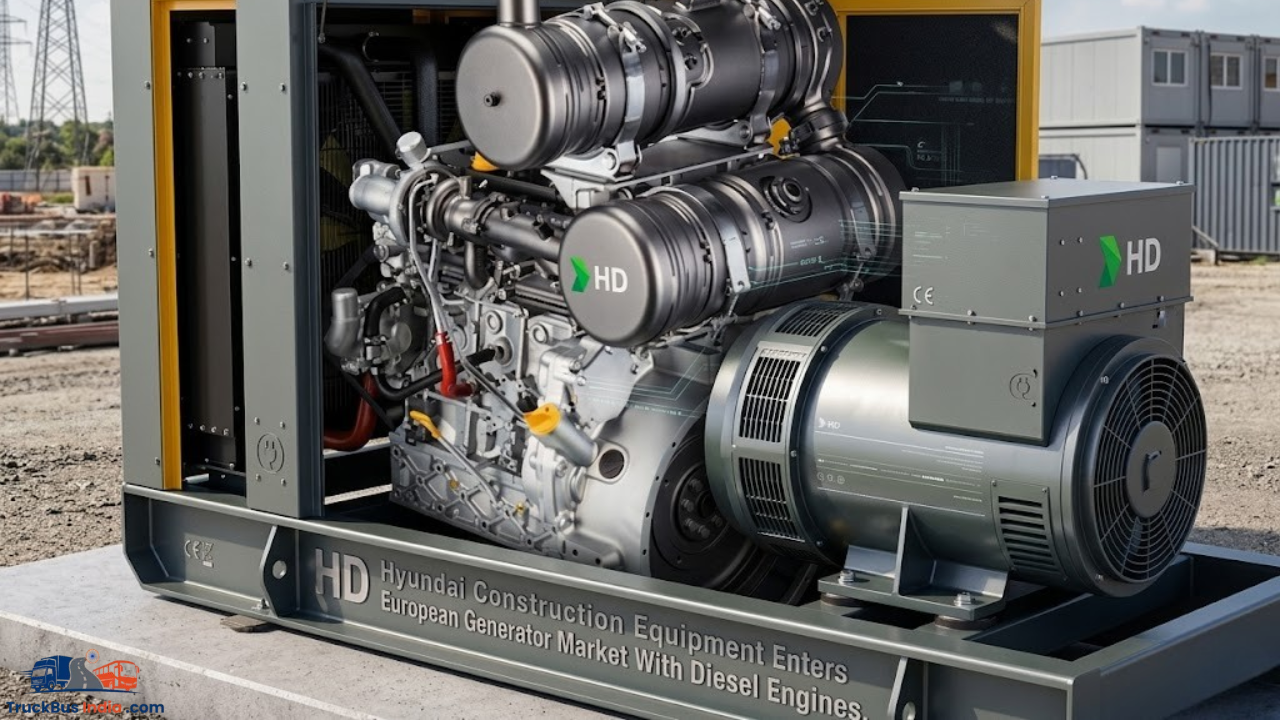
HD Hyundai Construction Equipment is accelerating its expansion into the Europe diesel generator market, focusing on supplying advanced diesel engines designed to meet strict emissions regulations. The company is positioning its G2 engine lineup as a key solution for generator manufacturers adapting to Europe’s Stage V standards, which are reshaping demand across the energy and industrial sectors.
HD Hyundai G2 Engines Secure New Supply Deal Europe
As part of its HD Hyundai G2 engines Europe strategy, the company announced a contract to supply 264 units of its G2 diesel engines to Portuguese generator maker Grupel. The order includes 1.8-liter, 2.4-liter, and 3.4-liter engines, all compliant with Stage V emissions norms.
These engines incorporate high-pressure fuel injection systems and fuel-efficiency enhancement technologies. The upgrades are aimed at reducing emissions while improving performance, making them suitable for Europe’s tightening environmental regulations.
Europe Diesel Generator Market Driven by Energy Demand
The Europe diesel generator market growth is being supported by rising demand for backup power systems. According to industry estimates, the market is expected to grow at a 4.18 percent compound annual rate, reaching about $4.74 billion by 2031.
Growth is being driven by concerns over grid reliability and the rapid expansion of data centers across the region. These developments are increasing the need for stable and efficient power generation solutions, especially in commercial and industrial applications.
HD Hyundai Engine Expansion Strategy and Revenue Targets
Beyond its G2 series, HD Hyundai diesel engine expansion Europe plans include scaling mid-sized engines such as the 5-liter DX05 and 7.5-liter DX08 models. Both are designed to comply with Stage V emissions standards and target broader industrial applications.
The company aims to increase its European generator engine revenue from around 40 billion won to 67 billion won by 2030, reflecting its long-term commitment to the region’s evolving energy needs.