
News List
Delhi Tightens Fuel Rules Under No PUC Policy

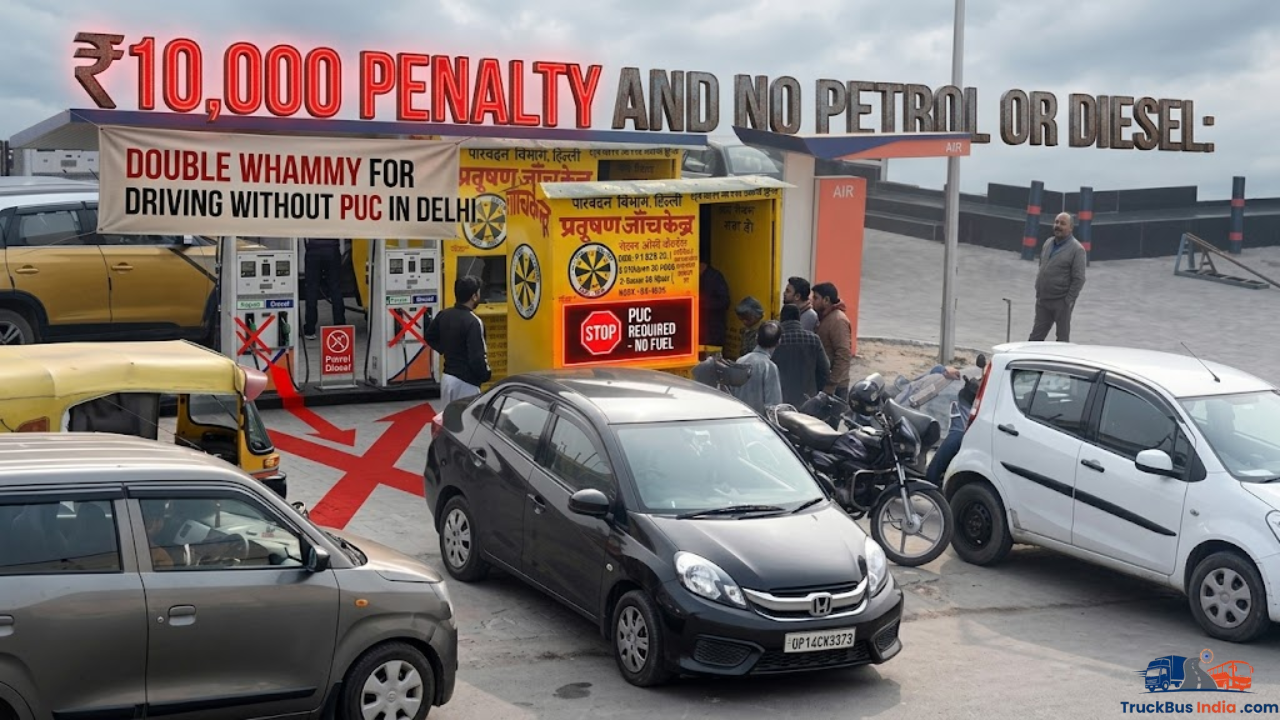
Delhi has intensified its anti-pollution drive by strictly enforcing the no PUC fuel policy, under which vehicles without a valid Pollution Under Control certificate are being denied access to petrol, diesel, CNG, and LPG. The move is aimed at curbing rising air pollution levels in the capital.
Fuel stations across the city have already begun implementing the directive, creating immediate consequences for vehicle owners who fail to comply. Authorities have described the measure as a permanent enforcement step rather than a temporary crackdown.
Fuel supply blocked for non-compliant vehicles
Mandatory emission certificate requirement
Under the no PUC fuel policy, all vehicles must carry a valid Pollution Under Control certificate to purchase fuel of any type. This includes petrol, diesel, CNG, and LPG, making compliance essential for daily vehicle use in Delhi.
Year-round enforcement across the city
Officials have confirmed that the rule is now a continuous enforcement measure. Agencies including the Transport Department, Food and Supplies Department, Municipal Corporation of Delhi, and Delhi Traffic Police are jointly responsible for monitoring compliance at fuel stations.
Heavy penalties for violating rules
Fines and legal action
Driving without a valid PUC certificate can result in fines of up to ₹10,000 under the Motor Vehicles Act. Authorities can issue challans on the spot, either manually or through automated systems, especially in high pollution zones.
Additional consequences for repeat offenders
First time violations may lead to fines and possible suspension of the driving licence for up to three months. Repeat offences can result in vehicle registration suspension. In cases involving fake or tampered certificates, penalties may include fines above ₹10,000, imprisonment of up to six months, and vehicle seizure.
Wider impact on vehicle owners
Insurance and maintenance risks
Officials have warned that non-compliance with the no PUC fuel policy may also affect insurance claims. Expired certificates can lead to delays or rejection of claims, as insurers require emission compliance.
Vehicles without valid certificates are also more likely to show higher emissions, indicating poor engine health. This can reduce fuel efficiency and increase long term operating costs for owners.
Government push to reduce pollution
Stronger enforcement measures
The crackdown follows directives from Delhi’s leadership to strictly implement the no PUC fuel policy. Authorities noted that despite earlier introduction of the rule, many vehicles were still operating without valid certificates, prompting stricter action.
Air quality concerns remain
Delhi’s air quality was recorded in the moderate category with an AQI of 199. Officials believe stricter enforcement of emission rules will help improve air quality over time, especially during high pollution seasons.
Conclusion
The strict implementation of the no PUC fuel policy marks a significant step in Delhi’s ongoing battle against air pollution. With fuel denial and heavy penalties in place, authorities aim to push vehicle owners toward better compliance and cleaner emissions.