
News List
Balkrishna Industries Eyes Massive Kutch Expansion to Fuel 2030 Growth Targets

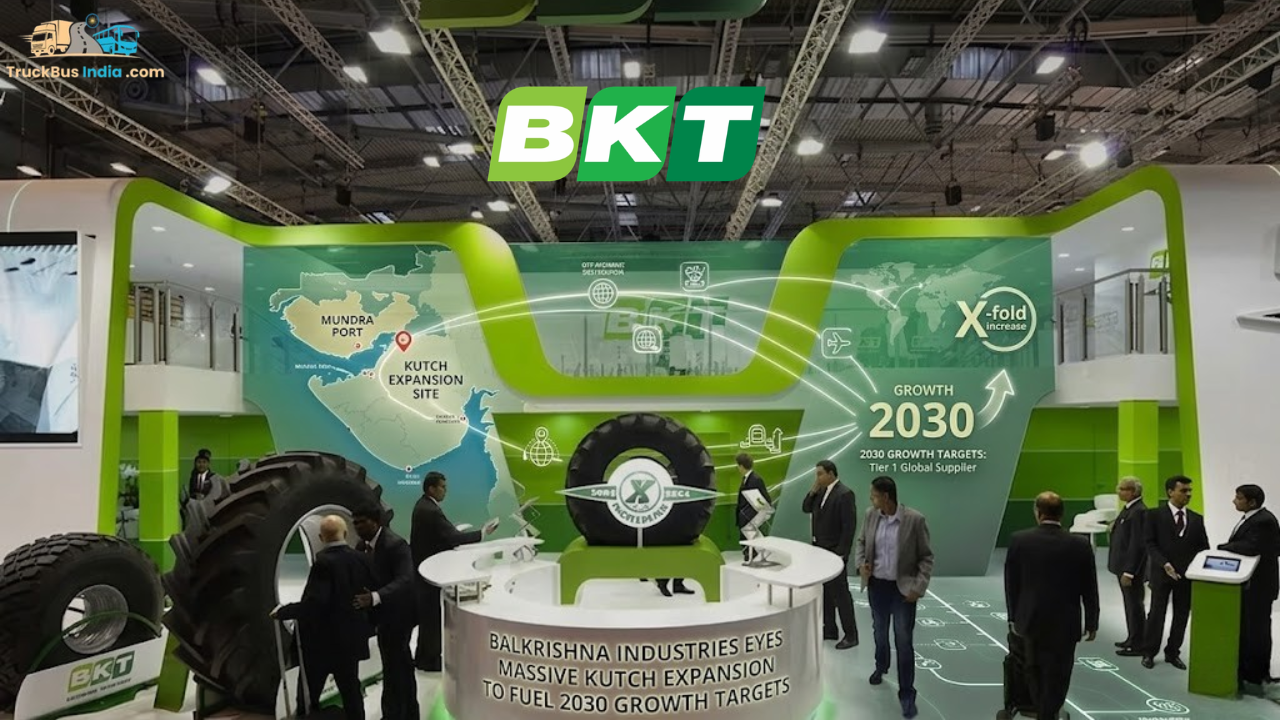
Balkrishna Industries Limited is preparing for a large-scale expansion of its Kutch facility in Gujarat as it positions itself for aggressive long-term growth. The Mumbai-based off-highway tyre manufacturer is aligning capacity expansion, vertical integration, and market diversification to achieve its ambitious 2030 roadmap.
Kutch expansion set to double production capacity
Balkrishna Industries has applied for environmental clearance from the Ministry of Environment for expanding its existing manufacturing unit in the Kachchh region. A key regulatory meeting is scheduled for April 28, according to official filings.
The expansion is a critical step in the company’s plan to scale revenue to Rs 23,000 crores by 2030, requiring more than a twofold increase from current levels. Growth will be driven by stronger domestic presence and entry into passenger vehicle tyre markets.
Tyre and tube manufacturing capacity at the Kutch site will nearly double from 3.24 lakh tonnes per annum to 6 lakh tonnes per annum.
Carbon black and power capacity expansion
Carbon black production is set for a major jump from 1.926 lakh tonnes per annum to 6.6 lakh tonnes per annum. Captive power capacity will also increase significantly from 40 MW to 160 MW, improving operational efficiency and energy independence.
Although carbon black currently contributes less than 10% of revenue, it plays a major internal role in production. The company expects increased contribution from specialty carbon black starting this financial year.
Vertical integration strengthens manufacturing ecosystem
The Kutch expansion also includes major downstream and supporting infrastructure development to improve self-reliance and margins.
New production lines and facility upgrades
The facility will add wheel rim production capacity of 1,000 units per day and dip roll fabric output of 75,000 tonnes per annum. Additionally, production capacity for moulds, drums, and tyre plant accessories will rise sharply from 360 units per year to 5,000 units per year.
Focus on cost efficiency and supply control
This vertical integration strategy is aimed at reducing dependency on external suppliers and strengthening control over specialty material production, helping improve long-term profitability.
Strategic shift towards domestic tyre market
Balkrishna Industries is also responding to global trade uncertainties, including tariff-related pressures affecting exports. As part of its risk diversification strategy, the company is increasing focus on the Indian automotive market.
Entry into passenger and commercial tyre segments
The company plans to enter passenger car radial (PCR) and commercial vehicle (CV) radial tyre segments. It aims to generate Rs 5,000 crores from this new business line by 2030, targeting a market share of 7% to 8% in a competitive segment dominated by established players.
Strong manufacturing base supports expansion plan
Founded in 1987, Balkrishna Industries is a leading global exporter in the off-highway tyre segment, serving agriculture, construction, mining, and industrial markets.
Existing production capacity and global reach
The company currently has an achievable tyre manufacturing capacity of 3,60,000 MTPA and carbon black capacity of 2,00,000 MTPA, including high-value advanced carbon materials.
Its manufacturing facilities are located in Waluj (Maharashtra), Bhiwadi and Chopanki (Rajasthan), and Bhuj (Gujarat). Major clients include CASE, John Deere, JCB, CAT, and TAFE.
Financial performance and growth outlook
In FY25, the company reported a net profit of Rs 1,628 crore on revenue of Rs 10,413 crore. It has outlined a capital expenditure plan of Rs 3,500 crore over the next three years, with the Kutch expansion forming the core of this investment strategy.
Long-term outlook
The Kutch expansion is positioned as a foundation for Balkrishna Industries’ next phase of growth. It is expected to enhance capacity, improve cost efficiency, and support the company’s transition into high-volume passenger vehicle tyre markets once global conditions stabilize.