News List
Hindustan Zinc Launches Electric Bus Fleet in Udaipur

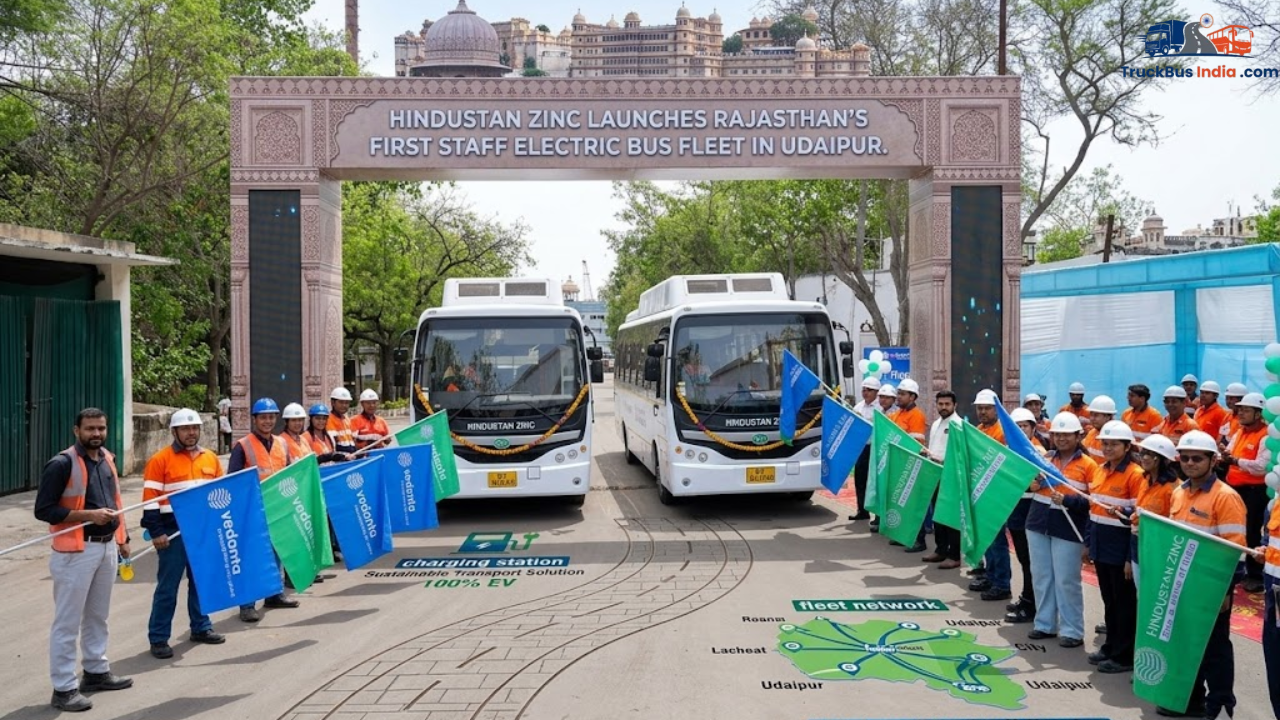
Hindustan Zinc Limited has introduced Rajasthan’s first electric bus fleet at its Zinc Smelter Debari unit in Udaipur.
The rollout marks a key milestone in the company’s transition toward cleaner mobility solutions and reinforces its long-term decarbonisation and net-zero ambitions.
Electric bus rollout begins at Debari plant
The newly introduced electric buses have been supplied by Tata Motors and deployed in collaboration with Enviiiro Wheels Mobility Pvt. Ltd. The Debari facility serves as the first phase of a wider plan that will gradually expand electric mobility across multiple operational sites in Rajasthan.
The buses will be used primarily for employee transportation, replacing conventional diesel-powered vehicles that were previously used for daily commuting within plant and operational areas.
Expansion planned across 41-bus fleet
Hindustan Zinc has outlined a larger roadmap to deploy a total of 41 electric buses across its Rajasthan operations. The Debari rollout is only the initial phase, with further deployment planned in subsequent stages across other facilities.
Focus on Scope 3 emission reduction
The initiative is designed to target Scope 3 emissions, which include indirect emissions such as employee commuting. These emissions are typically harder for industries to control, making this transition a significant step in the company’s sustainability journey.
Significant carbon reduction impact targeted
By shifting from diesel to electric mobility, Hindustan Zinc expects to avoid more than 11,000 tonnes of carbon dioxide equivalent emissions over the contract period. This reduction plays an important role in strengthening the company’s environmental performance metrics.
Contribution to net-zero roadmap
The electric bus deployment aligns with Hindustan Zinc’s broader net-zero and decarbonisation strategy. The company is increasingly focusing on reducing emissions across both direct operations and indirect value chain activities.
Cleaner internal transport systems
The shift to electric buses also represents a structural change in employee transportation systems. It reduces dependency on fossil fuels while improving energy efficiency across daily operations within industrial sites.
Strategic collaboration and industrial shift
The project has been executed through partnerships with leading industry players, ensuring operational efficiency and smooth integration of electric mobility solutions into existing transport systems.
Role of OEM and mobility partners
Tata Motors has supplied the electric buses, while Enviiiro Wheels Mobility Pvt. Ltd. is supporting operational deployment. This collaboration model is helping scale clean mobility solutions in large industrial environments.
One of Rajasthan’s largest industrial EV deployments
The Debari rollout represents one of the most significant electric bus deployments by an industrial company in Rajasthan. It highlights the growing shift among large-scale manufacturers toward sustainable internal transport systems.
Future expansion across operations
Following the Debari phase, Hindustan Zinc plans to expand the electric bus fleet across its other operational locations in the state. This phased rollout strategy is designed to ensure smooth adoption while scaling environmental benefits across the organisation.
Conclusion
Hindustan Zinc’s electric bus initiative in Udaipur marks a major step toward sustainable industrial mobility.
With plans for 41 buses and a projected reduction of over 11,000 tonnes of CO₂ emissions, the company is strengthening its commitment to cleaner operations and advancing its long-term net-zero strategy.