
News List
ASDC Steps Up to Reinforce India’s Last-Mile Workforce

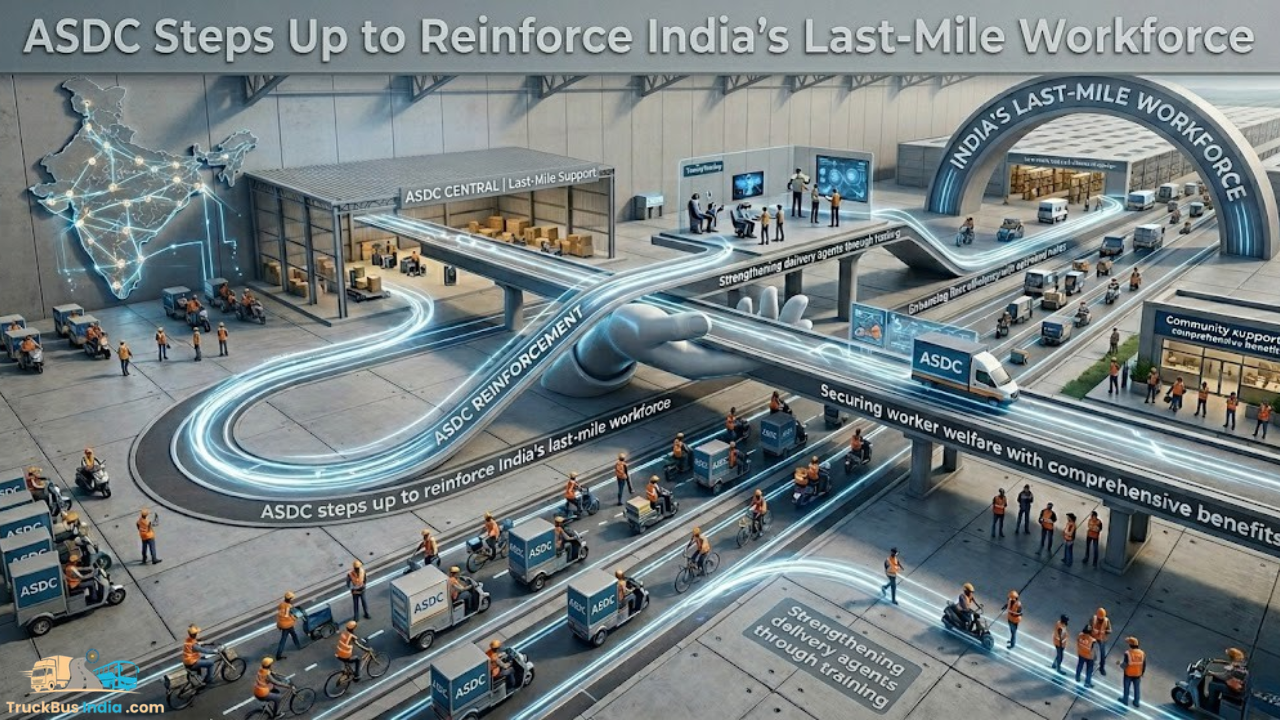
India’s logistics and mobility ecosystem is expanding rapidly, but the shortage of skilled professional drivers continues to be a major bottleneck. To bridge this gap, the Automotive Skills Development Council (ASDC) has launched a structured five-year initiative aimed at transforming informal drivers into certified, industry-ready professionals.
Structured training model reshapes driver ecosystem
The ASDC programme has already trained and graduated 156 candidates into formal employment, marking a shift from unorganised labour to structured careers in mobility and logistics.
The initiative focuses on Light Motor Vehicles (LMV), Heavy Motor Vehicles (HMV), and professional taxi services, creating a steady pipeline of trained drivers for industry demand.
Industry-backed certification system
- Supported by Michelin India and HCL Foundation
- Training delivered through IDTR-certified infrastructure
- Focus on real-world fleet requirements
- Designed for long-term employability
Strategic training hubs in high-demand cities
Pune and Bengaluru serve as the core training locations due to their dense transport and automotive ecosystems. These cities provide direct exposure to real fleet operations and commercial mobility networks.
Comprehensive 360-hour skill development curriculum
The programme follows a 330 to 360-hour structured training model that goes beyond basic driving instruction.
Technical driving proficiency development
Training includes driving theory, vehicle handling, and maintenance fundamentals, ensuring candidates are fully prepared for commercial operations.
Safety and risk management training
Defensive driving techniques, road safety awareness, and accident prevention strategies form a key part of the curriculum.
Professional soft skills enhancement
Communication, customer handling, and workplace behaviour training help improve retention, especially in taxi and fleet-based roles.
Economic upliftment through formal employment
The programme has created a measurable impact on income levels and job stability for participants transitioning into formal employment.
Income growth after certification
- Pre-training earnings: Rs 8,000 to Rs 10,000 per month
- Post-training earnings: Rs 15,000 to Rs 22,000 per month
- Stable employment with fleet operators
- Improved financial security for families
Shift from informal labour to structured careers
The initiative is enabling a transition from informal driving work to formal job roles, offering better working conditions and long-term career stability within India’s mobility sector.
2026 roadmap for inclusive workforce expansion
ASDC is now focusing on scaling its impact further by expanding participation and strengthening industry linkages.
Gender inclusion in driver training
Efforts are underway to increase female participation beyond the current 7% share, promoting diversity in a traditionally male-dominated sector.
Stronger retention tracking systems
Post-placement monitoring is being enhanced to track job retention, career growth, and long-term workforce stability.
Expansion of industry partnerships
Collaboration with logistics and transport operators is being expanded to ensure direct placement pipelines from training to employment.
Future-ready mobility workforce development
The programme is helping address India’s growing demand for skilled drivers in logistics and last-mile delivery networks.
By combining structured training with industry integration, ASDC is strengthening workforce readiness for a rapidly evolving mobility landscape.