
News List
Iraq Oil Export Collapse Deepens Energy Crisis

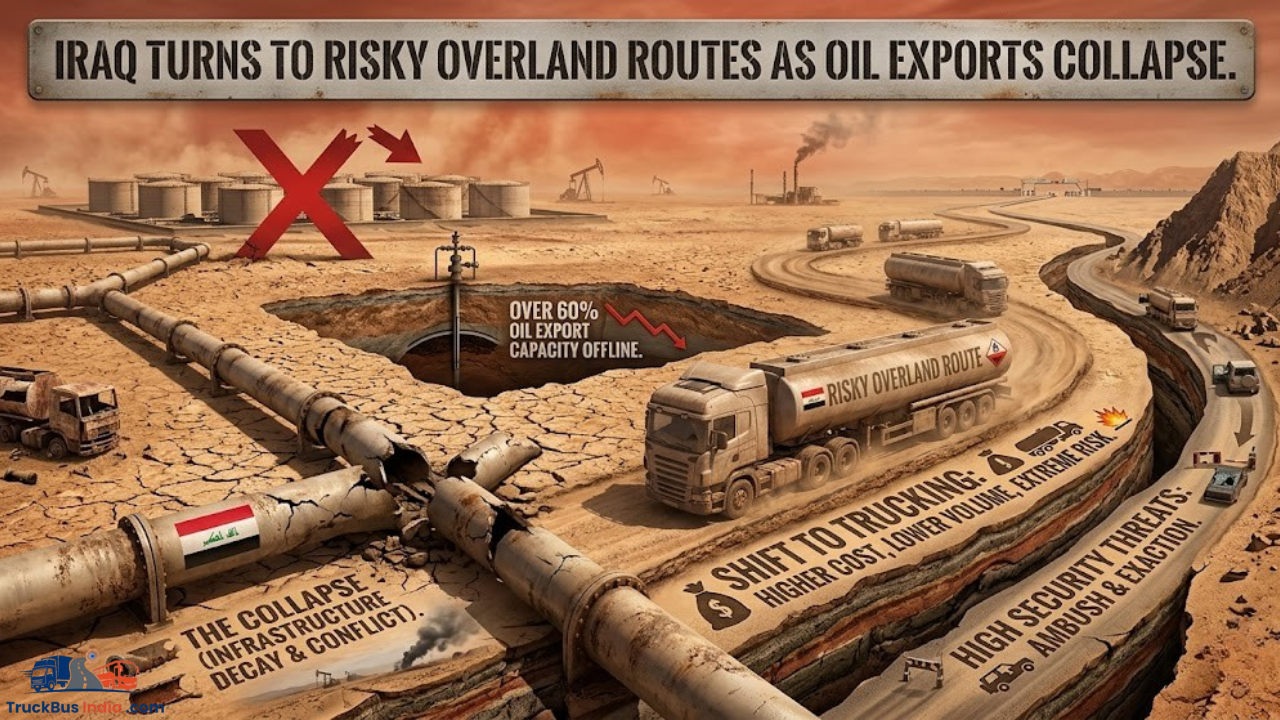
Iraq is facing a severe oil export collapse after disruptions in the Strait of Hormuz significantly reduced tanker movement. Export volumes have dropped by as much as 80%, pushing the country into a deep fiscal crisis due to its heavy dependence on oil revenues. With limited shipping options and rising transport costs, the situation has become increasingly unstable for one of the world’s most oil-dependent economies.
Strait of Hormuz Disruption Halts Iraqi Oil Flows
The ongoing instability in the Strait of Hormuz has severely restricted Iraq’s ability to export crude oil through traditional maritime routes. With tanker traffic largely blocked and war risk premiums rising sharply, exports through the Persian Gulf have become economically unviable.
Export Collapse and Production Impact
Iraq’s oil production has fallen sharply to around 1.2 to 1.3 million barrels per day, marking a drop of nearly 80%. This decline has created an urgent financial strain, as oil accounts for up to 95% of federal budget revenues.
Lack of National Shipping Fleet
Unlike some regional producers, Iraq lacks a strong national tanker fleet and depends heavily on third-party shipping companies, making it more vulnerable to maritime disruptions and rising transport costs.
Syria Border Route Reopens as Temporary Alternative
In response to the crisis, Iraq has reopened the Rabia-Yarubiyah border crossing with Syria after 13 years. This route offers a temporary overland alternative for transporting oil and goods toward Mediterranean ports.
Strategic Overland Trade Corridor
The crossing is part of a broader effort to revive regional trade routes, connecting Iraq with Syria and providing access to alternative export pathways beyond the Strait of Hormuz.
Integration with Other Border Routes
This reopening complements other operational crossings such as Al-Qaim-Al-Bukamal and Al-Walid-Al-Tanf, creating a wider overland network for trade and fuel movement.
Logistical and Cost Challenges of Truck-Based Exports
Despite reopening, overland oil transport presents major operational challenges. Trucking crude oil is significantly more expensive and less efficient compared to pipelines and maritime shipping.
Capacity and Bottleneck Issues
Current operations already involve hundreds of tankers daily, often exceeding optimal capacity and causing delays at border points due to limited infrastructure and storage constraints.
Security Risks in Transit Regions
Transport routes pass through areas with a history of conflict, including regions previously controlled by ISIS and Kurdish forces, raising ongoing security concerns for sustained operations.
Geopolitical Tensions Keep Markets Unstable
Ongoing tensions between the United States and Iran continue to keep the Strait of Hormuz highly unstable. Frequent shifts in control and policy announcements have created uncertainty in global oil markets.
Volatile Oil Price Movements
Oil prices have become highly volatile, with Brent crude fluctuating close to $100 per barrel amid shifting geopolitical developments and supply uncertainty.
Uncertain Diplomatic Outlook
Future negotiations between global powers and Iran remain uncertain, with no clear agreement on reopening safe maritime passage through the Strait of Hormuz.
Long-Term Export Stability Still Unresolved
Even with temporary alternatives like the Syria border route, Iraq’s long-term export stability remains uncertain without a fully reopened Strait of Hormuz. Overland routes cannot match maritime capacity, and continued instability in the region limits strategic recovery.
Key Developments in Iraq Oil Crisis
- Iraq oil exports have fallen up to 80% due to Strait of Hormuz disruption
- Production reduced to nearly 1.2–1.3 million barrels per day
- Oil contributes up to 95% of Iraq’s federal revenue
- Rabia-Yarubiyah border crossing reopened after 13 years
- Overland transport faces high costs, delays, and security risks
- Regional tensions continue to keep global oil markets volatile