
News List
Oil Prices Surge After US Seizes Iranian Vessel Near Hormuz

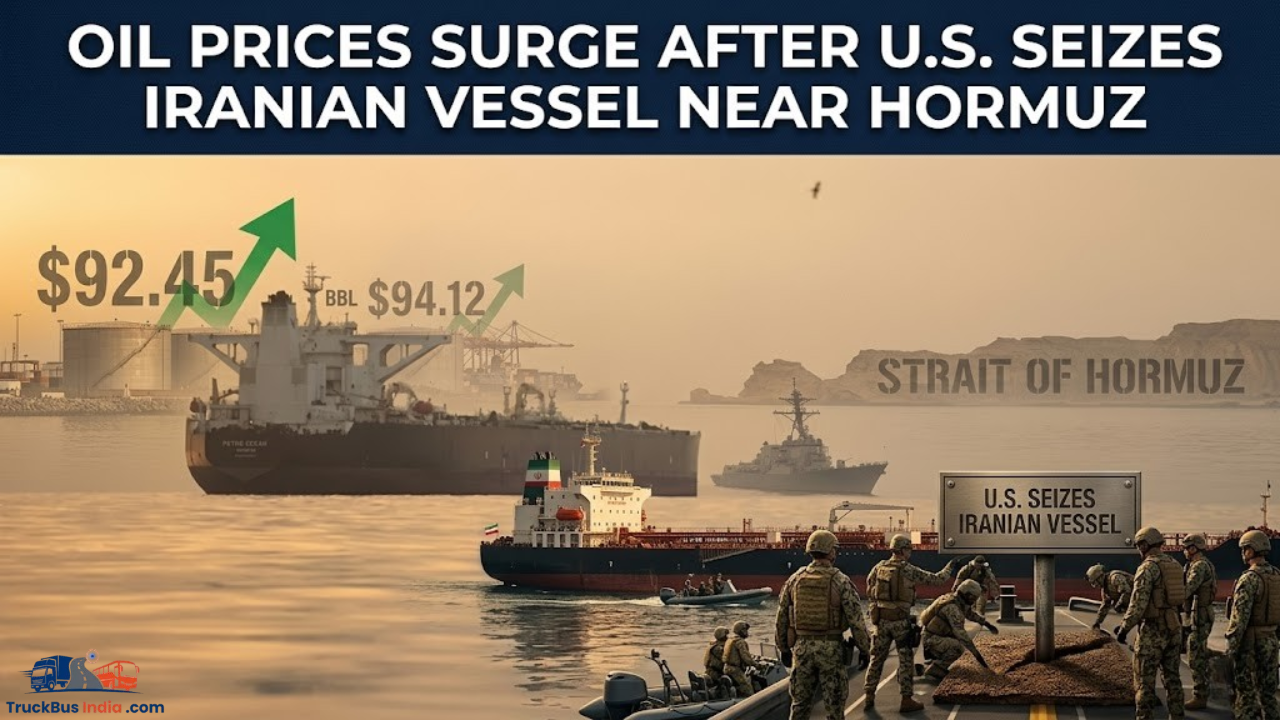
Global oil prices witnessed a sharp rise in early Asian trading after the United States intercepted an Iranian vessel near the Strait of Hormuz, triggering fresh concerns over supply disruptions. The sudden escalation has unsettled markets, with traders reacting to growing uncertainty around one of the world’s most critical oil transit routes.
Oil prices surge amid rising supply disruption fears
Oil markets reacted strongly to the latest geopolitical development, with benchmark prices climbing significantly. West Texas Intermediate surged by 6.21 percent to reach 89.06 dollars, while Brent crude rose 5.27 percent to trade at 95.14 dollars.
This sharp rebound comes just days after a major selloff, when prices had dropped by over 9 percent following signals of easing tensions and possible reopening of the Strait of Hormuz. However, the latest incident has reversed that optimism, pushing markets back into volatility.
US Iran tensions escalate after vessel seizure
The situation intensified after the United States seized an Iranian flagged vessel named Touska, alleging it was attempting to breach a naval blockade. The move followed reports that Iran’s Islamic Revolutionary Guard Corps had fired on two ships passing through the Strait, warning of a closure until the blockade is lifted.
Iran strongly condemned the action, calling it maritime piracy and warning of possible retaliation. The incident has cast serious doubt over the fragile ceasefire, with both sides showing signs of increasing military pressure.
Talks uncertain as geopolitical risks increase
Diplomatic efforts now appear uncertain, with Iran indicating that it may not participate in planned talks in Islamabad as long as the US naval blockade continues. Reports suggest that negotiations remain stalled, further increasing market anxiety.
Meanwhile, former US President Donald Trump stated that American negotiators would still be present for discussions, while also issuing strong warnings about potential consequences if an agreement is not reached. Such statements have added to the already tense environment.
Strait of Hormuz remains critical for oil supply
The Strait of Hormuz continues to be a vital passage for global oil shipments, and any disruption has immediate market implications. Although more than 20 vessels managed to pass through the route recently, confidence in safe and consistent transit has weakened.
Energy leaders have highlighted the scale of the issue, noting that nearly 600 million barrels of oil have been impacted over the past several weeks. With uncertainty lingering, traders are increasingly factoring in prolonged supply constraints.
The latest surge in oil prices reflects growing fears of a sustained disruption in global energy supply due to escalating tensions near the Strait of Hormuz. With negotiations uncertain and military activity intensifying, markets are likely to remain volatile in the coming days.
As the situation unfolds, all eyes will be on diplomatic developments and any updates regarding safe passage through the region. Until clarity emerges, oil prices are expected to remain sensitive to geopolitical risks.