
News List
Commercial Vehicle Growth Seen Slowing in FY27

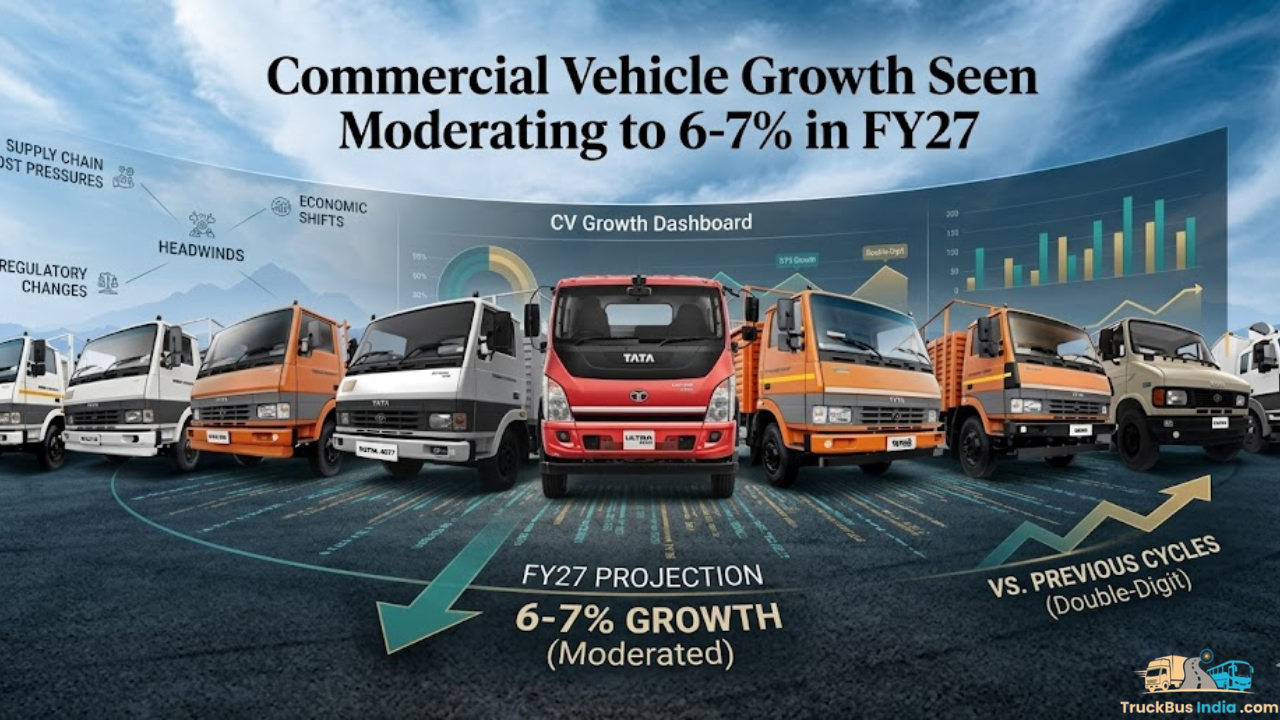
India’s commercial vehicle industry is expected to move into a slower but steady growth phase in FY27 after delivering a strong performance in FY26. The sector, which expanded significantly in the previous fiscal, is now facing signs of moderation due to a mix of global and domestic pressures.
According to industry data, commercial vehicle sales rose 11.7% in FY26, reaching 1,060,906 units compared to 949,406 units in FY25, as reported by the Federation of Automobile Dealers Association. This growth marked a solid recovery cycle driven by demand revival and supportive policy changes, including adjustments in GST rates for commercial vehicles.
However, experts believe FY27 will not mirror this pace. The commercial vehicle growth outlook suggests a more restrained expansion in the range of 6-7%, indicating a transition from a sharp recovery phase to a normalised demand environment.
Cyclical Headwinds to Shape CV Growth in FY27
Industry specialists point to several factors influencing the expected slowdown in commercial vehicle growth in FY27. Volatility in oil prices, uneven monsoon patterns affecting rural demand, and broader macroeconomic uncertainty are expected to play a key role in shaping market performance.
Analysts also highlight that FY26’s strong growth was partially supported by a one-time factor, including a reduction in GST rates on commercial vehicles from 28% to 18%, which boosted demand significantly. As this effect stabilises, the industry is likely to see demand normalisation rather than continued spikes.
Infrastructure activity, freight movement, mining operations, and replacement demand will continue to remain the core drivers of the sector. However, tighter financing conditions and geopolitical uncertainty could limit aggressive expansion in FY27.
Within the segment, light commercial vehicles continued to dominate volumes in FY26, while medium commercial vehicles recorded the fastest growth. This trend is expected to remain largely consistent into FY27, even as overall commercial vehicle growth moderates.