
News List
Tata Azura 710 Vs Tata 710 LPT Compared

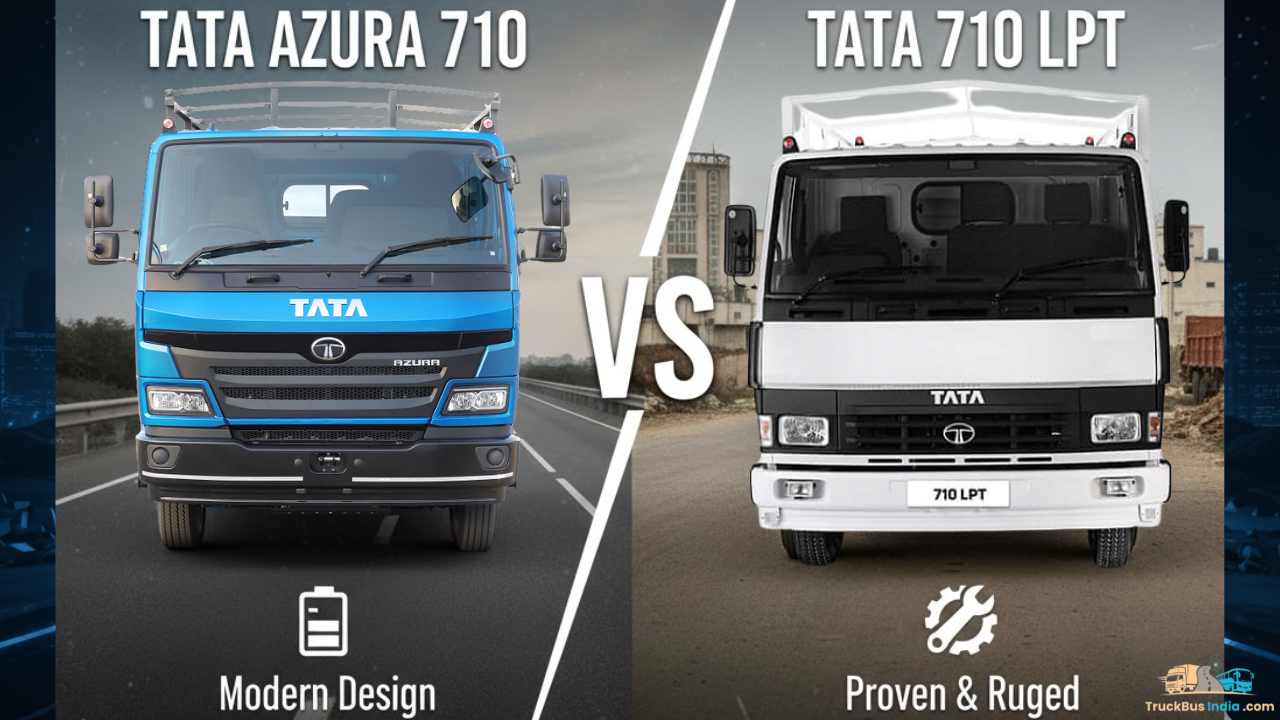
Tata Motors has strengthened its intermediate light commercial vehicle (ILCV) portfolio with the launch of the Tata Azura 710, bringing it into direct comparison with the widely used Tata 710 LPT. Both trucks are positioned for last-mile as well as long-haul cargo transport and share a rated gross vehicle weight of 7,490 kg. This makes them suitable for fleet operators looking to improve turnaround time and operational efficiency.
Performance And Powertrain Comparison
Both the Tata Azura 710 and Tata 710 LPT deliver identical performance figures, making this a closely matched contest. The Azura 710 is powered by Tata Motors’ in-house developed 4SPCR diesel engine, producing 99 hp of power and 300 Nm of torque. It is paired with a GB400 5-speed manual gearbox.
The Tata 710 LPT, meanwhile, uses the proven 4SP diesel engine coupled with a G400 5-speed manual transmission. While output numbers remain the same, the Azura 710 benefits from newer engine technologies, updated electronic control systems and a revised wiring setup aimed at improved thermal management and durability. The 710 LPT counters this with a powertrain that has delivered consistent reliability across years of demanding fleet operations.
Suspension Setup And Ride Comfort
Suspension architecture on both trucks is largely similar, with parabolic leaf springs at the front and semi-elliptical leaf springs at the rear. However, the Tata 710 LPT gains an advantage through the inclusion of auxiliary springs at the rear, which help improve stability and reduce body movement under varying load conditions.
The Tata Azura 710, despite not featuring auxiliary springs, is expected to offer a balanced ride and adequate load-handling capability due to well-tuned spring rates and hydraulic shock absorbers. On paper, though, the auxiliary spring configuration gives the 710 LPT a slight edge in ride comfort and load stability.
Braking Systems And Safety Features
Braking is where the Tata Azura 710 offers greater flexibility. Depending on the load body variant, it is available with either air brakes or hydraulic brakes, allowing operators to choose a setup based on their business requirements. The air brake system is offered on larger load body variants, while hydraulic brakes are available on shorter configurations designed for lighter-duty use.
The Tata 710 LPT comes exclusively with a dual-circuit full air braking system. This setup ensures improved safety by providing a backup braking circuit in case of air pressure loss, making it suitable for heavy-duty and continuous transport operations.
Which ILCV Is The Better Choice In 2026?
Both trucks offer strong value propositions within the ILCV segment. The Tata 710 LPT remains a dependable choice for operators seeking a proven platform with robust suspension and braking systems. The Tata Azura 710, on the other hand, appeals to buyers looking for newer technology, improved thermal efficiency and variant-based configuration flexibility.
The final decision depends on application needs, cargo profiles and long-term fleet strategies rather than outright performance differences.