
News List
Switch Mobility iEV3 vs iEV4: Key Differences, Specs, and Performance Compared

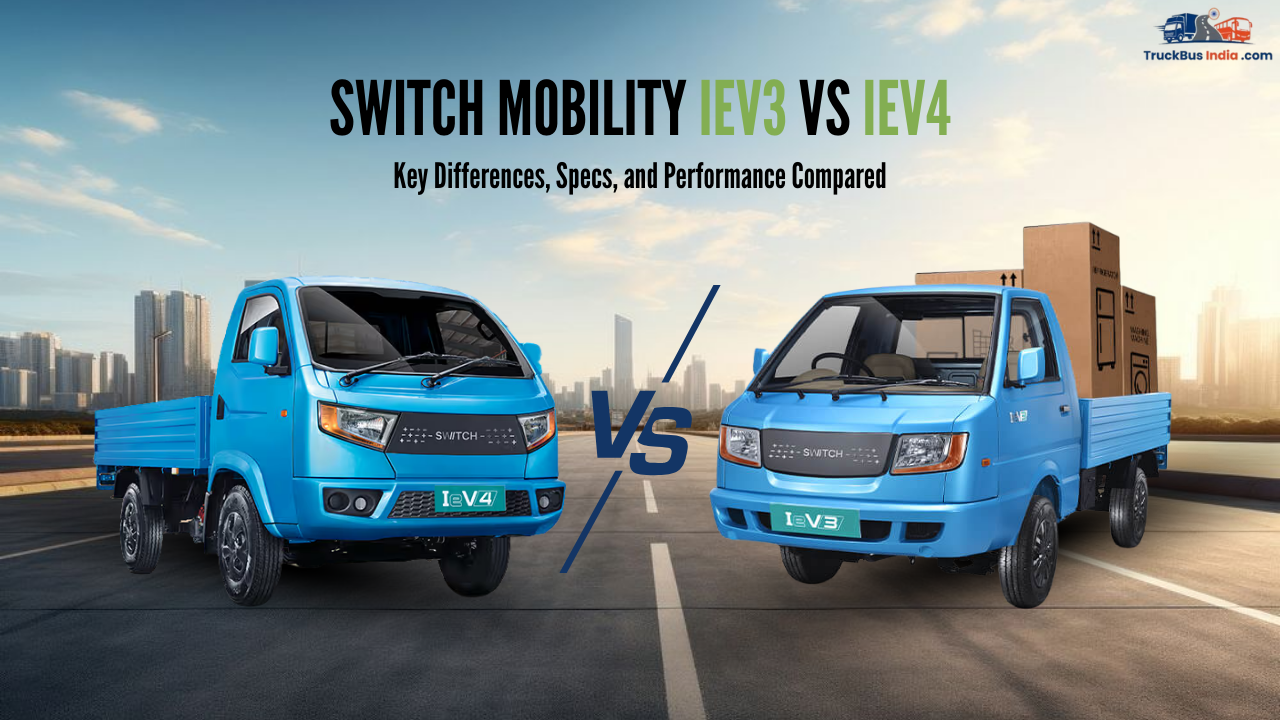
Electric mobility in commercial vehicles is rapidly evolving in India and globally. As companies move toward cleaner transport solutions, the emergence of practical electric light commercial vehicles (eLCVs) has become crucial to sustainable logistics. Among the latest in this space are the Switch Mobility iEV3 and iEV4, two electric LCV offerings designed for varied business needs. Let’s dive into their key differences, performance, and what they mean for commercial fleets.
The Rise of Electric Commercial Vehicles
The broader commercial vehicle landscape is showing early but significant signs of electrification. According to the ACEA 2025 review, electric trucks have recorded isolated gains in registrations across Europe, although they still represent a relatively small share compared with traditional diesel trucks, while electric buses have made stronger inroads in public transport networks.
In India, policies and schemes like the extended PM E‑Drive programme support the adoption of electric buses, trucks, and ambulances, illustrating the government’s push toward greener commercial mobility.
What Are Switch Mobility iEV3 and iEV4?
Switch Mobility, a subsidiary of the Hinduja Group and Ashok Leyland’s EV‑focused division, has introduced the iEV3 and iEV4 as part of its electric light commercial vehicle (LCV) lineup. These vehicles are designed for last‑mile to intra‑city logistics and aim to reduce operating costs and emissions for businesses.
Both models belong to the IeV Series, which stands for Intelligent Electric Vehicles, combining modern EV architecture with telematics and connected technology for fleet optimisation.
Side‑by‑Side Specs Comparison
Here’s how the iEV3 and iEV4 stack up against each other in key specifications:
| Feature | Switch iEV3 | Switch iEV4 |
| GVW | 2,590 kg | 3,490 kg |
| Payload | ~1,250 kg | ~1,700 kg |
| Battery Capacity | 25.6 kWh | 32.2 kWh |
| Motor Power | 40 kW | 60 kW |
| Torque | 190 Nm | 230 Nm |
| Range | ~140 km | ~130 km |
| Max Speed | ~70 km/h | ~80 km/h |
| Charging Time | ~3–4 hrs | ~4–5 hrs |
| Gradeability | 22% | 23% |
| Approx Pricing (Ex‑showroom) | ₹12.32 Lakh* | ₹15.29 Lakh* |
Key Takeaways from the Specs
- Payload and Power: The iEV4 has a significantly higher payload capacity and more powerful motor, making it better suited for heavier cargo and demanding urban delivery requirements.
- Range and Battery: The iEV3, despite a smaller battery pack, claims a slightly higher range due to its lighter build and lower energy demand. Both variants offer competitive ranges for urban and semi‑urban logistics.
- Speed and Performance: The iEV4’s higher maximum speed and stronger powertrain support more dynamic operations, while the iEV3 remains an efficient workhorse for shorter, lighter duties.
Features That Matter
Beyond basic specs, both vehicles include modern features that appeal to commercial operators:
- Electric Power Steering and Hill Hold: Enhanced drivability and safety on gradients.
- Regenerative Braking: Helps improve range and efficiency by capturing energy while slowing.
- Connected Telematics (iON): Real‑time data for fleet operators to monitor vehicle health, routes, and performance metrics — ultimately reducing total cost of ownership (TCO).
These aspects make both iEV3 and iEV4 suitable for enterprises aiming to integrate greener, connected vehicles into their logistics operations.
Who Should Choose Which?
- Small and Medium Businesses: The iEV3, with its lower price and excellent range for everyday city logistics, is ideal for smaller delivery fleets, retailers, and service businesses transitioning to electric vehicles.
- Larger Fleets & Heavier Loads: The iEV4’s higher payload and performance make it a better choice for heavier workloads like bulk deliveries, intercity routes, or businesses requiring more hauling capacity.
The Bigger Picture: EV Trucks and the Future
While electric LCVs like the iEV3 and iEV4 are gaining traction, broader electric truck adoption still faces hurdles such as infrastructure limitations and higher upfront costs compared with diesel counterparts. However, industry data shows gradual improvements in electrification, especially in niches like buses and light‑to‑medium commercial vehicles.
Innovations such as Jio‑BP’s ACTIVE Technology petrol, which can add up to 100 km of extra drive annually without additional fuel cost, reflect parallel efforts to improve internal combustion engine (ICE) efficiency alongside the electric transition.
Conclusion
Switch Mobility’s iEV3 and iEV4 represent a significant step forward in India’s commercial electric vehicle journey. With tailored specs for varied logistics needs, connected technology, and zero tailpipe emissions, these electric LCVs are well‑positioned to support the growth of cleaner, smarter commercial transport — especially in urban ecosystems prioritising sustainability.