
News List
Metro Expansions Pull in More Low-Height Haulage Trucks

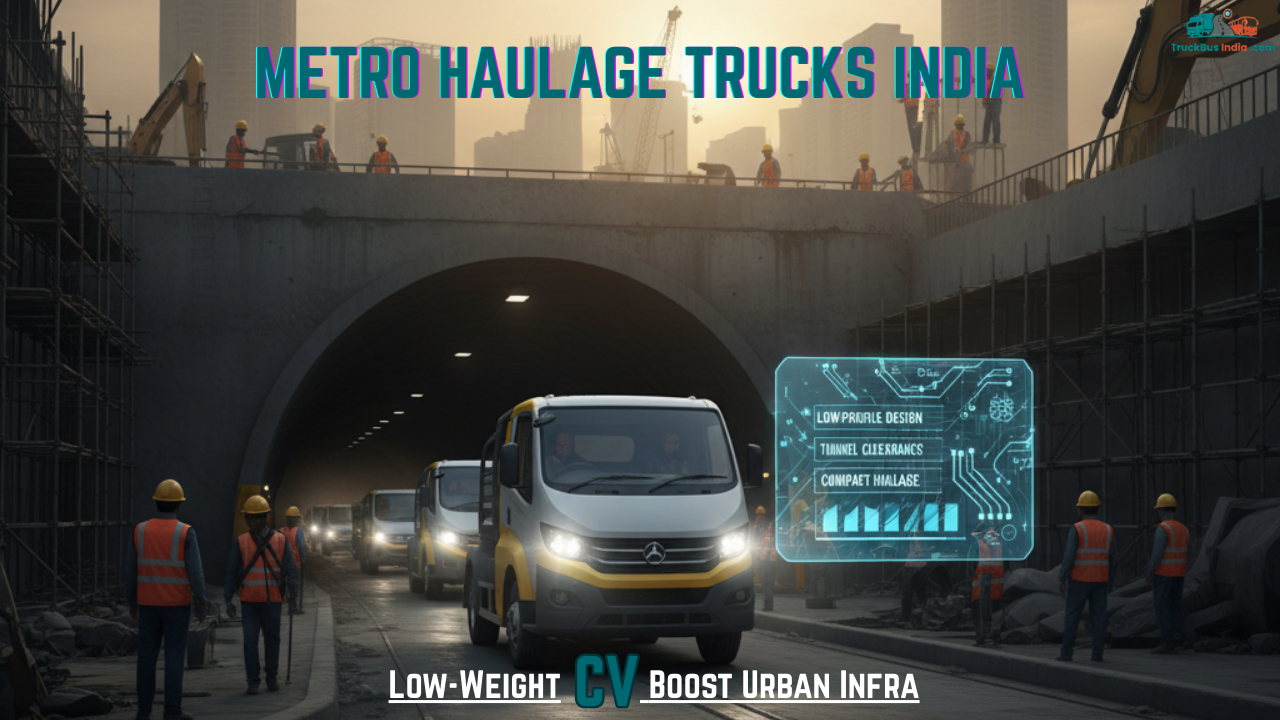
India’s urban landscape is transforming at an unprecedented pace. With major metros like Delhi, Mumbai, Bengaluru, Pune, and Chennai expanding their underground corridors, construction companies are revisiting the kind of vehicles they deploy inside these restricted spaces. One category gaining rapid acceptance is low height CV models—compact haulage trucks engineered to work efficiently inside tunnels, shafts, and confined infrastructure zones.
The surge in metro construction activity has created a unique demand profile, giving rise to a growing market for metro haulage trucks that can transport soil, concrete, reinforcement material, and equipment through low-clearance pathways where conventional commercial vehicles simply cannot operate.
Why Metro Projects Need Specialised Low-Height Trucks
1. Tighter Tunnels, Stricter Clearances
Underground metro tunnels typically offer limited headroom and narrow movement paths. Regular haulage trucks are often too tall or too wide to maneuver through these spaces. Low-profile commercial vehicles solve this challenge with:
- Reduced cabin height
- Compact wheelbase
- Increased turning radius
- Lower center of gravity for stability
This makes them ideal for hauling material through long underground corridors without the risk of getting stuck or causing delays.
2. Efficient Movement in Constrained Construction Zones
Unlike open construction sites, underground metro builds involve constant coordination, staggered material entry, and restricted mobility. Vehicles must move smoothly through shafts, staging zones, and bending passages. Low-height trucks enable:
- Faster trips between excavation points
- Easier navigation in cluttered underground spaces
- Reduced stoppages caused by size limitations
These factors improve overall project efficiency and help maintain tight metro construction timelines, which are often closely monitored.
Growing Adoption Driven by Infra Boom
India’s focus on expanding public transit networks—and especially metro systems—has led to a sizable increase in demand for infra project vehicles designed specifically for urban underground work. Over the last few years, OEMs and body builders have responded by introducing:
- Short-cabin haulage trucks
- Low-profile dumpers
- Compact tippers
- Multi-use underground carriers
These vehicles can haul excavation muck, deliver concrete rings, transport construction consumables, and shuttle smaller equipment—all while maintaining maneuverability in tight spaces.
Contractors working on metro rail, underpasses, and deep tunneling projects are now actively adding low-height trucks to their fleets for faster, safer material movement.
Advantages Beyond Tunnel Mechanics
The benefits of low-height haulage models extend beyond just size compatibility.
1. Better Stability Under Load
The lower center of gravity reduces the chances of tipping or imbalance, especially when moving heavy material over uneven underground flooring.
2. Improved Safety
Operators have better visibility in cramped environments, reducing accidents and collisions inside tunnels.
3. Lower Fuel Consumption
Compact engines and lighter builds often result in better fuel efficiency compared to full-sized tippers used in open sites.
4. Reduced Wear and Tear
Since these trucks are built for confined spaces with frequent stop-and-go momentum, their components are optimized to endure shorter runs and tight maneuvering stresses.
A Future-Ready Trend for Urban Infrastructure Builds
As metro rail networks continue to spread into new urban and semi-urban areas, the demand for low-profile haulage solutions will only grow. Underground construction presents challenges that conventional trucks cannot always solve, making specialized models essential for faster project execution and safer operations.
Manufacturers are expected to expand their low-height portfolio further, offering more payload choices, electric options for zero-emission tunneling, and advanced navigation aids.
For now, one thing is clear: low height CV trucks are becoming an indispensable part of India’s metro construction ecosystem—driving efficiency in spaces where every centimeter of clearance matters.