
News List
India’s electric bus push opens global opportunity: JBM’s Arya

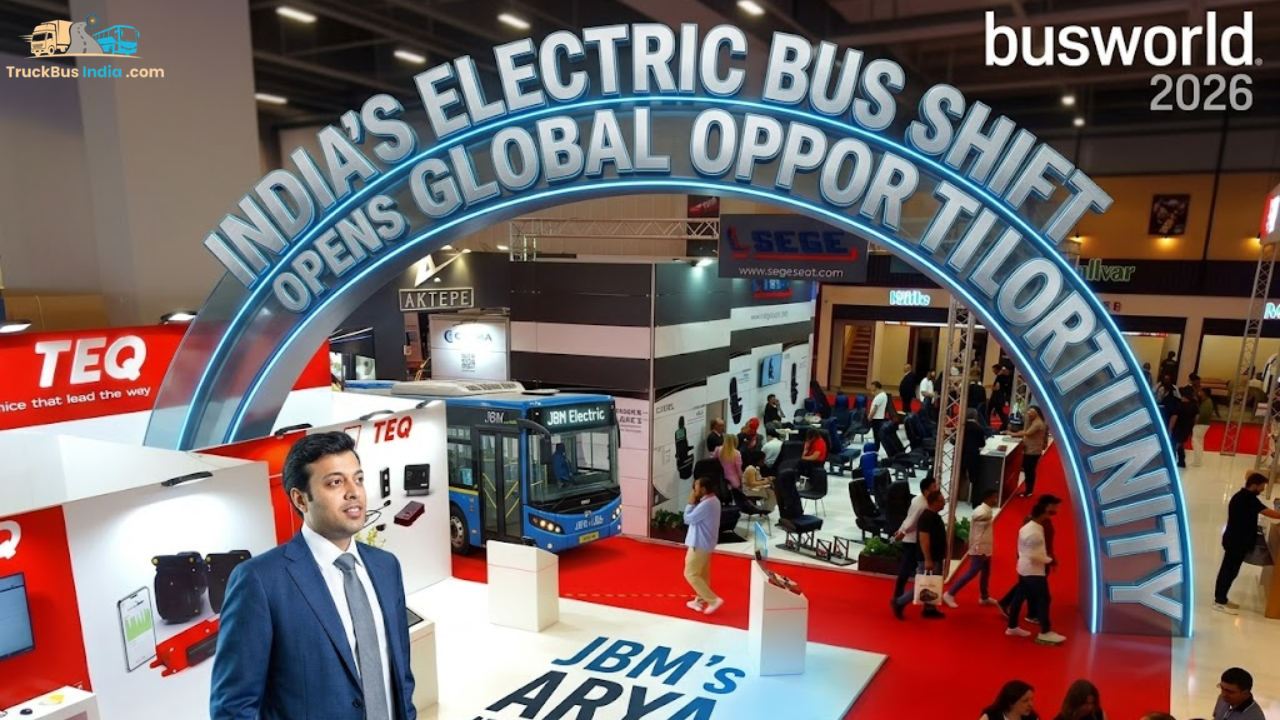
India’s transition to electric buses is rapidly reshaping the country’s mobility landscape while opening doors for global expansion. Speaking at Busworld India 2026, Nishant Arya, Chairman of JBM Electric Vehicles, said the shift is not only transforming domestic transport but also positioning India as a strong player in the global EV space.
He highlighted that the evolution of the electric bus ecosystem is creating opportunities across the value chain, from manufacturers to technology providers and financiers.
Rapid Growth In India Electric Bus Ecosystem
Nishant Arya pointed out that India’s electric bus segment has already achieved significant scale, with industry volumes crossing 100,000 units. This growth reflects increasing demand as well as participation from multiple stakeholders.
He said the pace of transformation in the bus industry has been remarkable, driven by changing customer expectations and the entry of new players. According to him, electric buses are acting as a major catalyst in redefining mobility in India.
Technology Driving Future Of Electric Mobility
Emphasising the role of innovation, Arya said the future of the electric bus industry will depend on technology-led value creation. He noted that traditional approaches will not be enough to sustain growth in the evolving market.
He stressed that the industry must adopt a more agile and integrated approach, where collaboration between stakeholders becomes central to progress. Technology, he added, is now the key driver shaping competitiveness in the sector.
Global Factors Accelerating Electric Bus Transition
Arya highlighted that global geopolitical uncertainties and fluctuations in fossil fuel markets are accelerating the shift toward electric mobility. These factors are making conventional fuel-based systems less reliable and more unpredictable.
He said electric mobility offers greater sustainability and stability, aligning with India’s long-term renewable energy goals and reducing dependence on fossil fuels.
Collaboration Across EV Ecosystem
The transition to electric buses will require strong collaboration across the ecosystem. Arya noted that OEMs, suppliers, financiers, and technology companies must work together to ensure smooth and scalable growth.
He said such convergence is essential to build a robust ecosystem that can support large-scale adoption and innovation in the electric bus segment.
Domestic Competition To Build Global Strength
Drawing comparisons with Japan’s automotive growth, Arya said intense domestic competition can help Indian companies become globally competitive. He explained that strong competition at home can drive innovation, efficiency, and quality improvements.
This approach, he believes, can enable Indian manufacturers to develop world-class electric mobility solutions capable of competing on a global stage.
India Electric Bus Shift Signals Global Ambition
The insights shared at Busworld India 2026 reflect a broader ambition for India’s electric mobility sector. Arya said the country is moving beyond a ‘Make in India’ mindset toward ‘Make for the World,’ with electric buses playing a central role.
As the electric bus ecosystem continues to expand, India is well positioned to leverage its scale, innovation, and competitive environment to emerge as a global leader in electric mobility.