
News List
Electric Bus Push India Stalls Amid Depot Crisis

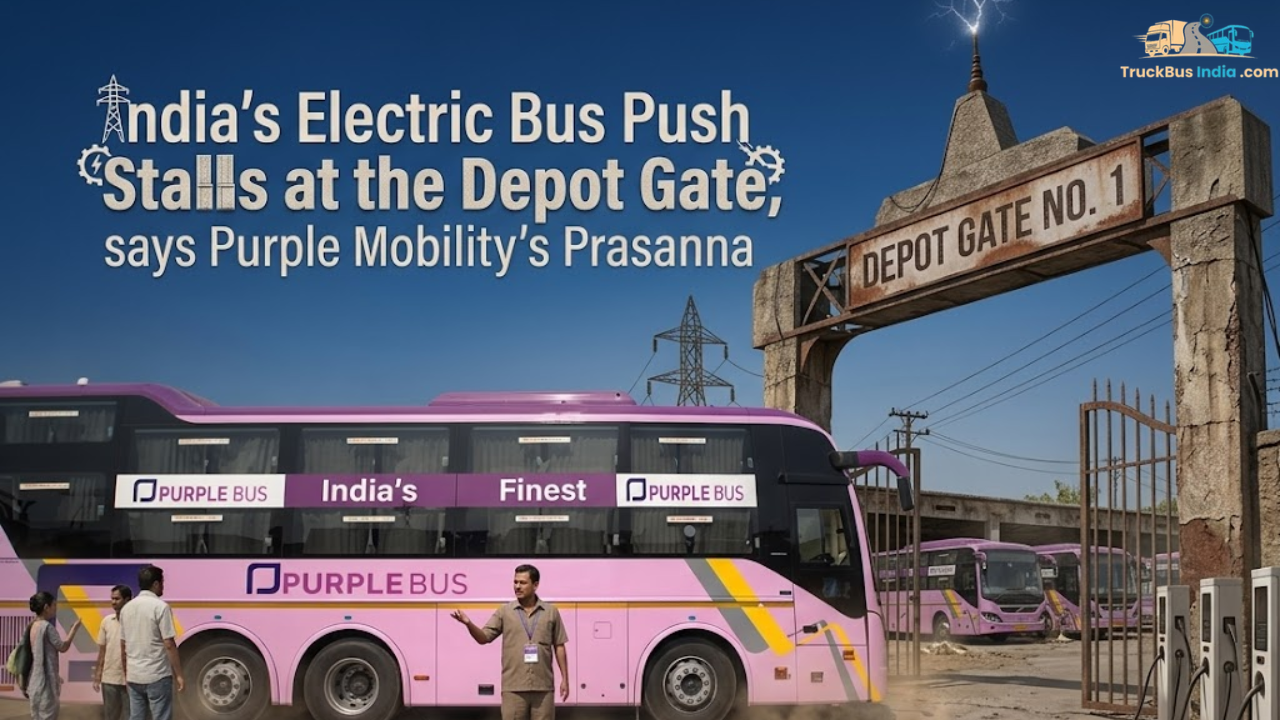
The electric bus push India is facing serious structural roadblocks as operators struggle with lack of depots, high infrastructure costs, and limited financing options. At the Busworld India 2026 Conclave in New Delhi, Prasanna Patwardhan, Chairman and MD of Purple Mobility, highlighted how the transition to cleaner transport is being slowed not by intent but by missing groundwork.
He pointed out that the electric bus push India is colliding with real-world constraints where most operators are simply not prepared for large-scale electrification despite policy momentum and industry interest.
Infrastructure and Financing Barriers Slowing Electric Bus Push India
A key issue in the electric bus push India is the lack of usable land for charging infrastructure. India has nearly 20 lakh buses, but only about 1.5 lakh operate with any existing infrastructure support. The remaining majority have no dedicated depots or charging setups, making electrification extremely difficult.
Unlike diesel buses that can refuel in minutes at widespread stations, electric buses require 1 to 4 hours of charging time. This makes depot availability essential. However, operators often do not own or control suitable land, directly restricting the electric bus push India at the ground level.
Cost is another major challenge. In one reported case, extending a power line alone cost around ₹1 crore, exceeding even the price of charging equipment. Distribution companies expect operators to fund grid expansion and also pay usage charges, making the electric bus push India financially burdensome.
Financing adds another layer of difficulty. Banks hesitate to lend without strong collateral, but most private operators lack depots or assets to pledge. This credit gap further slows the electric bus push India despite growing policy support.
Patwardhan also suggested that manufacturers and dealers should place demonstration units in accessible locations so operators can experience electric buses firsthand, which could help accelerate adoption decisions.
Industry Risk and Technology Uncertainty
While operators struggle with infrastructure, manufacturers face a different kind of uncertainty. The government continues to push for cleaner transport, but there is still no final clarity on whether diesel (Euro 6), electric, or hydrogen will dominate long term.
According to industry leaders, operators are less exposed to this uncertainty because buses will remain essential regardless of fuel type. However, the electric bus push India is still at risk due to delayed ecosystem readiness, even as demand for modernization increases.