
News List
The Complete Guide to Bulldozer Selection: Sizing, Types and Key Factors

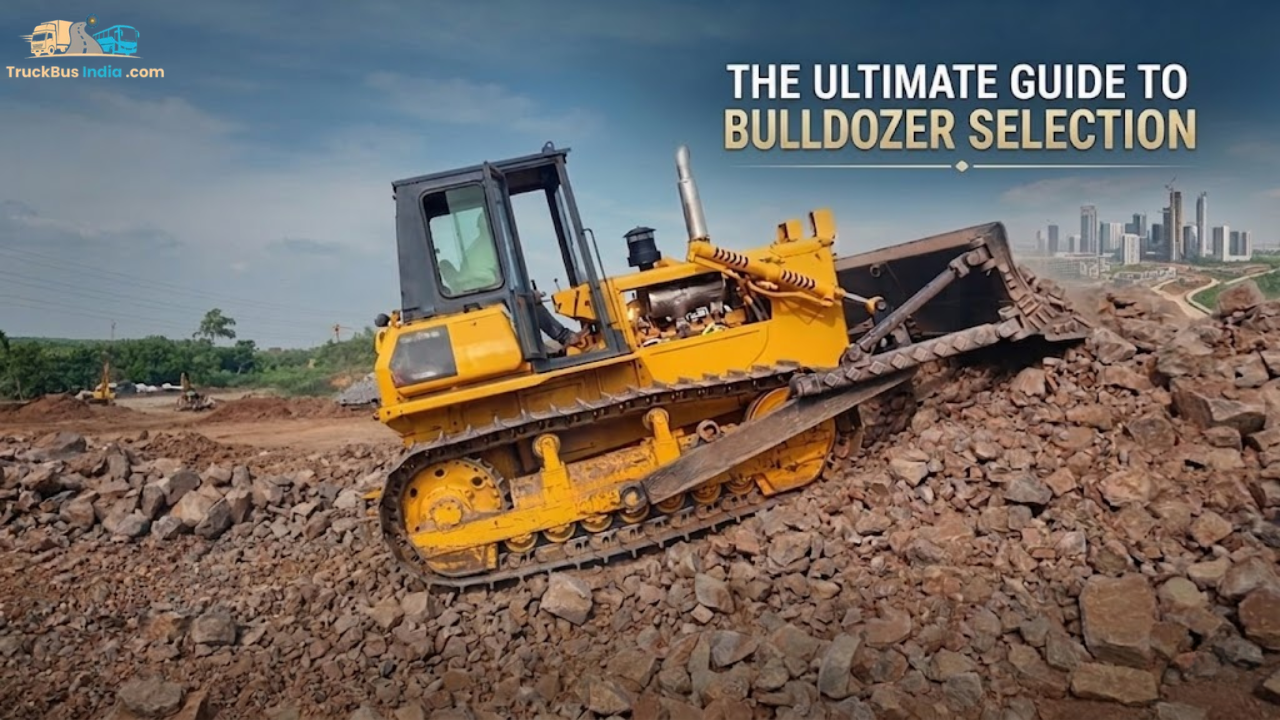
In heavy construction and earthmoving, bulldozers remain one of the most essential machines on site. From land clearing and grading to pushing large volumes of material, their role is critical across projects.
However, choosing the right bulldozer is not as simple as picking any machine. Selecting the wrong size or type can lead to inefficiency, higher costs, and reduced productivity. This bulldozer selection guide explains how to match machine capabilities with project requirements for better performance and cost control.
Bulldozer Sizes, Types and Selection Factors Explained
Choosing the right bulldozer starts with understanding size, type, and operational requirements. Bulldozers are broadly classified based on horsepower and operating weight into small, medium, and large categories.
Bulldozer Sizes and Their Applications
Each bulldozer size serves a different purpose depending on the scale of work.
Small Bulldozers for Compact Projects
Small bulldozers, typically under 100 HP, are best suited for light duty tasks. These include residential construction, landscaping, and backfilling work.
Their compact size allows easy movement in confined areas, making them ideal for projects with limited access. They are also more cost effective and require less skilled operation compared to larger machines.
Medium Bulldozers as Versatile Workhorses
Medium bulldozers offer a balance of power and flexibility. Machines like the Sinomach Changlin GTY220 with a 220 HP engine fall in this category.
They are widely used in road construction, quarry operations, and site development projects. This category is considered the most practical choice for contractors handling varied workloads.
Large Bulldozers for Heavy Duty Operations
Large bulldozers, usually above 300 HP, are designed for high production tasks. These machines are commonly used in mining, dam construction, and large scale infrastructure projects.
They can move massive volumes of material but require skilled operators and are suitable mainly for open and challenging terrains.
Types of Bulldozers and Their Uses
Apart from size, bulldozers are also classified based on design and functionality.
Crawler Bulldozers for Tough Terrain
Crawler bulldozers use tracks instead of wheels, providing excellent traction and stability. They are ideal for soft soil, muddy conditions, rocky surfaces, and slopes.
Their low ground pressure prevents sinking, making them the preferred choice for most heavy construction work.
Wheel Bulldozers for Speed and Mobility
Wheel bulldozers are designed for firm and flat surfaces. They offer higher speed and better mobility compared to crawler machines.
These are suitable for projects where the machine needs to move frequently between locations, such as road work or landfill operations.
Specialised Bulldozer Types
There are also specialised bulldozers designed for specific applications:
- Mini bulldozers for tight spaces
- Mulcher bulldozers for vegetation clearing
- Low ground pressure bulldozers for wetlands and soft terrain
Key Factors for Choosing the Right Bulldozer
Selecting the right bulldozer requires evaluating multiple factors beyond just size and type.
Project Scope and Work Requirements
Identify the primary tasks such as grading, earthmoving, or land clearing. This helps determine the required horsepower, blade type, and attachments like rippers.
Terrain and Site Conditions
Ground conditions play a major role in bulldozer selection. Crawler bulldozers are better for uneven and soft surfaces, while wheel bulldozers perform well on stable and flat ground.
Operator Skill and Comfort
Larger machines require experienced operators. Features like comfortable cabins, easy controls, and safety systems improve productivity and reduce fatigue during long operations.
Cost and Long Term Value
Total cost of ownership includes fuel consumption, maintenance, and resale value. For short term projects, renting may be more economical, while long term usage supports purchasing a reliable machine.
Conclusion
Selecting the right bulldozer is a critical decision that directly impacts project efficiency and cost. By understanding bulldozer sizes, types, and key selection factors, businesses can choose equipment that matches their operational needs.
Instead of focusing only on power, the goal should be to find a machine that delivers the best balance of performance, efficiency, and cost for the specific project.