
News List
Middle East War Triggers Major Oil Supply Loss

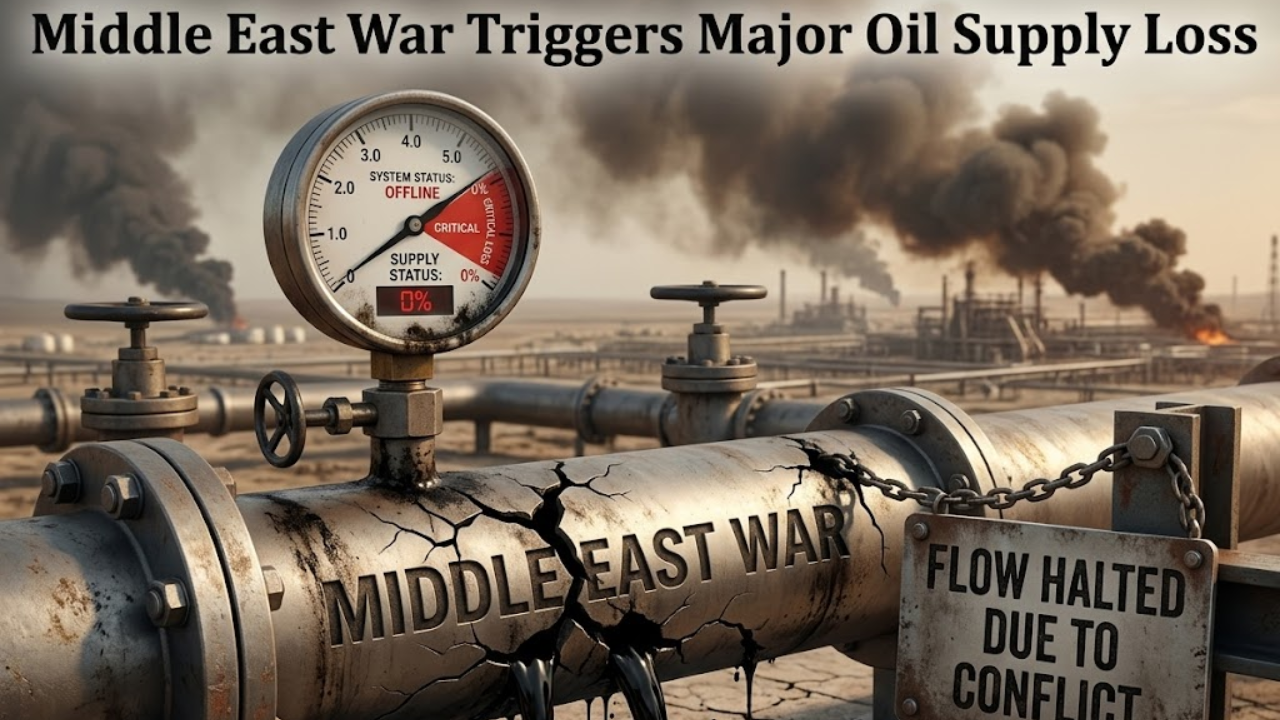
The ongoing Middle East conflict has escalated into a major oil supply crisis, removing nearly 500 million barrels of crude from global markets. Valued at around $50 billion, the disruption is placing heavy pressure on global energy systems as the Strait of Hormuz remains partially closed. With falling production and restricted shipping routes, the oil supply crisis is reshaping global oil flows and price stability.
Strait of Hormuz Disruption Drives Oil Supply Crisis
The main trigger behind the oil supply crisis is the continued disruption of the Strait of Hormuz, a vital route that previously handled a significant share of global crude exports. With repeated closures and unstable conditions, oil shipments through this corridor have been heavily reduced.
As a result, Middle Eastern production has dropped sharply, with millions of barrels per day removed from the market. This has created a widening gap between global demand and available supply, further deepening the oil supply crisis.
Global Inventories Decline Amid Oil Supply Crisis
The oil supply crisis has led to a rapid decline in global crude inventories. Storage levels across multiple regions are falling as consumption continues while supply remains constrained.
Market data shows that tens of millions of barrels have already been drawn down from onshore reserves. This tightening balance is increasing pressure on pricing and contributing to ongoing volatility in oil markets as the oil supply crisis continues.
Slow Recovery Expected From Oil Supply Crisis
Even if conditions improve and the Strait of Hormuz reopens fully, recovery from the oil supply crisis is expected to take time. Damage to infrastructure and disrupted logistics have reduced production capacity across several producing nations.
Some regions may restore output within months, while others could take much longer depending on operational challenges. This means the oil supply crisis is likely to continue affecting global energy markets well into the future.
Conclusion
The Middle East conflict has created one of the most severe oil supply disruptions in recent years. With 500 million barrels already lost and global inventories tightening, the oil supply crisis is expected to keep markets under pressure. Until stable shipping routes and production levels are restored, volatility in oil markets is likely to persist.