
News List
JCB Compactors vs CASE Compactors: Specs Comparison and Which One to Choose

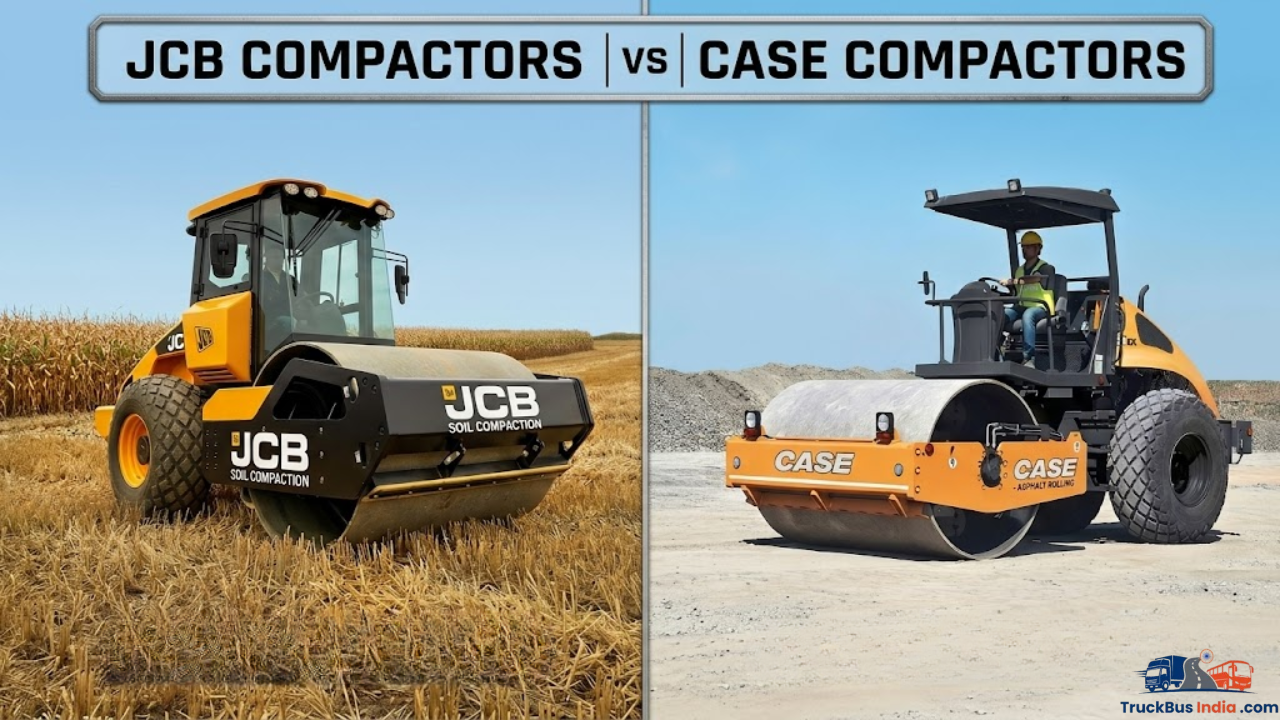
Compactors are essential construction machines used for soil compaction, road building, and surface finishing across infrastructure projects. In India, JCB and CASE are two leading brands offering a wide range of compaction equipment for different project scales. While both deliver strong performance, their specifications, design focus, and application suitability differ significantly. This comparison helps understand which compactor brand fits specific construction needs based on power, efficiency, and operational requirements.
JCB Compactors: Versatile Machines for Mixed Projects
JCB compactors are widely used across Indian construction sites due to their versatility and availability in multiple size categories. The brand offers both mini tandem rollers and single drum compactors designed for flexible use in road construction and soil compaction tasks.
Popular models such as VM 117, VMT 330, and VMT 300 are commonly deployed for finishing and compaction work. These machines typically deliver engine power ranging from 44 HP to 74 HP, making them suitable for small to medium-scale construction applications.
Key Specifications of JCB Compactors
- Engine power: 44 HP to 74 HP
- Drum width: 1200 mm to 2100 mm
- Operating suitability: Small to medium projects
- Fuel tank capacity: 46 litres to 300 litres
JCB compactors are known for ease of operation and wide service availability, which makes them a practical choice for contractors working in urban and semi-urban regions.
CASE Compactors: Built for Heavy-Duty Infrastructure Work
CASE compactors are designed for large-scale infrastructure and high-intensity compaction tasks. These machines are commonly used in highway construction, industrial projects, and large road development works where consistent heavy-duty performance is required.
Models such as 1107 NX, 1107 EX-D PLUS, and 1107EX PLUS are widely used in demanding environments. CASE compactors offer a broader engine power range, extending up to 101 HP, which supports heavier workloads and tougher soil conditions.
Key Specifications of CASE Compactors
- Engine power: 25 HP to 101 HP
- Drum width: 1000 mm to 2150 mm
- Fuel tank capacity: up to 275 litres
- Application focus: Large infrastructure projects
CASE machines are designed for continuous operation, offering strong vibration systems and robust build quality suitable for long-duration construction cycles.
JCB vs CASE Compactors: Key Comparison
Both brands offer reliable machines, but their specifications vary depending on project requirements and workload intensity.
Specification Comparison Table
| Specs | JCB Compactors | CASE Compactors |
| Engine Power | 44 HP to 74 HP | 25 HP to 101 HP |
| Max Operating Weight | 2740 kg to 11525 kg | 2900 kg to 11550 kg |
| Drum Width | 1200 mm to 2100 mm | 1000 mm to 2150 mm |
| Fuel Tank Capacity | 46 litres to 300 litres | 38 litres to 275 litres |
JCB focuses on versatility and ease of use, while CASE emphasizes higher power output for demanding compaction work.
Which Compactor Should You Choose?
When to Choose JCB Compactors
- Suitable for small to medium construction projects
- Ideal for urban and narrow workspaces
- Offers wider model variety
- More budget-friendly for contractors
JCB compactors are a practical choice for contractors who handle diverse but moderate-scale construction activities.
When to Choose CASE Compactors
- Best for highways and large infrastructure projects
- Suitable for continuous heavy-duty compaction
- Higher engine power for tough soil conditions
- Built for long-duration industrial usage
CASE compactors are preferred where high performance and durability are critical for large-scale operations.
Conclusion
Both JCB and CASE compactors serve important roles in India’s construction sector but cater to different operational needs. JCB offers flexibility with a wide range of models suitable for smaller and medium projects. CASE focuses on high-performance machines designed for large infrastructure and heavy-duty compaction tasks.
The right choice depends on project scale, budget, and workload intensity. Contractors working across varied sites may prefer JCB, while those focused on highways and large infrastructure may find CASE more suitable for long-term efficiency.