
News List
Farizon V7E Electric Van Unveiled for Urban Logistics in UK

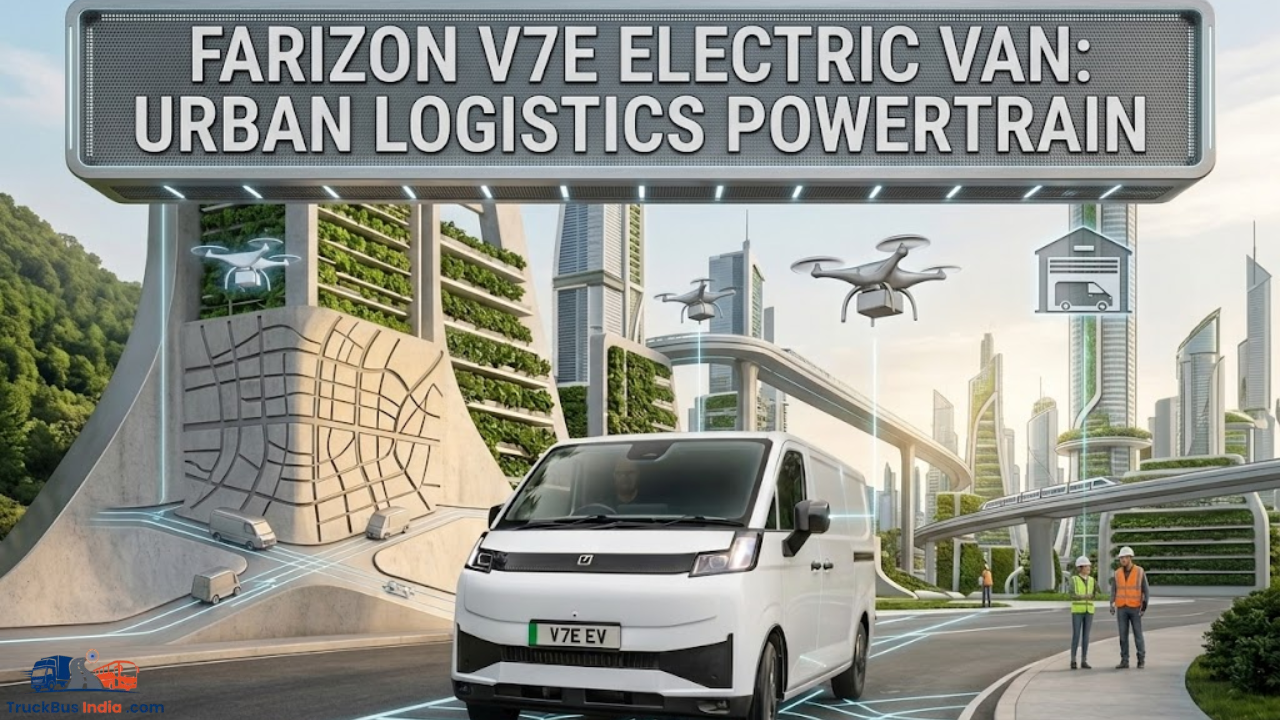
Farizon has introduced its new V7E electric van at the Commercial Vehicle Show in Birmingham, expanding its zero emission commercial vehicle lineup. Designed specifically for urban logistics, the new model focuses on efficiency, cargo space, and ease of operation for fleet users.
Alongside the launch, the company also revealed updates for its 2026 SV electric van, adding new features and a Core variant to strengthen its position in the UK market.
Farizon V7E Electric Van Specs, Range and Price
The Farizon V7E electric van is built on a dedicated EV platform featuring a skateboard chassis and advanced drive by wire architecture. This system replaces traditional mechanical linkages with electronic controls, improving handling precision, safety, and response time.
Battery Options and Performance
The V7E is offered with two battery options:
- 50 kWh battery
- 67 kWh battery
Both battery packs are supplied by CATL. The van is powered by a permanent magnet synchronous motor delivering 110 kW power and 230 Nm torque, supported by a 400 volt system.
In terms of range, the V7E offers:
- Up to 295 miles WLTP city range
- Up to 204 miles combined range with larger battery
- Around 210 miles city range with 50 kWh battery
Energy consumption is rated between 15.3 to 15.5 kWh per 100 km in urban conditions, highlighting its efficiency for city operations.
Charging and Efficiency Features
The Farizon V7E supports fast charging and practical energy usage:
- DC fast charging up to 100 kW
- 20 to 80 percent charge in around 18 minutes
- AC charging at 11 kW with full charge under 5 hours
- Vehicle to load function with 2.2 kW output
The van also features a drag coefficient of 0.27 and a compact turning radius of 6 metres, improving manoeuvrability in tight city spaces.
Cargo Capacity and Urban Logistics Design
The Farizon V7E electric van has been designed with a focus on maximising cargo efficiency within a compact size.
Cargo Space and Dimensions
- Length: 5 metres
- Wheelbase: 3.2 metres
- Cargo volume: 6.95 cubic metres
- Payload: up to 1,338 kg
The cargo area measures 2.7 metres in length and 1.7 metres in width between wheel arches. It can accommodate up to three Euro pallets, making it suitable for logistics operations.
Practical Features for Fleet Use
The V7E includes several features aimed at improving usability:
- Dual sliding doors for easy access
- 270 degree rear doors for flexible loading
- Low cargo floor height of 0.5 metres
- Front wheel drive layout for better control
The intelligent packaging of the platform allows for more usable space while maintaining a compact footprint, which is important for urban delivery environments.
Farizon 2026 SV Electric Van Gets New Updates
Along with the V7E launch, Farizon has introduced updates to its SV electric van range for 2026.
New Core Variant and Features
The new SV Core variant is available in L1 H1 configuration with battery options of 67 kWh and 83 kWh. It starts at £39,000 in the UK.
Key features include:
- Heated seats and heated steering wheel
- 360 degree surround view system
- Advanced driver assistance systems
- Payload monitoring and automatic wipers in higher trims
Additional features such as vehicle to load functionality and heated windscreen are also available in higher variants.
Performance and Range of SV Van
The Farizon SV electric van is available with 67 kWh, 83 kWh, and 106 kWh battery options.
- Maximum range: up to 247 miles WLTP
- Power output: 170 kW
- Torque: 336 Nm
- Fast charging: 20 to 80 percent in around 36 minutes
These upgrades aim to improve comfort, usability, and performance for fleet operators.
The launch of the Farizon V7E electric van highlights the company’s focus on urban logistics and zero emission transport solutions. With strong range, flexible battery options, and efficient cargo design, the V7E is positioned as a practical solution for city based operations.
At the same time, updates to the 2026 SV electric van show Farizon’s commitment to improving its lineup based on customer feedback. As demand for electric commercial vehicles grows, these new offerings are expected to support wider adoption in the UK market.