
News List
Nitin Gadkari Advocates Multi-Fuel Strategy At Green Transport Conclave 2026

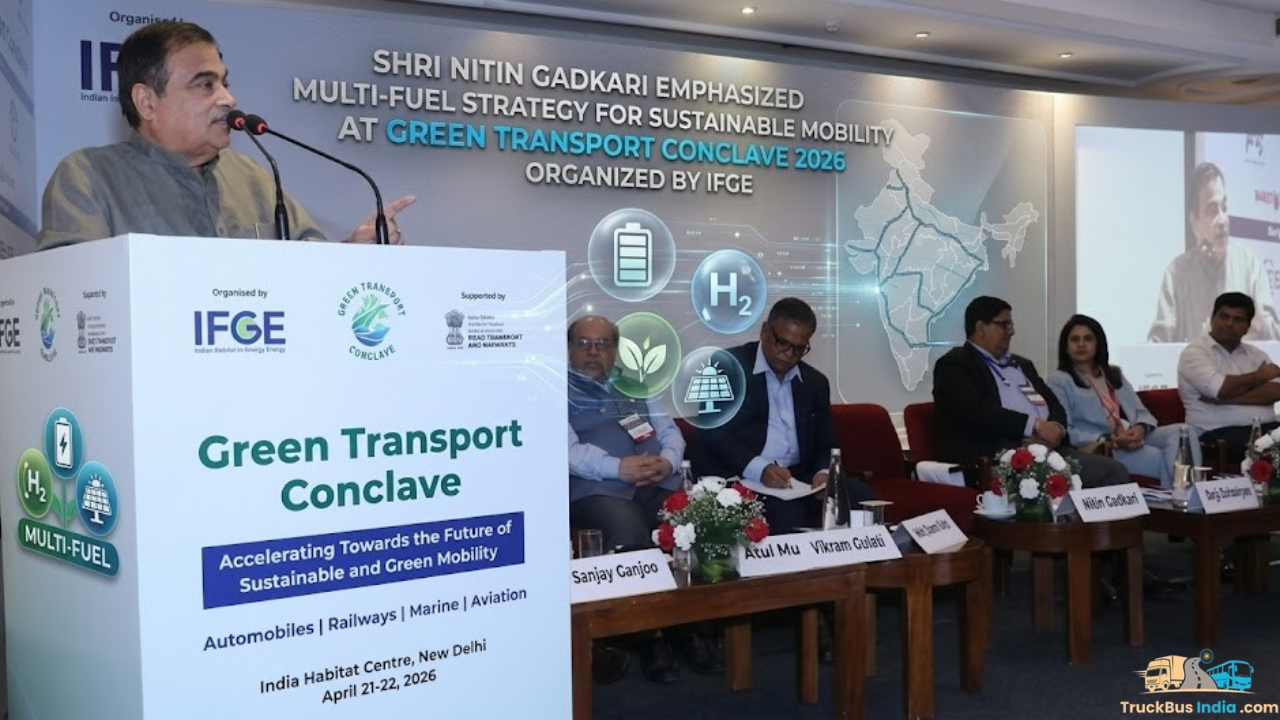
The Green Transport Conclave 2026, organised by the Indian Federation of Green Energy (IFGE) in New Delhi, brought together policymakers, industry leaders, and energy experts to discuss India’s transition towards sustainable mobility. Held over two days on April 21–22, 2026, the event was supported by the Ministry of Road Transport and Highways and focused on accelerating low-carbon and green transport solutions in India.
The conclave was inaugurated by Union Minister for Road Transport and Highways Shri Nitin Gadkari, who stressed the need for a diversified and practical approach to India’s future mobility needs. He highlighted that the transport sector remains one of the largest contributors to carbon emissions and requires urgent structural transformation through coordinated efforts across industries and government bodies.
Nitin Gadkari Highlights India Energy Dependence And Multi Fuel Approach
In his inaugural address, Shri Nitin Gadkari pointed out that India currently imports nearly 87 percent of its energy requirements, making energy security a critical national priority. He emphasised that relying on a single energy source would not be sufficient to meet the country’s rapidly growing transport and industrial demand.
He clearly stated that no single technology, whether electric vehicles, hydrogen fuel, or flex-fuel systems, can independently solve India’s energy challenges. Instead, he advocated for a balanced multi-fuel strategy that integrates multiple energy sources to ensure stability, affordability, and sustainability.
Gadkari also highlighted the importance of biofuels, biomass densification, and alternative fuels such as isobutanol blending and DME. He further emphasised the role of organic manure derived from industrial by-products like press mud and spent wash in improving soil health and supporting sustainable agriculture practices. According to him, increasing biomass productivity is essential not only for energy production but also for strengthening rural economies and supporting India’s Atmanirbhar Bharat vision.
Multi Modal Transport Vision For Sustainable Mobility
Shri Manoj Kumar Singh, CEO of the Uttar Pradesh State Transformation Commission, attended the inaugural session as Guest of Honour. He emphasised that India’s transport strategy is evolving beyond electrification towards a broader multi-fuel and multi-modal ecosystem.
He highlighted the integration of electric vehicles, sustainable aviation fuels, biofuels, and green logistics into a unified transport framework. According to him, aligning road transport systems with logistics corridors and clean energy infrastructure will be crucial in building a resilient and future-ready mobility network.
The discussions at the conclave also focused on decarbonisation of long-haul, intercity, and rural transport across road, rail, and aviation sectors. Experts stressed the need for improving freight efficiency through better coordination between road, maritime, and rail networks.
Policy Frameworks And Technology Integration In Focus
A major part of the conclave was dedicated to policy frameworks required at both central and state levels to support low-carbon transport systems. Participants discussed the importance of creating enabling regulations for electric mobility, biofuels, and hybrid energy systems.
Another key focus area was the role of advanced technologies in the transport ecosystem. These included automation, artificial intelligence, system integration, and modern fuel dispensing infrastructure. Experts agreed that technology-driven solutions would play a critical role in improving efficiency and reducing emissions across the transport sector.
MoU Signed To Promote Green Road Infrastructure
One of the significant highlights of the Green Transport Conclave 2026 was the signing of a Memorandum of Understanding between CSIR-Central Road Research Institute and IFGE. The agreement aims to promote the use of biochar and bio-bitumen in road construction and infrastructure development.
This collaboration is expected to support sustainable construction practices and reduce the environmental impact of road development projects. The use of alternative materials in infrastructure is seen as an important step towards greener and more resource-efficient transport systems.
Industry Participation And Key Discussions
The conclave witnessed participation from a wide range of industry leaders and organisations representing automotive, energy, logistics, aviation, and infrastructure sectors. Senior representatives from companies such as Toyota Kirloskar Motor, Maruti Suzuki India, Tata Motors, Ashok Leyland, Praj Industries, and Kinetic Green contributed to the discussions.
Experts also addressed themes such as sustainable freight movement, green logistics, electric vehicle adoption, and bioenergy expansion. The event provided a platform for collaboration between government bodies, industry associations, and research organisations.
Key speakers also included representatives from NITI Aayog, Global Biofuels Alliance, Railway Board, TERI, and the Commission for Air Quality Management. Their discussions highlighted the importance of coordinated efforts to achieve India’s long-term climate and energy goals.