
News List
Strait of Hormuz constraints keep oil prices elevated

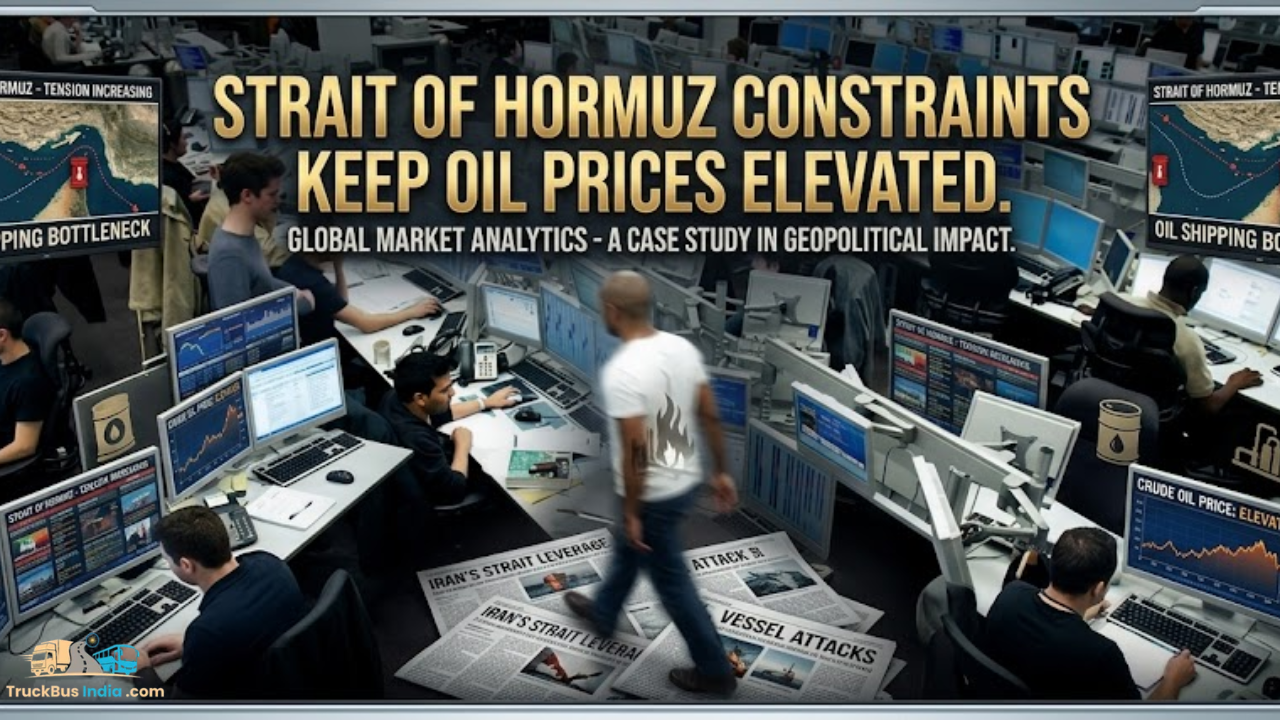
Global oil prices continue to stay elevated as disruptions in the Strait of Hormuz persist despite a fragile ceasefire between the United States and Iran. The restricted flow of tankers through the key energy chokepoint is keeping supply tight and preventing a full market recovery.
Oil prices remain elevated despite ceasefire
Oil prices are holding close to $100 per barrel even after the ceasefire initially raised hopes of easing supply pressures. However, the Strait of Hormuz constraints continue to dominate market sentiment and limit expectations of a sustained price correction.
The ceasefire has reduced immediate escalation risks, but it has not restored normal shipping operations. As a result, global oil and gas markets continue to face uncertainty.
Strait of Hormuz disruption limits global tanker flow
The Strait of Hormuz disruption remains a critical challenge for global energy trade, with vessel movement still tightly controlled. Standard commercial shipping lanes are largely inactive, and transit is being managed under restricted conditions.
Maritime operations continue to depend on security assessments and approvals, with shipping companies adopting a cautious approach. This has significantly reduced tanker traffic and disrupted normal supply chains.
The lack of open navigation has prevented any meaningful recovery in oil flows, keeping global supply conditions tight.
Brent crude outlook remains under pressure
Market forecasts indicate that Brent crude prices may remain above $100 per barrel if the Strait of Hormuz remains partially closed. Analysts warn that continued disruptions could extend volatility in global energy markets.
Even if the route reopens, recovery in oil supply is expected to take several months due to logistical delays and infrastructure constraints. This delayed normalization is likely to keep prices sensitive to any further geopolitical developments.
Conclusion
The Strait of Hormuz constraints continue to be the key factor behind elevated oil prices despite a ceasefire between Iran and the United States. With restricted shipping and ongoing uncertainty, global energy markets are expected to remain tight and volatile in the near term.