
News List
Reliance caps fuel purchases at Jio-BP pumps amid shortages

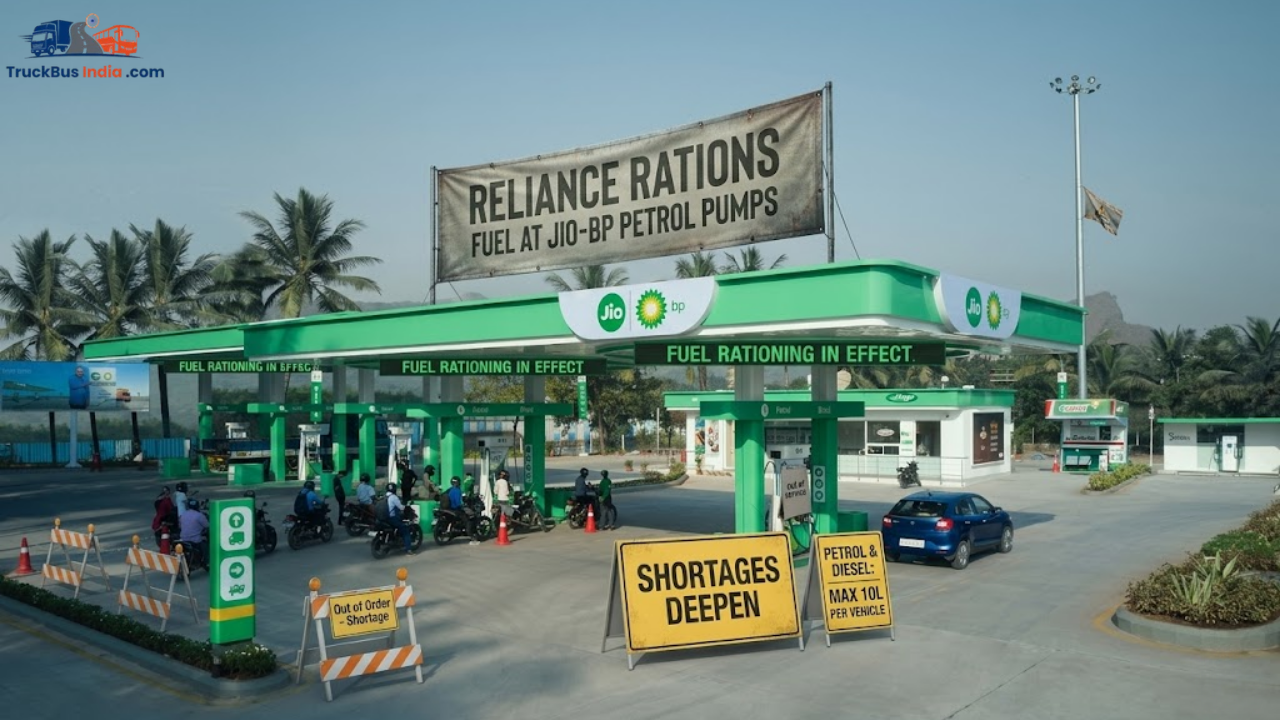
Reliance Industries has begun restricting fuel purchases at its Jio-BP petrol pumps as supply concerns intensify due to ongoing geopolitical tensions. With global oil movement disrupted and demand rising across India, the company’s move signals growing pressure on the country’s fuel supply chain.
Reliance caps fuel purchases to manage rising demand
Reliance Industries, in partnership with BP Plc, has introduced a ₹1,000 per visit cap at several Jio-BP petrol pumps to manage fuel availability and prevent panic buying. While the company has not officially announced a nationwide policy, multiple pump operators have started enforcing limits at the local level.
The joint venture operates over 2,000 fuel stations across India, making it a notable private player in the retail fuel space. Though Reliance accounts for only a small share of the country’s total fuel outlets, it is the first major retailer to move beyond pricing adjustments and actively ration fuel.
Company sources indicate that the decision aims to ensure equitable distribution and avoid stock depletion during peak demand periods. A spokesperson clarified that there is no formal directive in place, suggesting that such restrictions may be localised responses to supply stress.
India fuel shortage concerns rise amid global disruptions
The India fuel shortage situation has been aggravated by ongoing disruptions in the Strait of Hormuz, a key global oil transit route. Despite a temporary ceasefire between the US and Iran, shipping activity remains limited, and insurers continue to flag the region as high-risk.
India, which imports over 90 percent of its crude oil, is particularly exposed to such global supply shocks. As tanker movements slow and supply chains tighten, domestic fuel availability has come under pressure.
State-run companies such as Indian Oil, Bharat Petroleum, and Hindustan Petroleum have not formally imposed caps. However, reports suggest that some outlets may be informally restricting purchases, reflecting broader concerns in the market.
Reliance fuel rationing reflects wider market pressure
The move toward Reliance fuel rationing highlights the growing imbalance between supply and demand. Private retailer Nayara Energy has already raised fuel prices in recent weeks to offset losses and manage consumption levels.
Government data shows that fuel retailers are currently incurring losses of ₹24.40 per litre on petrol and ₹104.99 per litre on diesel. This financial strain, combined with volatile global oil prices, is adding further complexity to the situation.
Brent crude prices have continued to fluctuate, with recent gains linked to reduced production capacity in Saudi Arabia following infrastructure attacks. These developments have contributed to uncertainty in the global energy market.
Conclusion
Reliance caps fuel purchases as a precautionary step amid mounting supply challenges and rising demand. While the restrictions are not officially mandated across all locations, they signal deeper concerns within India’s fuel ecosystem. As global disruptions persist and domestic pressures increase, more such measures may emerge to stabilise supply and manage consumption.