
News List
Truckers Seek Contract Suspension As Freight Crisis Deepens

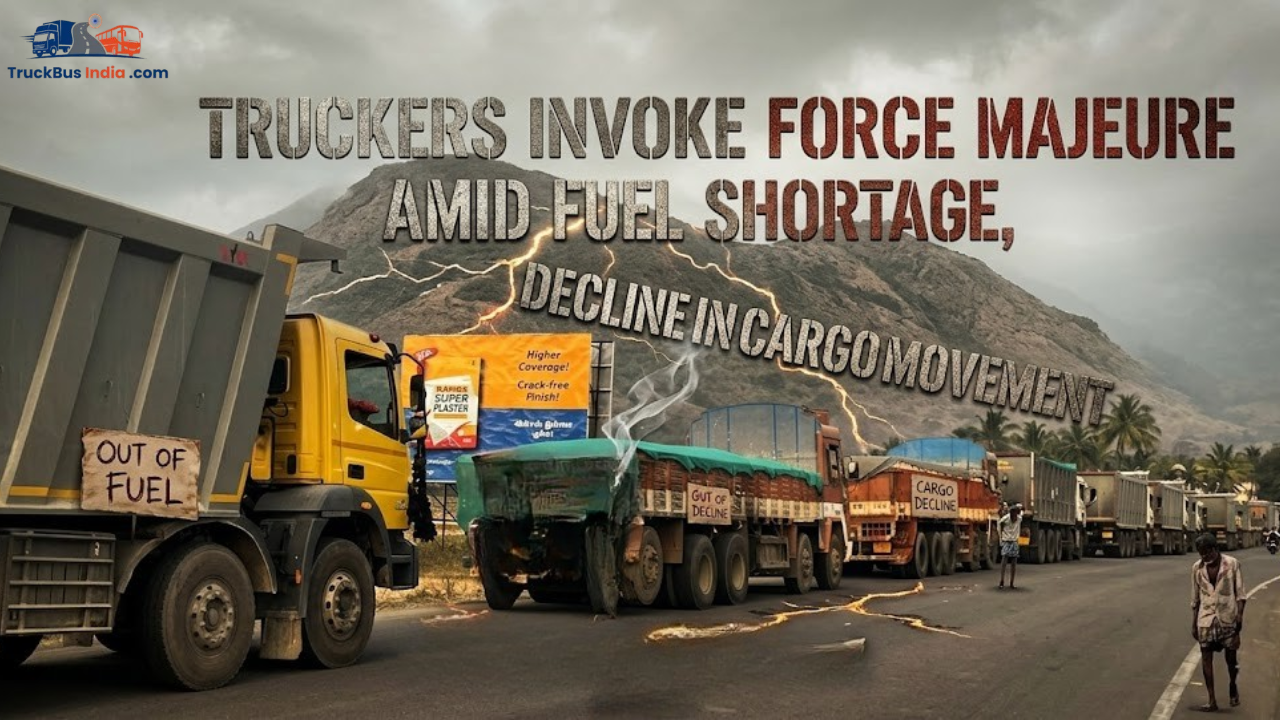
India’s trucking sector is facing a severe operational crunch, with transporters invoking a force majeure-like situation due to fuel shortages, supply chain disruptions, and declining cargo volumes.
In an advisory issued on March 24, the All India Transporters’ Welfare Association urged customers and trade partners to temporarily suspend long-term freight contracts and shift to spot pricing until at least April 30.
Transporters Push for Spot Pricing Amid Cost Pressures
The industry body has asked stakeholders to keep contracted freight rates in abeyance and allow shipments to move on mutually agreed spot market rates.
Transporters say fixed freight contracts no longer reflect the current volatile cost environment. Rising fuel expenses, operational inefficiencies, and fluctuating demand have made existing agreements unsustainable.
The association has also demanded immediate clearance of overdue payments along with temporary financial support to ease the growing liquidity stress among fleet operators.
Fuel Shortages and Cargo Slowdown Hit Operations
The trucking industry is grappling with multiple disruptions simultaneously. Diesel shortages at several locations have resulted in dry fuel pumps and increased vehicle idle time. The withdrawal of credit sales by fuel stations has further strained working capital for operators.
At the same time, a sharp decline in cargo movement from ports and industrial clusters has disrupted route economics. This has reduced round-trip viability, often forcing trucks to return empty, significantly impacting profitability.
Shortages of essential workshop inputs, including gas cylinders, have also delayed vehicle repairs and maintenance cycles, lowering fleet utilisation and trip frequency.
Industry Warns of Wider Supply Chain Impact
Transporters say the combined effect of these challenges has eroded margins and reduced fleet availability. Driver shortages, uncertain schedules, and longer turnaround times are further affecting operational efficiency.
The industry has warned that without immediate intervention, service reliability across major trade routes could weaken, leading to broader supply chain disruptions.
The proposed shift to spot pricing is being seen as a temporary but necessary step to align freight rates with ground realities and ensure continuity of cargo movement.