
News List
Truck Cabin Safety Standards Transform Indian Logistics

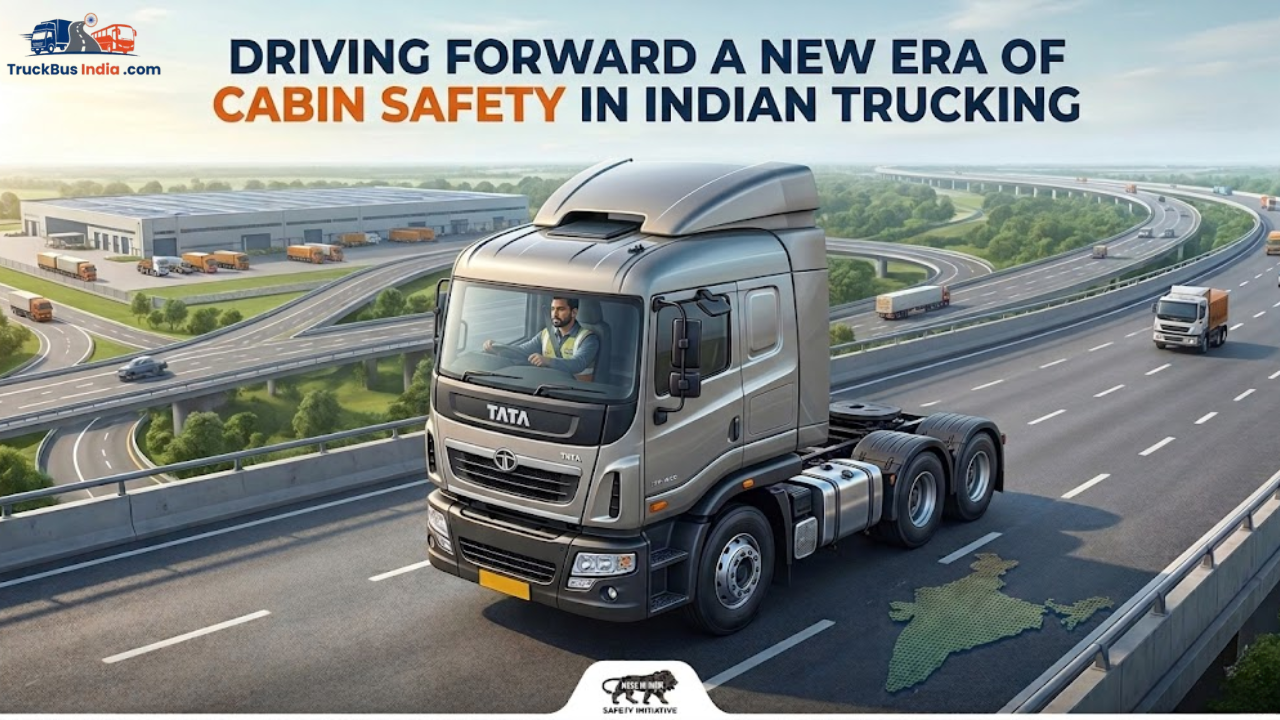
India’s logistics network relies heavily on highways, where trucks carry the majority of goods across the country. Traditionally, performance metrics like payload, mileage, and engine power defined truck value. However, evolving road infrastructure and faster highway corridors are shifting industry priorities toward one critical factor: driver safety inside the cabin.
This change is redefining how commercial vehicles are designed, evaluated, and purchased in India.
Rising Importance of Cabin Safety
Shift in industry priorities
The trucking ecosystem is moving from pure efficiency metrics to safety-focused decision-making. Fleet owners are now considering cabin strength as a key purchase factor.
Increasing highway risk exposure
Higher speeds on modern expressways have increased crash severity, making structural protection inside the cabin more critical than ever.
Business continuity concerns
Accidents not only cause human loss but also disrupt logistics operations, leading to delayed deliveries and financial setbacks.
Understanding ECE R29.03 Standard
Global crash safety benchmark
ECE R29.03 is a strict international regulation that evaluates truck cabin structural integrity during severe accidents.
Multi-layer structural testing
The standard includes frontal impact, roof strength, and rear wall load tests to simulate real crash conditions.
Focus on driver survival space
Its primary goal is to ensure the cabin maintains survival space for the driver during high-impact collisions or rollovers.
Why India Needs Stronger Cabin Safety
High accident vulnerability
India records a significant number of highway accidents involving commercial vehicles, increasing the need for better cabin protection systems.
Faster and longer routes
Modern logistics operations involve high-speed travel over long distances, increasing impact forces during collisions.
Structural safety demand
Cabin strength is becoming essential for reducing fatalities and ensuring operational reliability in long-haul transport.
Tata Motors’ Portfolio Safety Upgrade
Full-range compliance approach
Tata Motors Commercial Vehicles has upgraded models like Prima, Signa, Ultra, and Azura to meet ECE R29.03 standards.
Industry benchmark shift
This portfolio-wide adoption raises the baseline for safety expectations across India’s trucking industry.
Real-world engineering focus
The company has incorporated Indian crash data into design improvements, strengthening cabin performance beyond minimum global requirements.
Conclusion
The adoption of ECE R29.03 standards marks a major shift in India’s trucking ecosystem, where safety is becoming as important as performance and efficiency. With manufacturers upgrading entire portfolios and focusing on real-world crash scenarios, the industry is moving toward a future where driver protection is a fundamental design principle, not an optional feature.