
News List
SAE Conference Highlights Growing Focus on ADAS Adoption in India

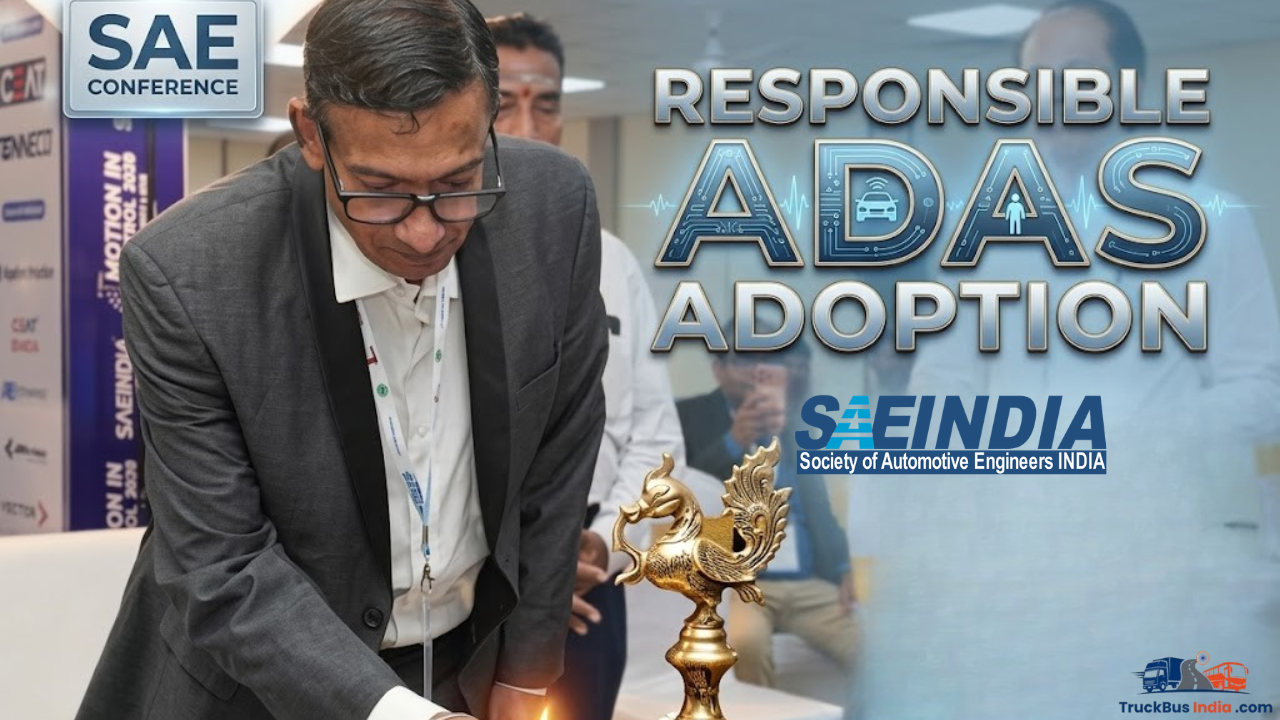
The automotive sector in India is undergoing a major transformation with increasing emphasis on safety, automation, and intelligent mobility systems. This shift was at the centre of the SAE India – Northern India Section’s 5th edition of “Motion in Control 2026”, a two-day conference dedicated to vehicle dynamics and Advanced Driver Assistance Systems (ADAS).
Supported by leading organisations such as Maruti Suzuki, ATS, ICAT, and GARC, the event brought together engineers, researchers, and industry leaders to discuss how ADAS adoption can be accelerated in a responsible and India-specific manner. The discussions highlighted that while global automotive markets are rapidly integrating ADAS technologies, India’s diverse and complex road conditions demand customised engineering approaches rather than direct technology transfer.
India’s shift from passive to active safety systems
Experts at the conference emphasised that India is steadily moving from passive safety features toward active and preventive safety systems. Regulatory frameworks such as BNCAP are encouraging manufacturers to adopt advanced safety technologies, while testing institutions like ARAI, ICAT, NATRAX, and GARC are strengthening validation capabilities for real-world Indian driving conditions.
Vehicle Dynamics and Safety Engineering Challenges
Speakers underlined that implementing ADAS in India is not just a technology upgrade but a complex engineering challenge. Indian roads present unpredictable traffic patterns involving two-wheelers, pedestrians, and mixed vehicle behaviour, making standard global ADAS systems less effective without adaptation.
Dr. A. S. Ramadhas from GARC highlighted the importance of India-specific testing infrastructure, including advanced EMI/EMC laboratories and ADAS validation systems for braking and steering performance. He noted that such facilities are critical for building reliable safety systems suited to Indian environments.
Balancing comfort, control and safety
Dr. V. Vikraman of Renault Group India explained that vehicle dynamics in ADAS-equipped vehicles requires balancing ride comfort with safety performance. He noted that Indian conditions demand unique calibration strategies, making local engineering expertise essential for effective system integration.
Industry Outlook and Component-Level Transformation
The conference also explored how ADAS adoption is reshaping the automotive components ecosystem. Industry leaders pointed out that nearly 90 percent of passenger vehicles are expected to feature ADAS technologies by 2030, supported by a strong projected growth rate in the sector.
Mr. R. Balakrishnan of Rane (Madras) Limited highlighted that ADAS integration is influencing braking systems, electronic steering, and other core vehicle functions. He added that component manufacturers are increasingly aligning their portfolios with intelligent mobility requirements.
Rising role of AI and predictive safety systems
Speakers also noted that artificial intelligence and data-driven systems will play a major role in the next phase of ADAS development. These technologies are expected to improve predictive safety, reduce human error, and enhance real-time decision-making capabilities in vehicles.
Demonstrations and Future Roadmap for ADAS in India
The two-day event also included technical sessions and live demonstrations, including track-based ADAS testing showcased by GARC. These demonstrations helped participants understand real-world validation techniques and the importance of controlled testing environments for safety systems.
Experts from Maruti Suzuki, Renault Nissan Technology Centre, Mahindra & Mahindra, and ZF India discussed future mobility trends and the need for collaborative development between OEMs, suppliers, and research institutions.
Building a responsible adoption ecosystem
In the concluding discussions, industry leaders stressed that responsible ADAS adoption in India will depend on stronger testing ecosystems, improved road safety awareness, and engineering-led innovation tailored to local conditions. The conference reinforced that the future of mobility in India will rely on a balanced approach combining technology, regulation, and practical road realities.