
News List
Tata Ace EV 1000 vs Euler Turbo EV 1000: Full Comparison

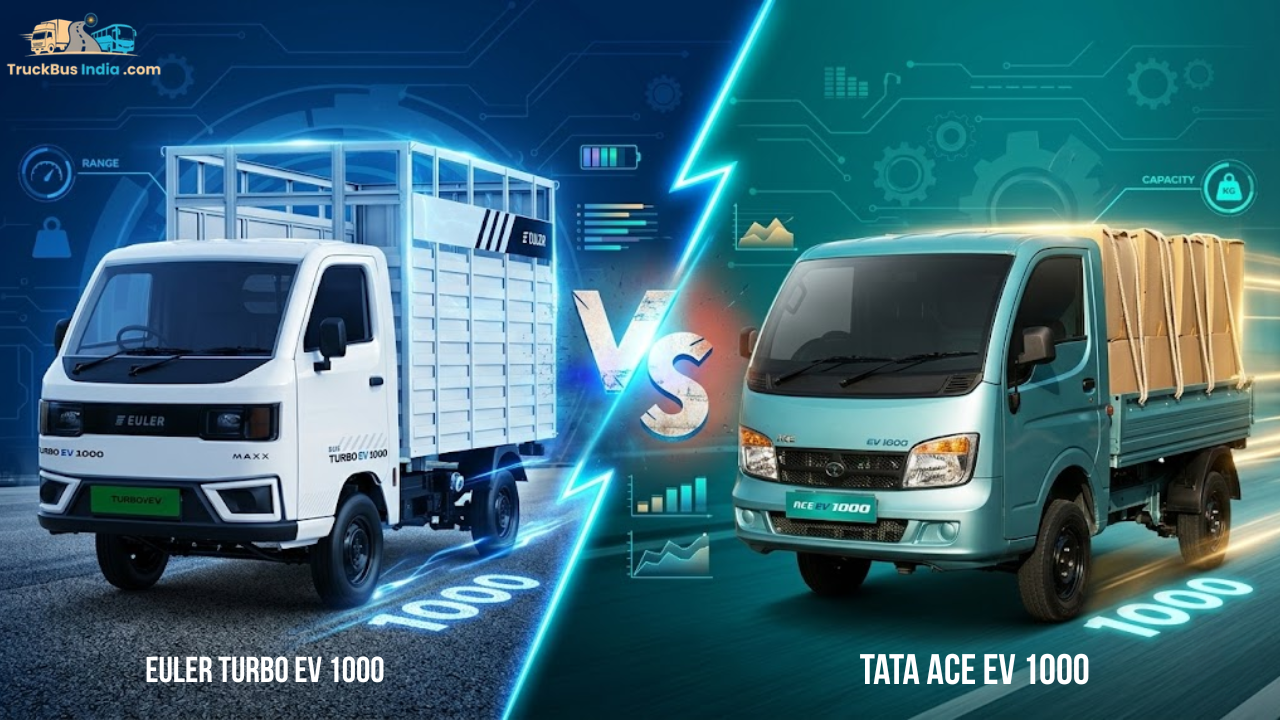
The Indian commercial electric vehicle sector is growing rapidly, and fleet operators are paying close attention to the Tata Ace EV 1000 and Euler Turbo EV 1000. Both models are shaping the future of last-mile delivery and intra-city logistics. According to recent data, India’s electric vehicle sales grew by 15.68 percent, reflecting a shift in business demand rather than trend chasing. Companies are increasingly relying on electric commercial vehicles to manage costs, improve efficiency, and reduce emissions.
This detailed comparison highlights specifications, battery performance, payload capacity, chassis strength, charging options, pricing, and market positioning, helping businesses make informed decisions when investing in electric fleets.
Battery Capacity and Range
Battery size is a key factor in determining daily productivity for commercial vehicles. The Tata Ace EV 1000 comes with a 21.3 kWh battery, providing a certified range of around 161 km. This is suitable for predictable intra-city routes and short-distance deliveries. Its battery is designed to perform reliably in controlled city loops and works well for fleets with depot-based charging setups.
The Euler Turbo EV 1000, on the other hand, features a 19.2 kWh liquid-cooled battery. While slightly smaller in capacity, the Turbo EV 1000 compensates with higher efficiency and thermal management. The liquid cooling system ensures battery stability even in Indian summer temperatures, which frequently exceed 45°C in many regions. The certified range of up to 180 km gives fleet operators flexibility to manage longer urban routes without interruptions. Businesses benefit from operational continuity, making the Euler Turbo EV 1000 well-suited for dense delivery clusters and high-frequency stops.
Battery performance also influences charging speed and downtime. The Turbo EV 1000 supports fast charging using CCS2 technology, adding 50 km of range in just 15 minutes. This is ideal for businesses that need rapid turnaround times. Tata Ace EV 1000 supports regular AC charging, which is effective for depot-based fleets but may limit flexibility for continuous urban operations.
Payload Capacity and Chassis Strength
Both vehicles offer a payload capacity of 1000 kg, but the difference lies in chassis design and torque delivery. Tata Ace EV 1000 continues the trusted Ace platform, which many fleet operators are familiar with. It is well-suited for transporting goods in urban environments and has proven reliability. Its torque and gradeability are designed for city terrain, offering steady performance for scheduled delivery operations.
Euler Turbo EV 1000 is built with electric-first engineering in mind. The chassis is designed to handle commercial EV stress cycles, ensuring stability and strength under full load. Torque response at low speeds is optimized for stop-start traffic conditions, giving drivers more control while maintaining delivery efficiency. High-tensile steel construction allows the frame to withstand repeated heavy loads without warping, improving longevity and reducing maintenance costs. This focus on commercial EV performance highlights Euler Motors’ commitment to electric-only vehicles rather than splitting attention between diesel and electric platforms.
Charging Ecosystem and Fleet Integration
Charging infrastructure and fleet integration are critical considerations for commercial EV operations. Tata Ace EV 1000 supports standard AC charging, making it suitable for fleets that charge vehicles overnight at depots. This model fits businesses with predictable routes and scheduled charging windows.
Euler Turbo EV 1000 offers advanced features, including fast charging compatibility and connected telematics. Fleet managers can monitor battery health, range, and vehicle status in real time. This integration allows businesses to optimise route planning, reduce downtime, and maximise operational efficiency. The ability to track data remotely also supports predictive maintenance, ensuring higher uptime for busy delivery operations.
Smart fleet management and digital integration are increasingly important in India’s growing electric commercial vehicle market. Euler Motors focuses on connected solutions, allowing operators to manage larger fleets efficiently and take advantage of urban logistics trends.
Market Positioning and Business Use
Tata Ace EV 1000 builds on Tata’s well-established commercial vehicle network, with a wide service reach across India. Brand familiarity and dealer presence provide comfort for fleet buyers who value long-term reliability and access to after-sales service. This model is ideal for businesses transitioning to electric vehicles while maintaining traditional operational frameworks.
Euler Turbo EV 1000 represents a new-age approach to commercial EVs, designed for last-mile delivery, e-commerce operations, and institutional fleets. It caters to businesses looking for electric-first engineering, advanced battery management, and real-time fleet intelligence. Operators choosing Euler Turbo EV 1000 benefit from innovation and modern commercial EV design, allowing them to reduce operational costs while improving efficiency.
Both models reflect different philosophies: Tata focuses on legacy adaptation into electric vehicles, while Euler Motors emphasises electric-first commercial engineering and integrated fleet solutions. Choosing the right vehicle depends on route patterns, fleet size, and operational priorities.
Pricing and Government Incentives
Price remains a key factor for fleet investment decisions. The Tata Ace EV 1000 is priced at approximately Rs. 11.40 lakh. Government subsidies can lower the effective cost for eligible buyers, making it a competitive option for established fleets.
Euler Turbo EV 1000 comes at around Rs. 5.9 lakh, offering a lower entry point with advanced features like a liquid-cooled battery and connected telematics. Lower upfront costs and reduced operational expenses make it appealing for small to medium fleet operators seeking electric solutions.
When calculating total cost of ownership, businesses should consider not only the purchase price but also savings in fuel, maintenance, and operational efficiency. Electric commercial vehicles, especially models like Euler Turbo EV 1000, provide significant advantages in total logistics costs and long-term sustainability.
Conclusion
Comparing Tata Ace EV 1000 and Euler Turbo EV 1000 highlights the diversity of options available in India’s electric commercial vehicle market. Tata Ace EV offers brand familiarity, established service networks, and reliable city performance. Euler Turbo EV 1000 provides longer range, liquid-cooled battery stability, real-time fleet management, and lower purchase costs.
Fleet operators transitioning to electric vehicles must evaluate their route demands, payload requirements, and fleet management preferences. Both models demonstrate that electric commercial vehicles are no longer a niche option, they are becoming the standard for efficient, cost-effective, and environmentally friendly operations across India. Businesses adopting these vehicles gain flexibility, reliability, and long-term profitability in a rapidly evolving market.
FAQs
How does battery warranty differ between Tata Ace EV and Euler Turbo EV 1000?
Battery warranties vary based on kilometres or years. Fleet operators should review official documents and capacity retention guarantees to understand coverage.
Which vehicle is better for inter-city short-haul routes?
Inter-city operations require higher range and thermal stability. Euler Turbo EV 1000 is better suited for longer urban routes, while Tata Ace EV 1000 works well for predictable city loops.
How do government incentives apply to commercial EVs in India?
Subsidies and incentives vary. Operators should verify eligibility and apply through official government portals to reduce purchase costs.
Can fleet managers track vehicle health and battery data remotely?
Yes, Euler Turbo EV 1000 integrates connected telematics, allowing real-time monitoring of fleet performance and predictive maintenance.