
News List
Maharashtra Directs Traffic Police on E-Challan Payments

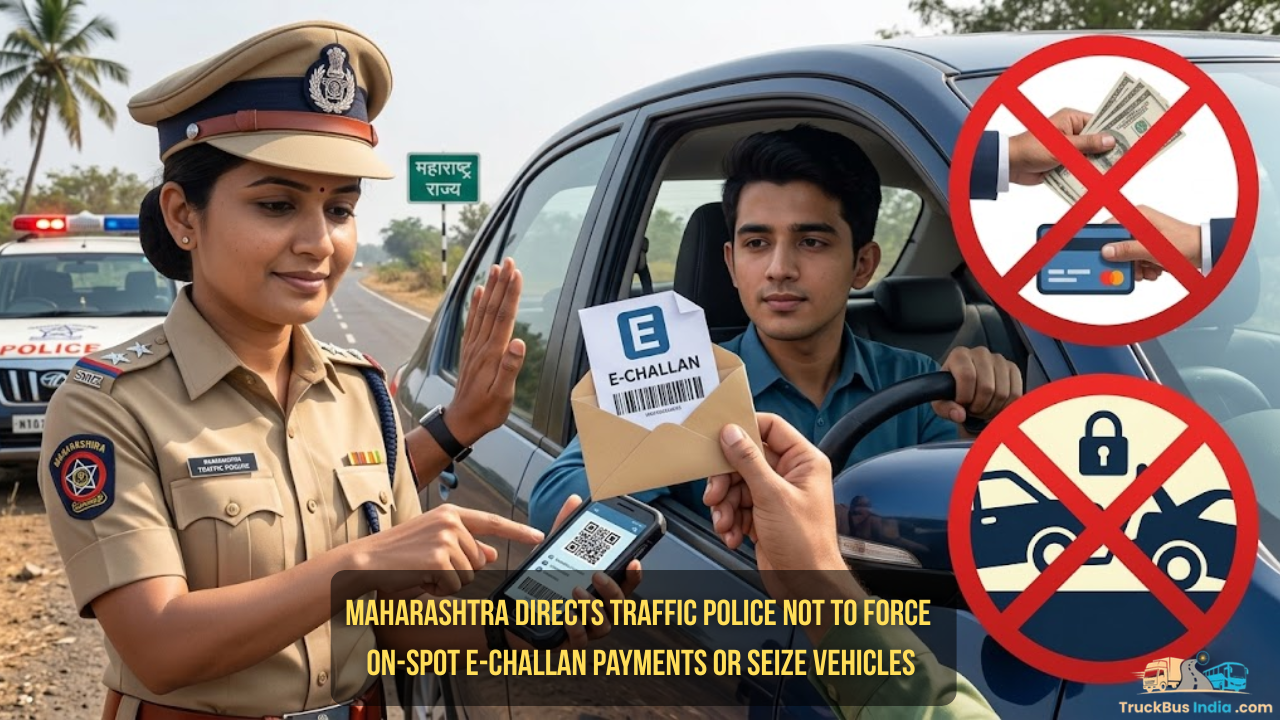
The Maharashtra State Traffic Police has issued a state-wide directive instructing officers not to force motorists to pay pending e-challans on the spot and not to seize vehicles without a court order. The move comes after repeated complaints from transport unions regarding alleged harassment and coercive recovery practices by traffic personnel.
Circular Issued Following Transport Union Complaints
The circular, issued on March 4, 2026, by Pravin Salunkhe, Additional Director General of Police (Traffic), was sent to police commissioners and district superintendents across Maharashtra. It instructs officers to:
- Accept e-challan payments only when motorists choose to pay voluntarily
- Avoid coercing drivers during roadside inspections
- Maintain professional and courteous behaviour at all times
The directive emphasizes that traffic personnel do not have the authority to compel on-the-spot payments and that vehicles cannot be detained as leverage for fines.
Vehicles Cannot Be Seized Without Legal Orders
The circular clarifies that vehicles cannot be seized solely due to unpaid e-challans. Any seizure must comply with legal procedures and be supported by orders from a competent court. Officers are prohibited from detaining vehicles or withholding documents to pressure drivers into immediate payment.
Complaints Raised in High-Level Meeting
The instructions followed a high-level meeting on March 2, chaired by Transport Minister Pratap Sarnaik, where transport associations highlighted instances of:
- Unjustified vehicle stops
- Detentions for extended periods
- Demands for immediate e-challan payments
- Requests for unofficial cash settlements
- Threatening or abusive behaviour
A planned nationwide strike by transport groups on March 5 prompted swift government action.
Enforcement and SOP Compliance
The circular reminded officers that a Standard Operating Procedure (SOP) for e-challan recovery and vehicle seizure has been in place since November 11, 2024. Senior officers are directed to monitor compliance strictly, ensuring traffic enforcement remains within legal boundaries. Disciplinary action will be taken against any officer found violating the guidelines.
The directive aims to enhance public trust in traffic enforcement while ensuring motorists’ rights are protected.