
News List
Europe’s Commercial Fleets Transform Through AI and Data

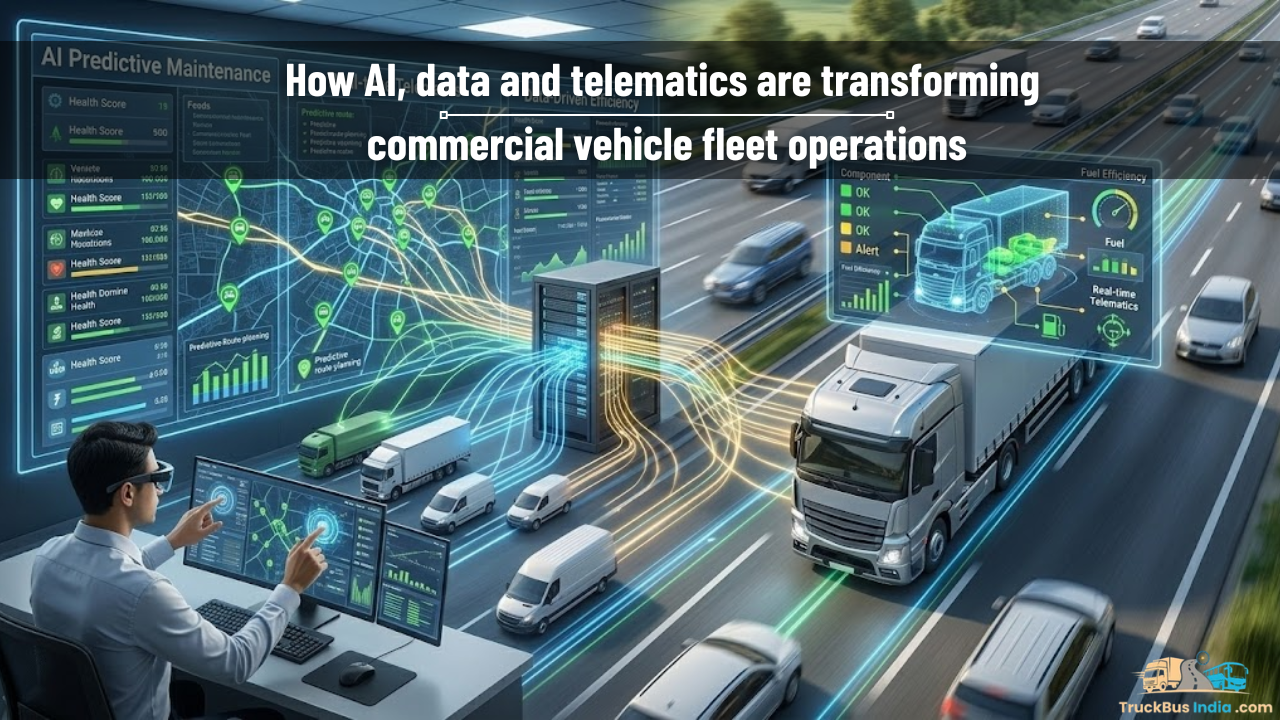
European light-commercial vehicle (LCV) fleets are undergoing a major technological transformation as artificial intelligence, telematics, and data analytics reshape operations. At the Commercial Fleets Summit 2026, industry leaders discussed how connected fleets can improve efficiency, predict maintenance, and support electrification strategies.
With multiple data sources, software systems, and AI tools, fleets can now go beyond simple vehicle tracking, moving into intelligent decision-making and predictive management.
Unified Fleet Ecosystem Drives Efficiency
Experts emphasised that a connected fleet is more than vehicles, it’s about integrating telemetry, maintenance, financing, and operational planning. According to Jeronimo Saiz, head of fleet operations at Kia Europe, combining these elements allows businesses to optimize energy usage, route planning, servicing schedules, and forecasting, reducing costs and increasing uptime.
Yet, most large fleets are still not fully integrated. AI and telematics hold the promise of automating routine tasks, freeing managers to focus on strategic decisions while enhancing productivity.
AI-Powered Fleet Management
Companies such as Geotab are deploying AI agents that aggregate siloed data from multiple systems. Fabian Seithel, Geotab AVP of Sales and Business Development EMEA, explained that these agents can monitor, analyse, and act on fleet data while supervised by managers, enabling smarter maintenance, risk prediction, and operational decisions.
AI applications are already reducing unnecessary downtime. Thomas Herzog of MAN Truck & Bus AG noted that by minimising routine stops, fleets can maximise vehicle utilisation while maintaining safety standards. Video-based AI coaching is also being used to guide driver behaviour in real-time, improving safety and efficiency.
From Data Collection to Intelligence
Industry leaders stress that fleets are sitting on a “goldmine of data”, yet extracting value remains a challenge. Danielle Walsh, CEO of Clearly, highlighted the need to go beyond dashboards and spreadsheets: actionable insights should guide asset replacement, maintenance timing, and operational policies rather than rely on assumptions.
A fully connected system enables fleet managers to make data-driven decisions, balancing cost, safety, and environmental performance while optimising return on investment (ROI).
Electrification Through Simulation
Electrification remains a priority for many European fleets, but adoption faces operational hesitations. Alfred Richard, CEO of Nelson, emphasised the role of digital twins in simulating fleet scenarios, including driver profiles, charging requirements, and route patterns.
By running these simulations, fleets can identify which vehicles and drivers are suitable for EV deployment, bridging the gap between ESG ambitions and day-to-day operations. Richard warned that there is no “one-size-fits-all” solution—fleet electrification must be tailored to driver, route, and operational context.
The Future of Connected Fleets
Connected fleets are evolving into a more autonomous and intelligent phase, where managers retain oversight while AI handles routine monitoring. Those who integrate unified data sources and predictive tools effectively are likely to outperform competitors, with higher efficiency, lower costs, and smoother adoption of electrification.