
News List
Cleaning India’s Air May Require Phasing Out Diesel and Old Vehicles

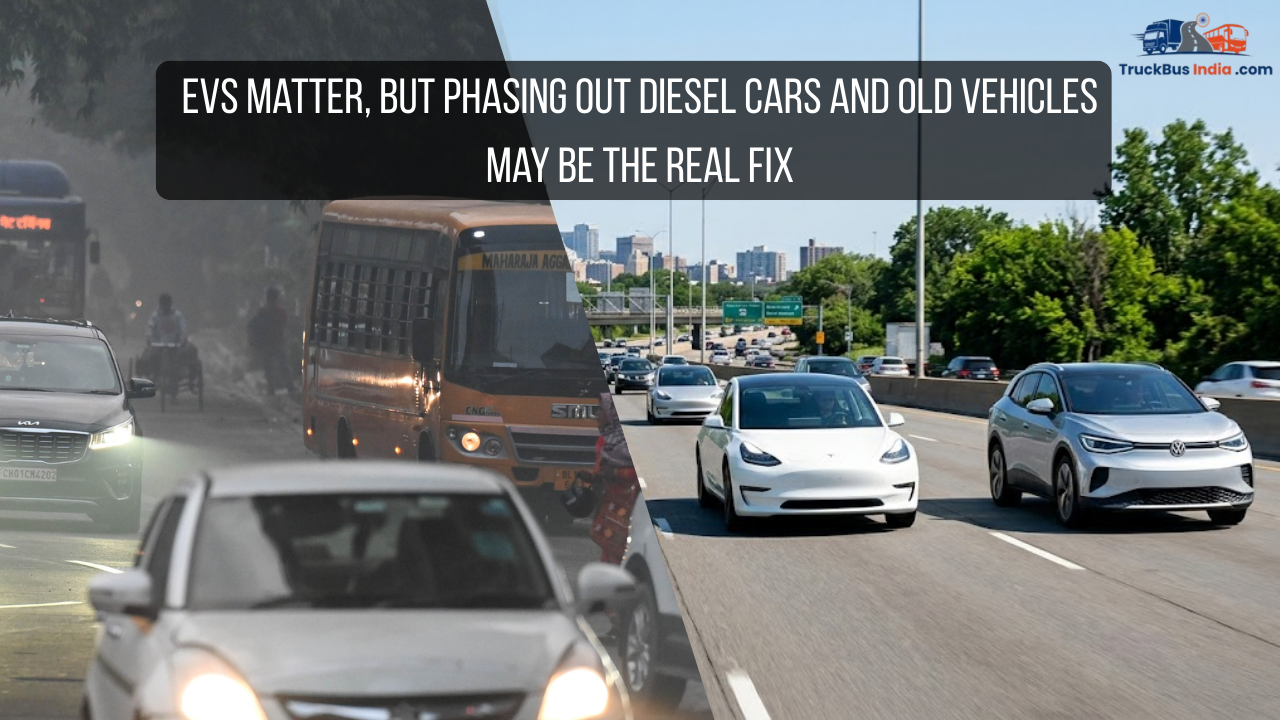
India continues to face a serious air pollution crisis, especially in major urban centres. Despite decades of policy discussions and legal interventions, the issue remains a persistent public health emergency. Experts believe that while electric vehicles are important for the future, addressing older diesel vehicles and outdated emission standards could deliver faster improvements in air quality.
According to the Air Quality Life Index developed by the University of Chicago, air pollution reduces the average life expectancy in India by about 3.5 years. This alarming statistic highlights the scale of the challenge policymakers must address.
Vehicular Pollution Remains a Major Contributor
Vehicular emissions are among the most significant contributors to air pollution in northern India, particularly in dense urban regions like Delhi NCR. Experts often debate the exact share of transport emissions, but most agree that road traffic plays a substantial role in worsening air quality.
Two and Three Wheelers Lead Transport Emissions
Studies indicate that two wheelers, three wheelers and trucks together contribute a large portion of transport related pollution. Research such as the Aironomics 2025 report by the Bharat Climate Forum and Dalberg suggests that nearly 80 percent of transport emissions in Delhi come from these vehicle categories.
These vehicles dominate urban mobility and logistics networks, which explains their outsized impact on pollution levels. Addressing emissions from these segments could deliver meaningful improvements in air quality across several Indian cities.
Diesel Cars Create Disproportionate Pollution
Cars may contribute less than 10 percent of overall transport emissions, but their impact is more complex when fuel type and vehicle age are considered. Diesel powered cars account for a disproportionately large share of car related emissions.
Although diesel vehicles make up only about 8 percent of the car fleet in Delhi, they generate nearly 59 percent of emissions from cars. Diesel engines release higher levels of particulate matter and harmful pollutants, which can worsen respiratory illnesses and other health problems.
Scrappage Policy Could Deliver Faster Results
One of the most effective measures suggested by policymakers is the removal of older vehicles from the road. The Government of India has estimated that properly implemented vehicle scrappage policies could reduce vehicular pollution by around 31 percent.
Replacing Old Vehicles Cuts Emissions Significantly
Older vehicles built before stricter emission standards were introduced tend to pollute far more than modern ones. Around 55 percent of cars currently on Indian roads were manufactured before the Bharat Stage VI emission standards came into effect, yet they account for about 96 percent of emissions from cars.
Replacing these older vehicles with modern BS VI compliant models can significantly reduce particulate emissions. The reduction could range from 55 to 95 milligrams per kilometre depending on the vehicle and engine type.
EV Transition Alone May Not Solve the Problem
Electric vehicles remain a key part of India’s long term decarbonisation strategy. However, experts argue that the environmental benefits of replacing a modern BS VI car with an EV are relatively small compared to removing older vehicles.
Switching from a BS VI car to an EV reduces particulate emissions by only about 4.5 milligrams per kilometre. By contrast, replacing older BS III or BS IV vehicles with BS VI models delivers far greater pollution reductions.
For cleaner air, experts suggest a multi pronged strategy. This includes phasing out diesel cars, improving vehicle scrappage systems, expanding electric buses and incentivising electric two wheelers and three wheelers. Such targeted measures could help India achieve faster improvements in urban air quality while continuing the long term transition to cleaner mobility.