
News List
Best JCB Construction Equipment for Indian Job Sites 2026

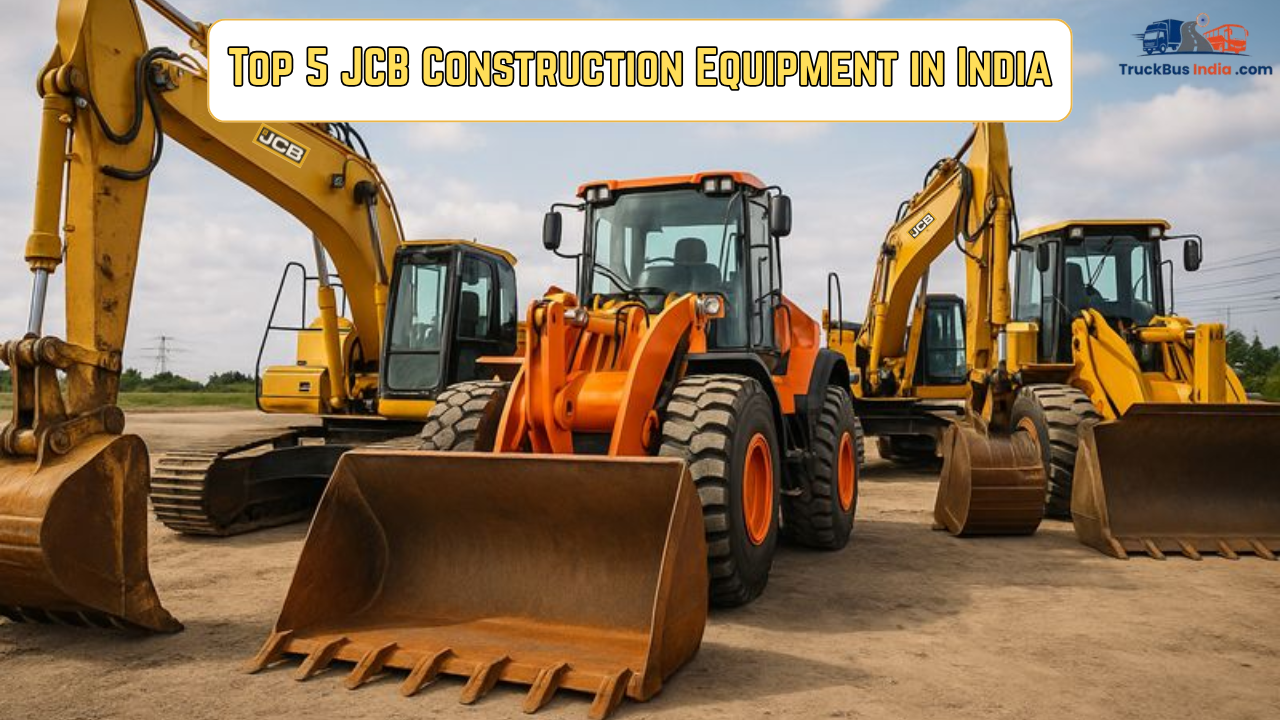
JCB machines are the preferred choice for contractors in India’s construction and infrastructure sector. Their machines offer a wide range, including backhoe loaders, excavators, skid steer loaders, and wheeled loaders, all compliant with Stage 5 emission norms, making them suitable for strict cities like Delhi and Mumbai. Online availability of spare parts and widespread after-sales service ensures smooth operations with minimal downtime. Choosing the right JCB machine improves productivity, reduces operational costs, and ensures timely completion of projects.
JCB Backhoe Loaders
JCB 4DX Backhoe Loader
The JCB 4DX is a versatile 4WD backhoe loader designed for urban construction, road repair, and utility trenching. Its 74 HP engine delivers the power needed for digging hard soil and loading aggregates. Key features include:
- Semi-automatic kick down for smooth acceleration and gear shifts.
- LiveLink 4.0 remote diagnostics for predictive maintenance.
- Enclosed cabin reducing noise and enhancing operator comfort.
Key Specifications:
- Loader Dump Height: 2.93 m
- Bucket Capacity: 0.32–0.4 m³
- Max Reach at Full Height: 930 mm
- Operating Weight: 8470 Kg
JCB Excavators
JCB 130 Excavator
The JCB 130 is a 13-ton tracked excavator ideal for road construction on uneven or sloped terrains. Its ecoMAX engine provides high torque at low speeds, improving fuel efficiency. Productivity and Economy modes allow operators to adjust fuel usage, while the auto idler feature saves fuel when the machine is idle.
Key Specifications:
- Max Operating Weight: 12,800 Kg
- Boom Length: 4.40 m
- Ground Clearance: 464 mm
- Fuel Tank Capacity: 253 L
Skid Steer Loaders
JCB 135 Skid Steer Loader
The JCB 135 is a compact 56 HP skid steer loader equipped with a Stage V CEV engine. Its 70% rear weight distribution ensures stability. Features include in-cylinder clean combustion to prevent soot build-up, HVAC system for operator comfort, and a large rear door for maintenance.
Key Specifications:
- Dump Height: 2.32 m
- Max Bucket Capacity: 0.36 m³
- Shovel Width: 1.52 m
- Fuel Tank Capacity: 84 L
Wheeled Loaders and Telehandlers
JCB 433-4 Wheeled Loader & 540-70 Telehandler
The JCB 433-4 is ideal for moving bulk materials, while the 540-70 telehandler lifts up to 1,500 kg to a height of 7 metres, reducing multiple lifting cycles. ECO and Power modes reduce fuel consumption by 15%, and ROPS/FOPS cabins ensure operator safety. The telescopic boom allows precise placement of materials on upper floors without ramps.
Key Specifications (540-70):
- Lift Capacity at Full Reach: 1,500 Kg
- Fuel Tank Capacity: 110 L
- Ground Clearance: 0.34 m
- Operating Weight: 8,498 Kg
Points to Consider When Choosing JCB Machines
- Each machine is designed for a specific construction task.
- Backhoe loaders handle digging and loading, excavators manage heavy excavation.
- Skid steer loaders perform well in compact spaces.
- Wheeled loaders and telehandlers manage bulk material movement and lifting.
- Stage 5 emission compliance allows usage in urban areas.
- Easy access to spare parts and after-sales support reduces downtime.
- Selecting the right machine ensures project efficiency, safety, and timely completion.
FAQs About JCB Construction Equipment
Q1: Are JCB machines suitable for urban projects in cities with strict emission norms?
Yes, all modern JCB machines comply with Stage 5 emission standards, making them ideal for cities like Delhi and Mumbai.
Q2: How easy is it to maintain JCB construction equipment?
JCB provides widespread after-sales support and spare parts are easily available online, ensuring minimal downtime.
Q3: Which JCB machine is best for compact job sites?
The JCB 135 skid steer loader is perfect for tight spaces due to its compact design and enhanced stability.
Q4: Can JCB telehandlers lift heavy materials to upper floors safely?
Yes, the JCB 540-70 telehandler can lift up to 1,500 kg to 7 metres, with telescopic boom and safety-rated ROPS/FOPS cabins.
Choosing the right JCB construction equipment allows contractors to optimize workflow, improve efficiency, reduce fuel and maintenance costs, and comply with emission standards, ensuring smooth operations across a variety of construction projects.