
News List
Delilah Law May Affect Indian Truckers In US

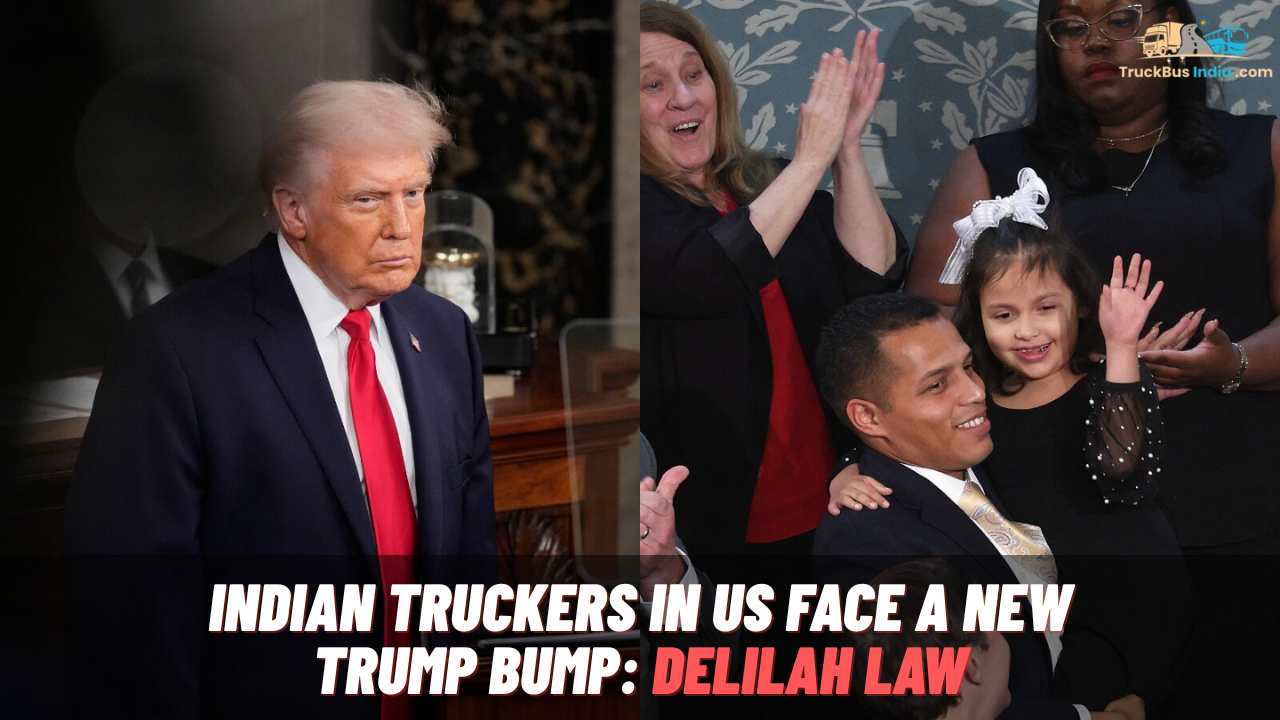
US President Donald Trump has proposed the Delilah Law, a new legislation aimed at barring illegal immigrants from obtaining commercial driver’s licences (CDLs). Announced during his State of the Union (SOTU) address, the law is named after Dalilah Coleman, a seven-year-old severely injured in 2024 when a truck driven by an illegal Indian immigrant hit her. The law is expected to have significant repercussions for Indian-origin truckers, who make up a sizable portion of the US trucking workforce.
The Dalilah Coleman Case
The law draws its name from Dalilah Coleman, who was five years old when the accident occurred. She suffered skull fractures, a broken femur, and lost the ability to speak, spending six months in hospital and a prolonged recovery period. The truck involved was driven by Partap Singh, an Indian immigrant who had entered the US illegally in 2022. Singh had been issued a CDL in California despite his undocumented status. The incident highlighted gaps in CDL regulations for non-citizens, prompting policymakers to consider stricter measures.
Policy Intent And Enforcement
Trump emphasised the importance of protecting American citizens and improving road safety. “Many illegal aliens do not speak English and cannot read basic road signs,” he said. He urged Congress to pass the Delilah Law, which would prohibit states from issuing CDLs to undocumented immigrants. The law would also enforce strict English proficiency standards for commercial drivers, a departure from previous federal memos that provided flexibility for non-English speakers.
Potential Impact On Indian Truckers
The proposed law could severely impact more than 1.5 lakh Indian-origin drivers, primarily from Punjab and Haryana, who make up roughly 20% of the US trucking workforce. Indian truckers have historically filled labour shortages in states such as California, Texas, and New Jersey. The Sikh community, in particular, has been instrumental in sustaining freight operations across the country.
Ongoing Regulatory Crackdowns
The trucking sector has already faced intensified scrutiny. In 2025, over 7,000 commercial drivers were removed from the roads, most being Indian-origin drivers. California alone announced plans to revoke 17,000 CDLs issued to foreign nationals. Visa issuance for truck drivers was also halted in December 2025, further restricting foreign drivers’ participation. Enforcement of the Delilah Law, if passed, could exacerbate the shortage of skilled truck drivers, potentially affecting logistics and supply chains across the US.
Industry Concerns And Shortage Risks
Indian truckers have long addressed driver shortages in the US, and any significant reduction in their numbers could create operational challenges. Recent high-profile accidents involving Indian-origin drivers, such as the 2025 Florida incident where Harjinder Singh killed three people, have intensified political pressure for stricter enforcement. Critics argue that while the law aims to improve safety, it may inadvertently worsen the US trucking labour crisis, which relies heavily on skilled foreign drivers.
Balancing Safety And Workforce Needs
The Delilah Law underscores the tension between safety regulations and industry demands. While it aims to improve road safety and enforce immigration laws, it may also reduce the availability of trained drivers, creating uncertainty in freight logistics. Industry analysts warn that the US trucking sector may face higher costs, delayed deliveries, and increased pressure to recruit domestic drivers to offset the shortage.
Looking Ahead
With the Delilah Law under consideration, Indian-origin truckers and the broader US trucking industry await further legislative and regulatory developments. How Congress addresses the balance between safety, immigration, and workforce needs will be crucial in determining the law’s long-term impact on both drivers and the logistics ecosystem.