
News List
Blue Energy Motors to Scale EV Freight Network Across India

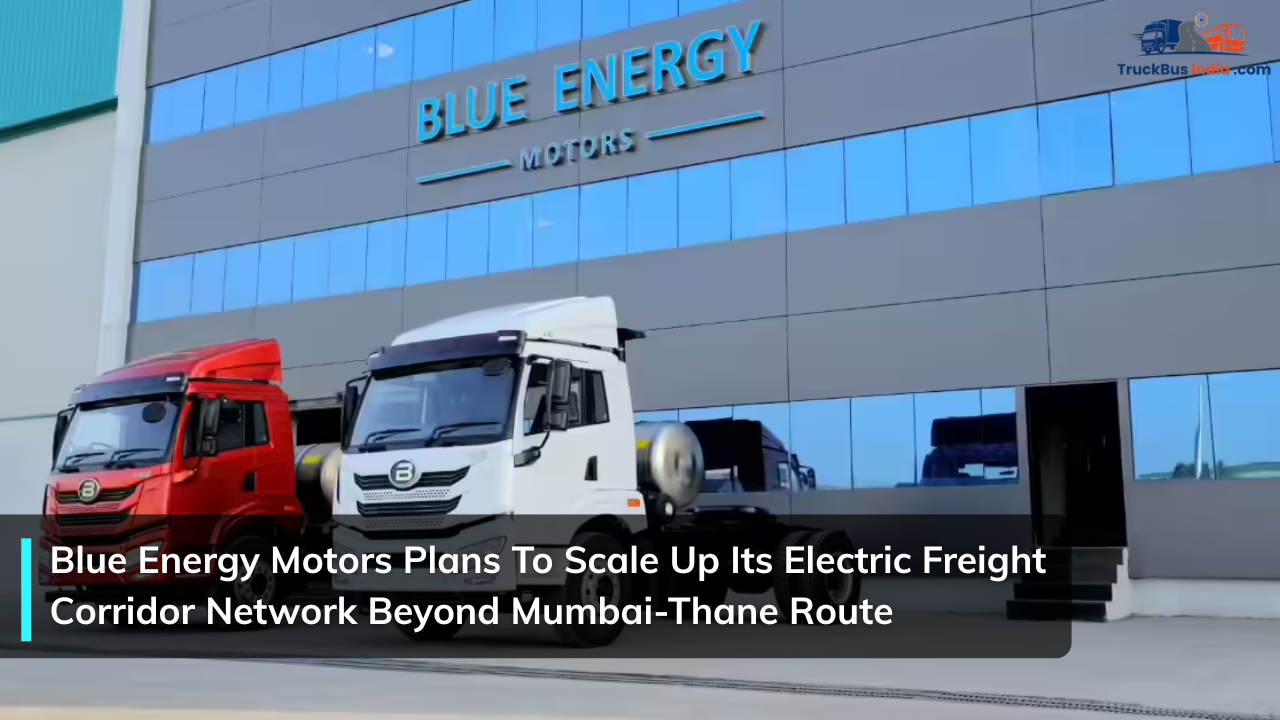
Pune-based Blue Energy Motors (BEM) is accelerating India’s shift to zero-emission logistics with plans to expand its electric freight corridors beyond the Mumbai-Pune route. The company aims to interconnect key industrial and port hubs, increase electric truck manufacturing capacity, and introduce innovative solutions to reduce fleet costs, marking a significant step in India’s EV freight revolution.
Expansion of Electric Freight Corridors
Blue Energy Motors is focusing on strategic stretches along the Golden Quadrilateral and India’s north-south and east-west highways. Over the next six to twelve months, the company plans to interconnect Mumbai, Pune, and Delhi corridors, starting with anchor clients from ports, industrial centres, and high-density logistics clusters.
Mumbai-Pune Route as a Model Corridor
The Mumbai-Pune route was selected for its connection to Mumbai’s consumer centres, Pune’s industrial belt, and the Jawaharlal Nehru Port Authority, one of India’s busiest freight hubs. Regenerative braking on the ghat sections allows 55-tonne electric trucks to recover significant energy, improving operational efficiency. Battery-swapping stations at Khalapur, Talegaon, and Chakan enable trucks to recharge in under five minutes, ensuring uninterrupted freight movement.
New EV Truck Manufacturing Plant in Maharashtra
BEM plans to invest Rs 3,500 crore to establish a clean and electric truck manufacturing facility in Maharashtra.
Expansion of Chakan Facility
Under an MOU with the Maharashtra government, the Chakan plant’s production capacity will rise from 10,000 trucks per year to 30,000 electric trucks per year. Funding includes USD 50 million already raised, with USD 30 million contributed by Zerodha co-founder Nikhil Kamath. BEM also intends to set up a battery assembly plant to support its nationwide EV operations.
Innovative Business Model Reducing Fleet Costs
BEM’s battery-free truck model provides batteries at swapping stations, with fleet operators paying only for the energy used. This lowers truck prices from approximately Rs 95 lakh to Rs 55 lakh (ex-GST). DC rapid charging is also available for 45–50 minutes, bridging the cost gap with diesel trucks while offering operational flexibility.
LNG Trucks for Routes Without EV Infrastructure
While electric corridors remain the long-term focus, BEM continues to operate over 1,200 LNG trucks. LNG remains a cost-effective alternative where electric infrastructure is still developing, offering around 40% lower per-kilometre costs and reduced emissions compared to diesel trucks.
Conclusion
With its nationwide electric freight corridor initiative, Blue Energy Motors is poised to transform India’s heavy-duty transport sector. Strategic infrastructure, cost-efficient trucks, and scalable production capacities position the company as a major player driving sustainable logistics across India.