News List
PM RAHAT Scheme Launch Provides Cashless Accident Care

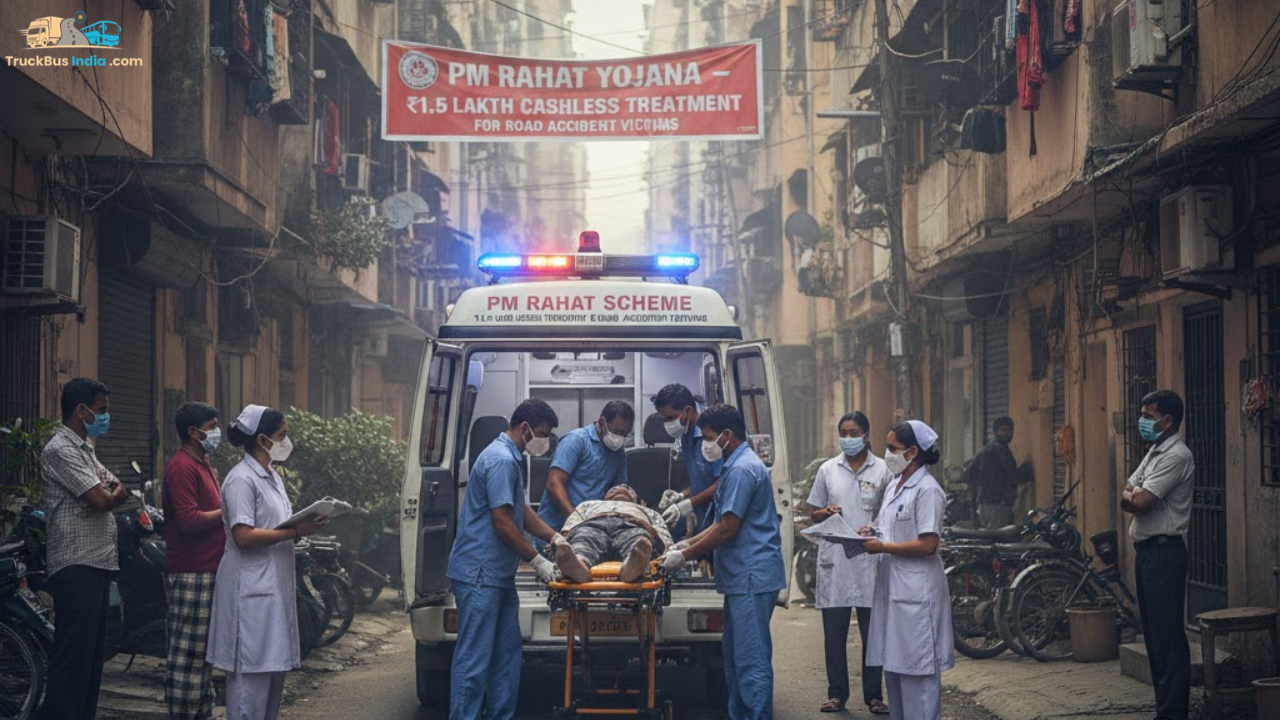
The Government of India has introduced the PM RAHAT Scheme to ensure immediate medical support for road accident victims. PM RAHAT, which stands for Road Accident Victim Hospitalisation and Assured Treatment, provides cashless hospital treatment so that accident victims can receive timely care without worrying about upfront medical bills. The initiative is part of the government’s ongoing efforts to reduce fatalities caused by delays in emergency treatment.
How the Scheme Provides Assistance
Under the PM RAHAT Scheme, accident victims who meet eligibility criteria can receive treatment worth up to ₹1.5 lakh for a period of seven days from the accident date. Hospitals and doctors provide care without demanding payment, while the costs are settled through government-linked funds and insurance channels.
The scheme is integrated with the 112 Emergency Helpline, allowing people at the accident site to immediately contact emergency services and be directed to the nearest hospital. This coordination ensures that victims receive timely treatment even in situations where immediate resources are limited.
Coverage for Different Types of Injuries
The scheme distinguishes between serious and minor injuries. Victims with life-threatening injuries are eligible for full medical care for the first 48 hours, while those with non-critical injuries can receive stabilisation care for 24 hours. After this initial period, full treatment coverage continues for up to seven days within the ₹1.5 lakh limit.
The Ministry of Road Transport and Highways confirmed that hospitals will be reimbursed through the Motor Vehicle Accident Fund. This system ensures that healthcare providers are compensated promptly, encouraging hospitals to participate actively in the scheme.
Coordination Between Hospitals and Police
Efficient implementation of PM RAHAT relies on cooperation between hospitals and law enforcement. Police verification is required to confirm the details of each accident. A digital platform links accident information with hospital records and health data, which helps in avoiding delays in treatment and claims processing.
The speed of police confirmation and hospital readiness is crucial. Quick verification allows emergency medical teams to focus on patient care, reducing critical delays that can be life-threatening.
Importance of PM RAHAT for Road Safety
PM RAHAT addresses a critical need by providing immediate medical care without upfront payment. Many road accident victims or their families struggle to arrange funds during emergencies. Cashless treatment ensures victims can concentrate on recovery rather than worrying about hospital bills.
The scheme also benefits hospitals by guaranteeing timely reimbursement, enabling them to continue providing high-quality services. Experts note that the first few hours after an accident, particularly involving commercial vehicles or heavy trucks, are crucial. Immediate intervention can save lives and prevent long-term complications.
Challenges and Considerations
Despite its potential, PM RAHAT faces several implementation challenges. Timely police verification is essential to prevent delays. Hospitals must be prepared to provide immediate cashless care, which may vary depending on local infrastructure. The scheme’s effectiveness also depends on how well the 112 helpline guides accident victims to hospitals quickly. Variations in infrastructure and support across districts could affect outcomes, and authorities are yet to provide a detailed plan for monitoring the scheme’s performance nationwide.
Conclusion
The PM RAHAT Scheme represents a major step forward in road safety and emergency care in India. By offering cashless treatment of up to ₹1.5 lakh within seven days of an accident, the government is reducing delays in critical medical care. The scheme’s integration with hospitals, police, insurance, and the 112 helpline creates a coordinated network aimed at saving lives and improving emergency response. Successful adoption of PM RAHAT could significantly improve survival rates and reduce the burden on families during road accident emergencies.