
News List
CNH India Showcases Pune-Made Farm Machinery as Mechanisation Accelerates

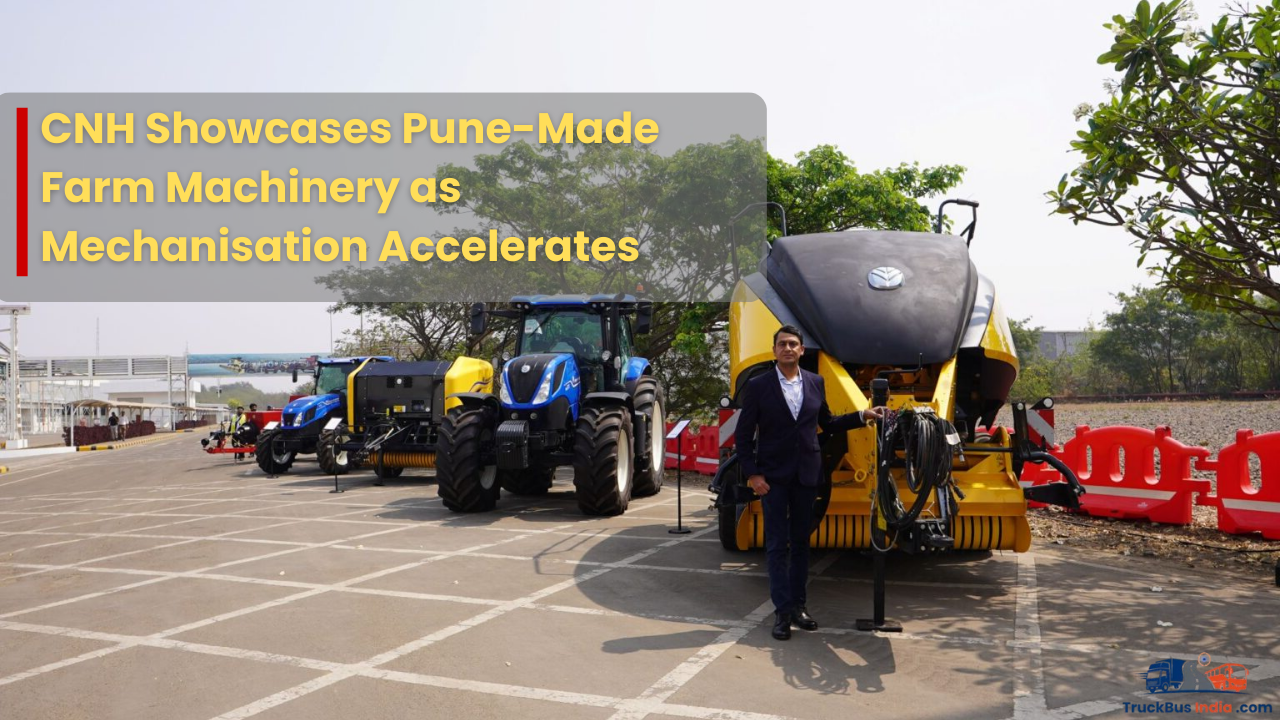
CNH India, part of global conglomerate CNH Industrial, recently showcased its range of advanced farm mechanisation equipment at its Pune manufacturing facility in Maharashtra. Spanning 280,000 square metres, the plant produces combine harvesters, sugarcane harvesters, small square balers, tractors, headers, cabs, and implements. Equipped with automated paint lines, structured assembly processes, and rigorous testing protocols, the facility supports both domestic and international markets while driving mechanisation across multiple crop types.
Mr. Narinder Mittal, President & Managing Director of CNH India Region, highlighted the plant’s role in boosting productivity, efficiency, and sustainability in Indian agriculture. He emphasised that CNH’s equipment, engineered for Indian soil and farming conditions, is fuel-efficient, reliable, and technologically advanced. The Pune plant gained early recognition in 2023 for producing India’s first TREM-V compliant sugarcane harvester, and CNH currently holds over 50% market share in sugarcane harvesters and small square balers.
CNH India’s Expanding Industrial Footprint
Beyond Pune, CNH India operates multiple plants, including Greater Noida for tractors and engines, producing 60,000 tractors last year, and Pithampur for construction equipment like excavators and skid-steer loaders. The Pune facility will soon localise fixed-chamber round balers, while a fourth plant is planned with an investment of ₹1,000 crore.
Supporting these operations are four R&D centres across India, linked to respective product lines, with the India Technology Center in Gurgaon designing products for global markets. CNH India, which entered the country in 1969 through a partnership with Escorts under the Ford brand, now exports a significant share of tractors and construction equipment, including AC-cabin tractors for the US. Export contributions are expected to exceed $500 million in the next 3–4 years.
Strategic Pivot: India as a Global Hub
Last year, CNH Industrial designated India as its fifth standalone global region, reflecting the country’s strategic importance. The company’s India strategy rests on four pillars:
- India for India: Scaling domestic market presence.
- India for Global: Exporting made-in-India products worldwide.
- Global Capability Center: Supporting international R&D and operations.
- Strategic Sourcing: Exporting India-made components for global plants.
Mr. Mittal noted that exports of components are projected to rise from $70 million last year to $200 million this year, positioning India as a global manufacturing and sourcing hub.
Driving Mechanisation and Productivity
Despite being one of the world’s largest agricultural economies, India’s mechanisation levels remain low, below 50%, and only 2–5% in critical areas like sugarcane harvesting. CNH’s advanced machinery addresses labour shortages, improves crop yields, and enables better resource management. For example, mechanised sugarcane harvesters cut cane at ground level, preserving nutrient-rich stubble and boosting secondary harvests by significantly reducing sugar losses. Rising demand for balers and harvesters is further fuelled by policies promoting clean energy and investment in compressed biogas (CBG) plants.
Technology and Market Readiness
CNH integrates telematics in tractors and balers to track performance, fuel usage, location, and machine health. Alerts from the field are monitored by command centres in Noida and Pithampur, enabling proactive support for dealers and customers. In a market shaped by seasonal demand, rainfall, and crop cycles, CNH employs advanced forecasting systems that track reservoir levels, commodity prices, and market trends to ensure efficient production planning.
Future Outlook
CNH India aims to increase tractor market share from 4.3% to selling 1 lakh tractors annually by 2030 while maintaining its leadership in harvesters and balers. With product localisation, expanding plants, and global exports, India is poised to become a critical growth engine for CNH Industrial globally, supporting the country’s journey toward modern, mechanised, and sustainable agriculture.