
News List
Delhi Introduces 500 EV Buses, Launches Panipat Service

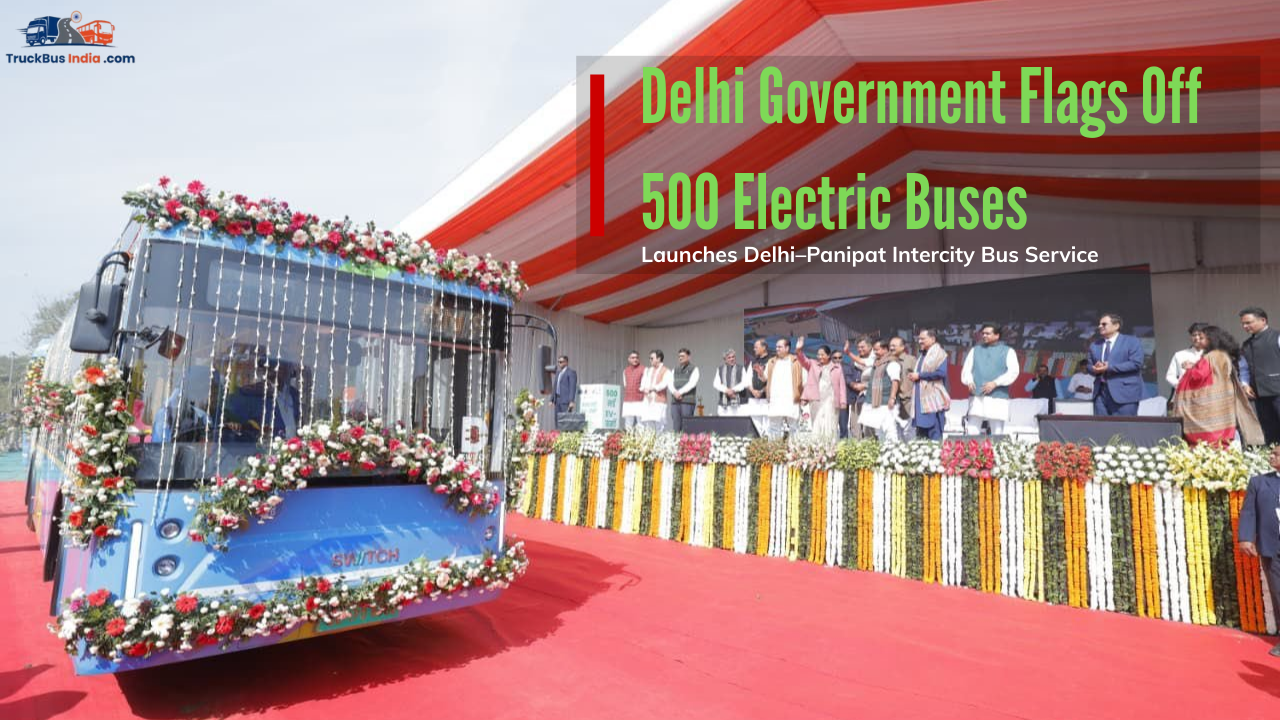
Delhi Flags Off 500 Electric Buses to Expand Green Fleet
The Delhi government has rolled out 500 new electric buses as part of a major expansion of the city’s public transport system, marking a key milestone in its push for cleaner and more sustainable mobility. The flag‑off ceremony took place on February 8, 2026, at Ramlila Maidan with Chief Minister Rekha Gupta leading the launch alongside senior leaders including BJP National President Nitin Nabin.
This significant addition has taken the Delhi Transport Corporation (DTC) electric bus fleet to over 4,000 vehicles, making it the largest electric bus fleet in India, overtaking previous leaders in other states.
A Focus on Clean Mobility and Reduced Pollution
At the event, Chief Minister Rekha Gupta highlighted the importance of electric buses in improving air quality and public transport accessibility across the national capital. She noted that these buses are air‑conditioned, low‑floor units equipped with passenger safety features such as panic buttons, CCTV cameras, and other modern amenities, aimed at enhancing commuter comfort and security.
Deliberating on the broader vision, Gupta said the government plans to increase the electric bus fleet to 7,500 by the end of 2026 and to 14,000 by 2028, reinforcing Delhi’s commitment to sustainable urban transport and pollution reduction.
Delhi–Panipat Electric Bus Service Launched
In addition to the induction of new electric buses, the government also inaugurated an electric bus service between Delhi and Panipat in Haryana. This inter‑state route is intended to serve daily commuters, office‑goers, and industrial workers travelling along the approximately 86‑kilometre corridor, which includes major stops such as the Singhu border, Murthal, and Samalkha.
Officials said that the new electric bus services on this route will provide safe, convenient, and pollution‑free travel for thousands of passengers daily, further strengthening regional connectivity while reducing dependence on fossil‑fuel buses.
Government’s Transport Strategy and Support Measures
The launch of the electric buses and intercity service coincided with celebrations marking one year of the BJP‑led government’s tenure in Delhi, with leaders highlighting progress in infrastructure development and delivery of public services.
At the ceremony, it was also announced that the government has approved a ₹1,200 crore grant for the DTC — ₹1,100 crore of which is earmarked for salaries, pensions, and statutory dues of DTC employees and pensioners, while the remaining ₹100 crore will be used for transport modernisation initiatives, including advanced traffic management systems and electric vehicle charging infrastructure.
Transport Minister Pankaj Singh added that upcoming policies will focus on last‑mile connectivity and electric vehicle growth, including draft EV and e‑rickshaw policies to further support the transition to green mobility.
Impact and Future Outlook
The induction of 500 electric buses at once is a first for Delhi’s public transport system, underscoring a rapid scale‑up of environmentally friendly transit. With the new Delhi–Panipat route and plans for extensive fleet growth, the city aims to not only improve urban and regional connectivity but also contribute to long‑term reductions in air pollution and carbon emissions.
Overall, these developments reflect the government’s strategy to modernise public transport with a future‑ready electric fleet, enhance commuter experience, and support broader climate and sustainability goals.