
News List
Horse Powertrain Eyes India Expansion with Hybrid Focus

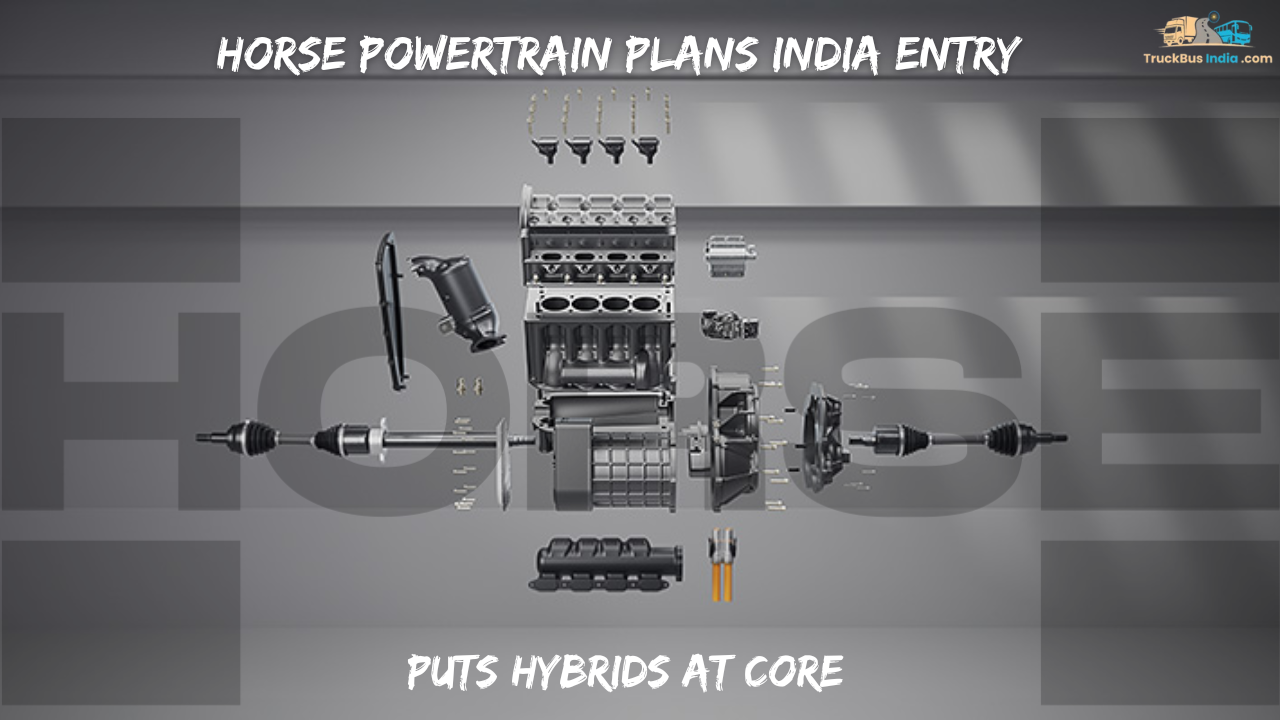
Horse Powertrain Maps Strategic India Entry Amid Hybrid Push
Global powertrain supplier Horse Powertrain, backed by France’s Renault and China’s Geely, is actively evaluating multiple pathways to enter the Indian market, identifying the country as a critical pillar of its long-term growth strategy. With revenues of €15 billion and a strong global footprint, the company is positioning India not just as a high-volume market, but as a future development and manufacturing hub for powertrain technologies.
As the global automotive industry transitions toward cleaner mobility, Horse is placing hybrid technologies at the centre of its strategy, particularly strong hybrids, plug-in hybrids, and range-extender systems. The company believes this approach aligns well with India’s evolving mobility landscape, where multiple powertrain technologies are expected to coexist rather than a singular shift to battery electric vehicles.
Localisation Key to India Strategy
Speaking to Autocar Professional, Carolina Mechai, Head of Sales and Business Development at Horse Powertrain, emphasised that localisation would be fundamental to the company’s success in India. She stated that Horse is exploring several entry routes, including partnerships with existing local players, joint development programmes with Indian OEMs, and, eventually, the possibility of setting up local manufacturing facilities with export capabilities.
Mechai highlighted that India’s role could extend beyond domestic sales. Over time, the country could serve as a development base and export hub for regions such as Europe and Latin America, given its strong engineering talent pool and cost-competitive manufacturing ecosystem.
Beyond Renault Chennai: A Stronger Horse Presence
Horse already supplies engines to Renault Group’s operations in Chennai, but the company now aims to establish a more defined and independent presence under the Horse brand. Rather than being seen merely as a backend supplier, Horse wants to be recognised as a strategic powertrain partner for Indian automakers.
The company views India as an ideal market due to its sustained demand for internal combustion and hybrid powertrains, robust cost-engineering capabilities, and increasing trend of OEMs outsourcing powertrain development. These factors align closely with Horse’s global business model.
Multi-Technology Path to Net Zero
Unlike many global suppliers betting heavily on battery electric vehicles, Horse is advocating a multi-fuel approach to achieving net-zero emissions. Mechai argued that the transition will not be uniform across all markets and that hybrids, flex fuels, efficient ICE engines, and range extenders will continue to play a significant role, particularly in emerging economies like India.
This stance mirrors India’s current policy direction, which supports a diversified energy transition rather than an abrupt shift to pure electric mobility.
Global Scale and Saudi Aramco Backing
Horse Powertrain was formed around two-and-a-half years ago after Renault and Geely carved out their powertrain operations into a joint venture. Saudi Aramco later acquired a 10% stake in the company, strengthening its financial and strategic backing.
Today, Horse operates as an independent global supplier with approximately 90,000 employees and an annual output of nearly 8 million powertrain units. Its €15 billion revenue underscores its significance in the global automotive supply chain.
Why India Fits Horse’s Strategy
India remains a key market for conventional and hybrid powertrains. Diesel still accounts for about one-fifth of passenger vehicle sales, with higher penetration in mid-size SUVs. At the same time, alternative fuels such as CNG and flex fuels are gaining traction, making India a naturally multi-technology market.
For Horse, this diversity presents a unique opportunity to deploy its portfolio across different segments, from efficient ICE engines to advanced hybrid and range-extender solutions.
Outlook: India as a Global Powertrain Hub
As Horse continues to assess its India entry strategy, the company’s long-term vision suggests that the country could become a central node in its global operations—serving not just domestic automakers, but also export markets.
If executed effectively, Horse’s India expansion could reshape the country’s role in the global automotive supply chain, reinforcing its position as a critical player in the future of hybrid and multi-fuel mobility.