
News List
Indian Auto Component Industry Shows Resilience H1FY26

India’s Auto Component Industry Rides Domestic Strength Amid Global Challenges
The first half of FY26 has highlighted the resilience of India’s auto component industry, with total turnover rising to $41.2 billion, up from $39.9 billion in the previous year—a growth of nearly 7%. The domestic market remained the backbone of this performance, supported by steady vehicle demand, favourable GST reforms, and policy measures that eased pressure across the value chain.
Exports and Trade Dynamics
While domestic demand held firm, exports faced a more complex environment. Despite logistical disruptions, raw material constraints, and weaker demand in key markets such as Europe and the US, exports still grew by about 9.3% in H1FY26, surpassing expectations. The US remains the largest export destination, followed by Germany, Thailand, Brazil, and the UAE.
However, industry leaders remain cautious about the impact of revised US tariffs, which are expected to influence H2FY26 performance. Imports also rose faster than exports, climbing 12.5% to $12.3 billion, creating a trade deficit after last year’s surplus. China led imports, followed by Japan, Germany, and South Korea, largely linked to global vehicle manufacturers operating in India.
Growing Focus on Aftermarket and New-Age Mobility
Away from factory gates, the aftermarket emerged as a strong performer, growing 9% in the first half compared to 6% in the previous year. Expansion has been driven by a growing vehicle population, increased formalisation of repair services, and deeper penetration of e-commerce platforms into smaller towns and rural areas.
Meanwhile, supplies to electric vehicles continued to rise, accounting for roughly 5% of OEM demand—a clear indication of a gradual shift toward new-age mobility solutions. Engine components, suspension and braking systems, body and chassis parts, and drive transmission continue to dominate both domestic and export sales.
Industry Leaders Express Cautious Optimism
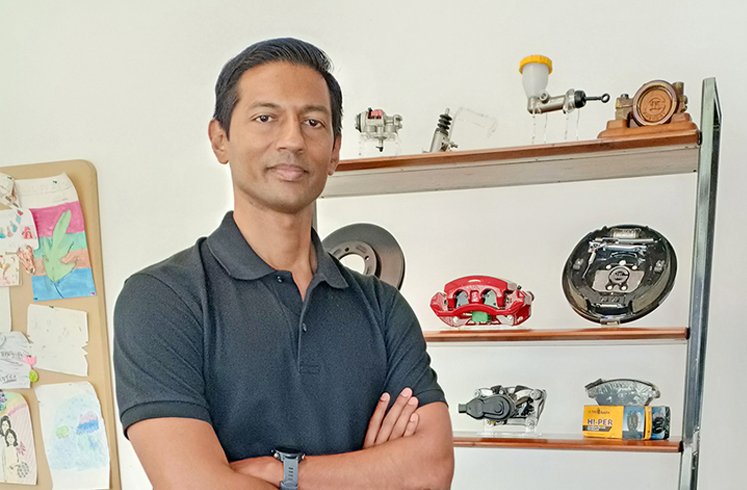
Despite global uncertainties, leaders remain confident in India’s long-term fundamentals. Mr. Sriram Viji, President-Designate of ACMA and Managing Director of Brakes India Pvt Ltd., highlighted that while fresh export awards are hard to predict, existing programs are expected to run longer due to strict supplier qualification processes.
“The depreciation of the rupee against the dollar has also provided some cushion, helping exporters manage cost pressures,” Mr. Viji noted. He emphasised that industry competitiveness is being strengthened through localisation, efficiency, and scale.
Backing Trade Agreements for Long-Term Growth
Looking ahead, Indian component makers are supportive of free trade agreements that ensure balanced outcomes. Mr. Vinnie Mehta, Director General of ACMA, highlighted that the proposed India–EU Free Trade Agreement is seen as a strategic opportunity to attract European investment, absorb advanced technologies, and enhance capabilities across the value chain.
“More than immediate trade gains, the real promise lies in long-term investment and technology flow,” he said, emphasising that balanced trade remains crucial for sustainable industry growth.
Vehicle Segments Driving Growth
Passenger vehicles continue to account for over 40% of OEM turnover, followed by commercial vehicles at nearly a quarter and two-wheelers at around 20%. Light commercial vehicles also contributed to the growth, highlighting the diversity of demand across vehicle segments.
Overall, H1FY26 demonstrates an Indian auto component industry that is navigating global headwinds with cautious optimism, backed by strong domestic demand, a growing aftermarket, and steady export performance, positioning it for sustainable growth in the months ahead.