
News List
India Proposes Mandatory AVAS for E-Rickshaws, EVs

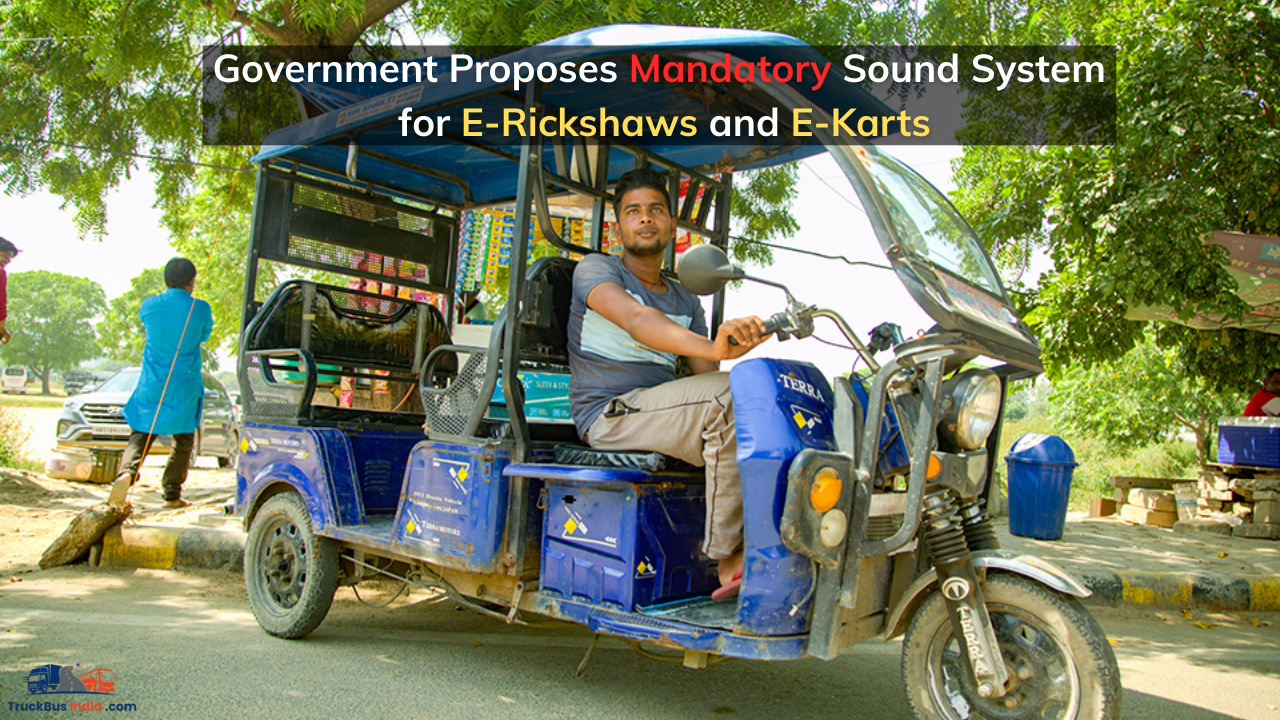
In a major move aimed at enhancing pedestrian safety, the Government of India has proposed making Acoustic Vehicle Alerting Systems (AVAS) mandatory for electric vehicles, including e-rickshaws and e-karts, starting October 2026. The draft notification issued by the Ministry of Road Transport and Highways (MoRTH) seeks to address safety risks associated with silent-running electric vehicles.
AVAS Requirement Details
Under the new proposal:
- All new electric vehicles across multiple categories must be equipped with AVAS from October 1, 2026.
- Existing electric vehicles are given a compliance window until October 1, 2027.
- The rule extends to M (passenger EVs), N (cargo EVs), L5 (three-wheeled e-rickshaws), and L7 (heavy quadricycles).
Previously, AVAS mandates were largely limited to M and N category vehicles. By including L5 and L7 categories, the government aims to ensure that e-rickshaws, e-karts, and heavy quadricycles emit audible warnings, reducing accident risks for pedestrians, cyclists, and visually impaired road users.
What is AVAS?
The Acoustic Vehicle Alerting System is a safety feature that emits sound through external speakers when an electric or hybrid vehicle is moving at low speeds or reversing. The tone adjusts with speed, alerting nearby pedestrians and road users to the vehicle’s approach. This system compensates for the lack of engine noise in electric vehicles, a factor that contributes to silent-vehicle accidents.
Why the Move Matters
Electric vehicles are environmentally friendly but often pose risks in urban settings where pedestrians rely on auditory cues. By mandating AVAS for a broader range of EVs, the government intends to reduce silent-vehicle-related accidents and enhance safety for all road users.
Public Consultation
The draft notification is now open for public feedback. Citizens and stakeholders have 30 days to submit comments or suggestions before the rule is finalized.
A Step Toward Safer EV Adoption
With India rapidly embracing electric mobility, the proposed AVAS rule demonstrates the government’s focus on balancing sustainability with safety. Once implemented, e-rickshaws, e-karts, and other electric vehicles will be required to provide audible alerts, ensuring safer streets while supporting responsible EV growth.
The move is widely seen as a timely intervention to protect pedestrians and vulnerable road users while promoting wider adoption of electric vehicles in India.