
News List
Chambal Expressway Approved to Boost North-Central India

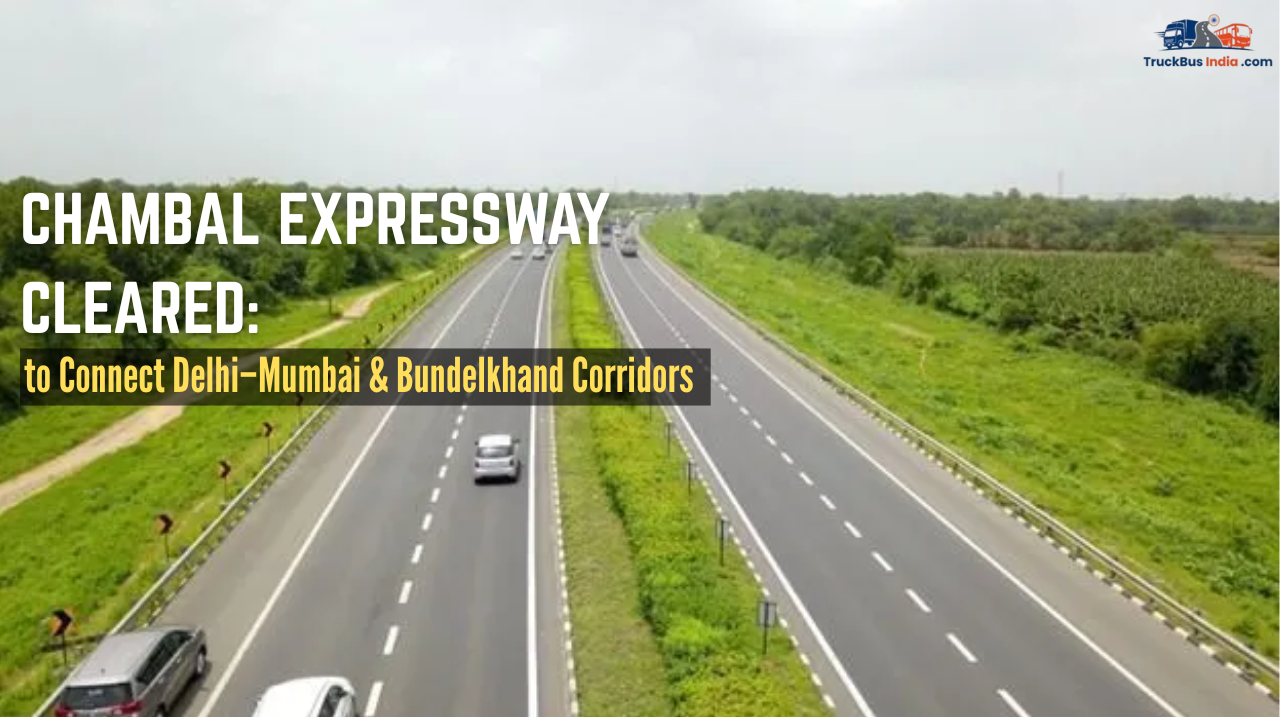
The Union government has officially approved the Atal Progress-way, also known as the Chambal Expressway, marking a major step in strengthening road connectivity across northern and central India. The corridor will link the Delhi–Mumbai Expressway with the Bundelkhand Expressway, facilitating faster travel and smoother movement of goods and services.
420 km Corridor Across Three States
Spanning approximately 420 kilometres, the expressway will traverse Rajasthan, Madhya Pradesh, and Uttar Pradesh. Designed as a six-lane, access-controlled expressway, it features restricted entry and exit points to reduce congestion and improve traffic safety. Currently, road travel along this route takes over 10 hours; the new expressway is expected to reduce travel time by nearly half, enhancing convenience for commuters and freight operators alike.
Key Towns to Benefit
Towns such as Kota, Etawah, Morena, and Bhind will see significant improvements in accessibility. Travel between Kota and Etawah, for example, could drop from over 10 hours to 5–6 hours, directly benefiting businesses in agriculture, manufacturing, and logistics by lowering transportation costs.
Project Cost and Implementation
The National Highways Authority of India (NHAI) will oversee construction, with the project estimated at Rs 14,000 crore. The development follows a mixed approach, combining widening of existing roads with new stretches to manage costs and construction challenges efficiently.
Environmental Considerations
During planning, the original route faced land acquisition and environmental concerns, particularly near forest areas, wildlife habitats, and the Chambal ravines. The alignment was revised to bypass sensitive zones and has secured the necessary environmental approvals, ensuring a balance between infrastructure development and sustainability.
Tourism and Economic Impact
Beyond transport efficiency, the expressway is expected to enhance access to historical sites, cultural landmarks, and natural attractions, supporting tourism growth in the three states. Improved connectivity will also stimulate regional economic activity, boosting sectors such as manufacturing, agriculture, retail, and logistics.
Part of India’s Infrastructure Vision
The Chambal Expressway is a key component of India’s long-term strategy to modernise transport networks, integrate economic corridors, and improve logistics efficiency. By reducing travel times and connecting major trade and tourism hubs, the expressway is poised to transform road transport across northern and central India, setting a benchmark for future infrastructure projects.