
News List
Commercial EV Charging Infrastructure: Major Problems and Challenges (2026)

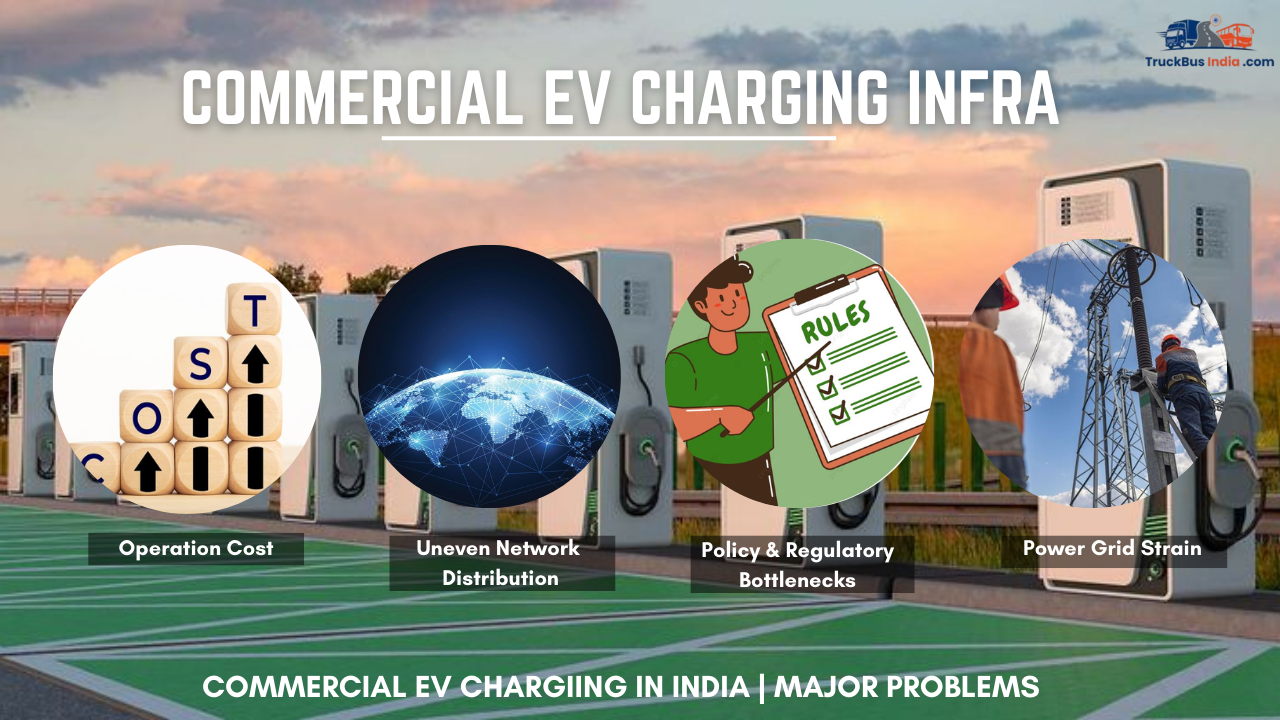
Electric vehicles (EVs) are undeniably shaping the future of mobility, offering reduced emissions and lower long-term running costs. But behind the scenes, charging infrastructure—especially for commercial and fleet EVs—is struggling to keep up with growing demand. This blog breaks down the real, data-backed problems hindering commercial EV charging deployment and what needs to change for wider adoption.
1. High Installation and Operational Costs
Building commercial EV charging infrastructure is expensive. A fast DC charger can cost ₹8–12 lakh per unit, and this doesn’t include land acquisition, grid upgrades, and operating costs. For many fleet operators, the upfront investment combined with long payback periods (often 6–8 years) is a significant deterrent. Smaller companies simply cannot absorb these costs without subsidies, making large-scale deployments less attractive.
2. Power Grid Limitations and Peak Demand
One of the biggest technical hurdles is the sheer amount of electricity needed to power commercial EV charging, especially high-power fast chargers. A 350 kW ultra-fast charger can draw as much power as 50–70 households, putting immense pressure on local grids. For fleets needing simultaneous charging of multiple vehicles, the peak demand can overwhelm existing infrastructure, leading to instability and higher electricity costs.
Grid limitations are a global concern—developers frequently struggle to get sufficient electricity capacity from utilities, forcing some to install diesel generators just to keep chargers online. This defeats the purpose of electrification and highlights the need for extensive grid modernization.
3. Lack of Standardization and Interoperability
Charging infrastructure suffers from fragmented standards and protocols. In India alone, multiple connector standards—such as CCS2, CHAdeMO, Type-2 AC, and Bharat DC-001—coexist, complicating deployment and interoperability. Without a unified national standard, charging providers must install multi-protocol chargers, increasing costs and confusing users.
There’s also no true cross-network compatibility. Users often need different apps or cards to access various charging services, fragmenting the user experience and discouraging frequent use.
4. Uneven Network Distribution
Most EV charging stations—particularly fast DC chargers—are concentrated in major urban centres or along key highways. However, peri-urban, rural, and secondary city corridors are severely underserved. This makes it difficult for commercial fleets (like logistics trucks or buses) that operate beyond city limits to plan routes without risking range anxiety or long detours for a charge.
In many Indian cities, even basic public chargers are scarce, with users reporting long waits, frequent outages, or slow charging speeds—factors that directly impact daily fleet operations and delivery schedules.
5. Land and Permitting Challenges
Finding suitable land for commercial EV charging stations is tough. Chargers require ample space for vehicle access, queuing, and safety clearances—especially for large trucks and buses. In urban freight hubs and logistics parks, land is often scarce or prohibitively expensive. Obtaining environmental clearances, utility connections, and permits can delay projects by months or even years.
6. User Awareness and System Reliability
Even where chargers exist, users and operators face real-world usability issues. Poor reliability, breakdowns, inadequate payment systems, and unclear pricing structures erode confidence in public infrastructure. Without guaranteed uptime and seamless payment interoperability, both commercial operators and individual EV owners may avoid public charging in favour of home depot charging—limiting growth.
7. Policy and Regulatory Bottlenecks
Although policies like FAME-II and state-level incentives support infrastructure build-out, regulatory complexity remains high. Responsibilities are split across multiple ministries and agencies, tariffs vary by region, and grid connection approvals are slow. Clear, consistent regulatory frameworks with predictable incentives are essential to attract sustained investment and scale infrastructure rapidly.
Conclusion: A Path Forward
Commercial EV charging infrastructure is at a critical juncture. While EV adoption grows rapidly, the underlying support systems are lagging due to cost, technical, grid, and policy challenges. Addressing these issues—through grid upgrades, standardization, unified payment systems, strategic land planning, and supportive regulation—will be central to powering the future of electric transport for fleets and businesses alike.