
News List
4×2 vs 6×4 Trucks India: Which Axle Configuration Is Right for You?

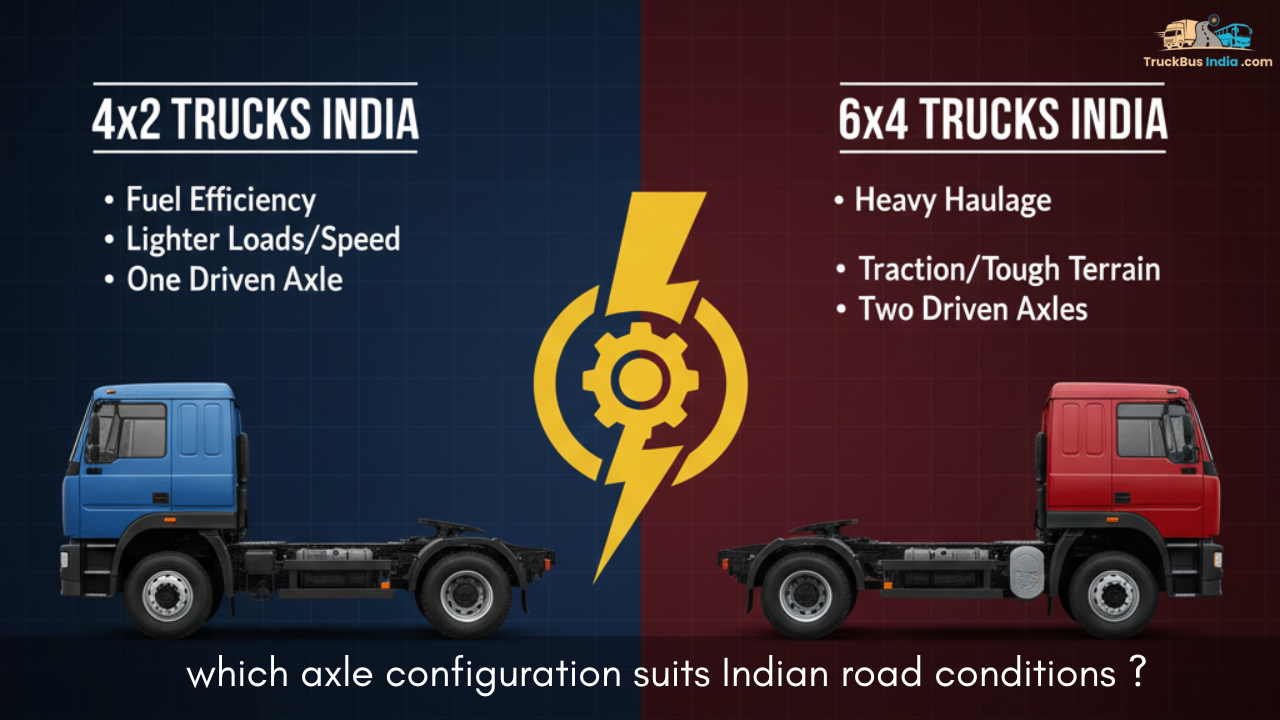
Choosing between a 4×2 or 6×4 truck axle configuration is a key decision for fleet owners and logistics planners in India. This choice affects fuel efficiency, load capability, terrain adaptability and overall operational cost. Let’s break down the differences, benefits and best use cases of each setup.
What Do Axle Configurations Mean?
- 4×2: Two axles — one front steering and one driven rear axle.
- 6×4: Three axles — one front steering axle and two rear drive axles, both powered.
The numbers indicate total wheels vs powered wheels (drive wheels). A 6×4 has greater drive capability than a 4×2, thanks to more driven wheels.
Load Carrying and Payload Capacity
4×2 Trucks
- Typically used for light to medium loads and general cargo transport.
- Axle weight distribution is straightforward but limits gross vehicle weight (GVW) capabilities compared to multi‑axle trucks.
- Suitable for GVWs up to ~16 tonnes in many cases.
6×4 Trucks
- Spread the vehicle’s weight over three axles, allowing for higher GVW limits and improved load capacity.
- Ideal for heavy‑duty applications like construction haulage, bulk freight and long‑haul heavy logistics.
- Extra axles help comply with Indian road axle load regulations and lower axle load pressures.
Terrain Suitability
4×2 Trucks
- Best suited for paved highways and urban routes where traction demands are moderate.
- Good maneuverability with a smaller turning radius, helpful for city deliveries and tight jobs.
- More fuel efficient because there’s less mechanical complexity and fewer driven axles.
6×4 Trucks
- Designed for challenging terrain — rural roads, construction zones, steep inclines and variable surfaces.
- An extra driven axle enhances traction and stability, especially under load or on uneven surfaces.
- The longer wheelbase can make tight‑space maneuvering harder than with 4×2.
Fuel Efficiency and Costs
- 4×2 configurations are generally more fuel efficient than 6×4 due to fewer driven components and reduced rolling resistance. This translates to lower operating costs when hauling moderate loads primarily on highways.
- Conversely, 6×4 trucks may consume more fuel due to extra drivetrain weight but the trade‑off is superior traction and load handling on tougher routes — a critical benefit in India’s mixed road environments.
Maintenance and Operational Considerations
- A 4×2 setup has fewer drivetrain components, leading to simpler maintenance, lower repair costs and less downtime.
- 6×4 trucks are mechanically more complex, which can mean higher maintenance costs, but they offer durability needed for heavy hauling and harsh conditions.
Choosing the Right Configuration for India
Go with 4×2 If:
- Your routes are mostly highway or urban with smooth surfaces.
- Payloads are moderate and fuel efficiency is a priority.
- Easy maneuverability and low running costs matter most.
Opt for 6×4 If:
- You operate in rugged terrains, rural areas or construction sites.
- Your loads are heavy and frequent, demanding traction and stability.
- Long‑haul and weight compliance are essential.
Conclusion
Both 4×2 and 6×4 trucks have important roles in India’s commercial vehicle sector. Your choice should align with load requirements, route conditions, operational costs and maintenance capabilities. A 4×2 is perfect for efficiency‑focused transport on highways and city roads, while a 6×4 shines in heavy‑duty applications across tougher terrain.