
News List
Why Jamshedji Tata Chose Jamshedpur: Building India’s Truck Empire

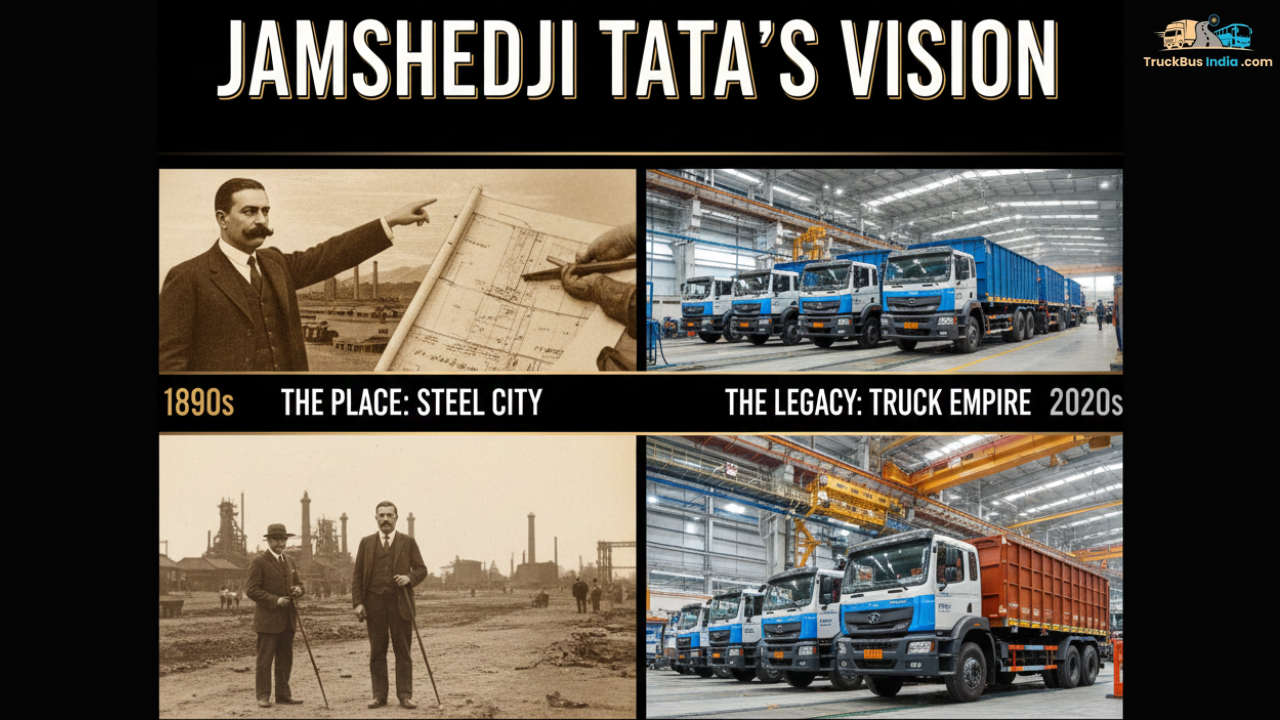
Jamshedji Tata, often called the father of Indian industry, had a vision that went beyond steel. His choice of Jamshedpur as the base for Tata Motors’ truck production laid the foundation for what would become India’s commercial vehicle (CV) empire. This story is not just about location—it’s about strategic foresight, industrial synergy, and nation-building.
The Vision Behind Jamshedpur
In the early 20th century, Jamshedji Tata envisioned an industrial hub that combined resources, infrastructure, and skilled labor. With Tata Steel already established in the city, it made sense to expand industrial operations in the same ecosystem.
- Proximity to Raw Materials: Coal, iron, and steel were abundant nearby, reducing production costs for vehicles.
- Skilled Workforce: Tata Steel had already trained a skilled labor pool, which could support complex manufacturing tasks.
- Transportation Network: Jamshedpur had access to railways and roads, facilitating the movement of raw materials and finished products.
This combination of resources, labor, and connectivity made Jamshedpur a strategic choice for commercial vehicle production.
Industrial Synergy: Steel Meets Trucks
By choosing Jamshedpur, Jamshedji Tata created a synergy between steel production and vehicle manufacturing. Trucks require durable materials, and having a steel mill nearby ensured easy access to high-quality steel at competitive costs.
- Early Tata trucks were designed to handle India’s challenging roads, and the steel produced locally played a key role in building strong, durable chassis.
- This approach reduced dependency on imports and lowered costs, making trucks more affordable for Indian businesses.
Laying the Foundation for a Truck Empire
Starting truck production in Jamshedpur in 1954 wasn’t just about making vehicles; it was about building an industrial legacy. Tata Motors became a pioneer in the Indian CV sector, offering:
- Reliable trucks for urban and rural transport
- Innovation in design and technology suited for India
- A training ground for skilled engineers and mechanics, fostering local talent
By leveraging the city’s industrial ecosystem, Tata Motors could scale production efficiently, eventually becoming India’s largest commercial vehicle manufacturer.
The Long-Term Impact
Jamshedji Tata’s decision to base truck manufacturing in Jamshedpur had far-reaching effects:
- It anchored India’s self-reliant commercial vehicle industry
- Attracted other industrial investments to the region
- Helped shape logistics and transportation across India, as durable Tata trucks became the backbone of freight movement
Even today, Jamshedpur remains a critical hub for Tata Motors, reflecting the enduring wisdom of Tata’s original vision.
Conclusion
Jamshedji Tata’s choice of Jamshedpur was more than strategic—it was visionary. By situating Tata Motors’ truck production in the Steel City, he leveraged resources, infrastructure, and talent to create a foundation for India’s truck empire. This decision not only transformed Tata Motors into a commercial vehicle leader but also propelled the growth of India’s industrial and logistics sectors, leaving a legacy that continues to drive innovation and economic development.