
News List
Want to Start a Truck Business in India? A Step-by-Step Guide to Starting and Making It Profitable

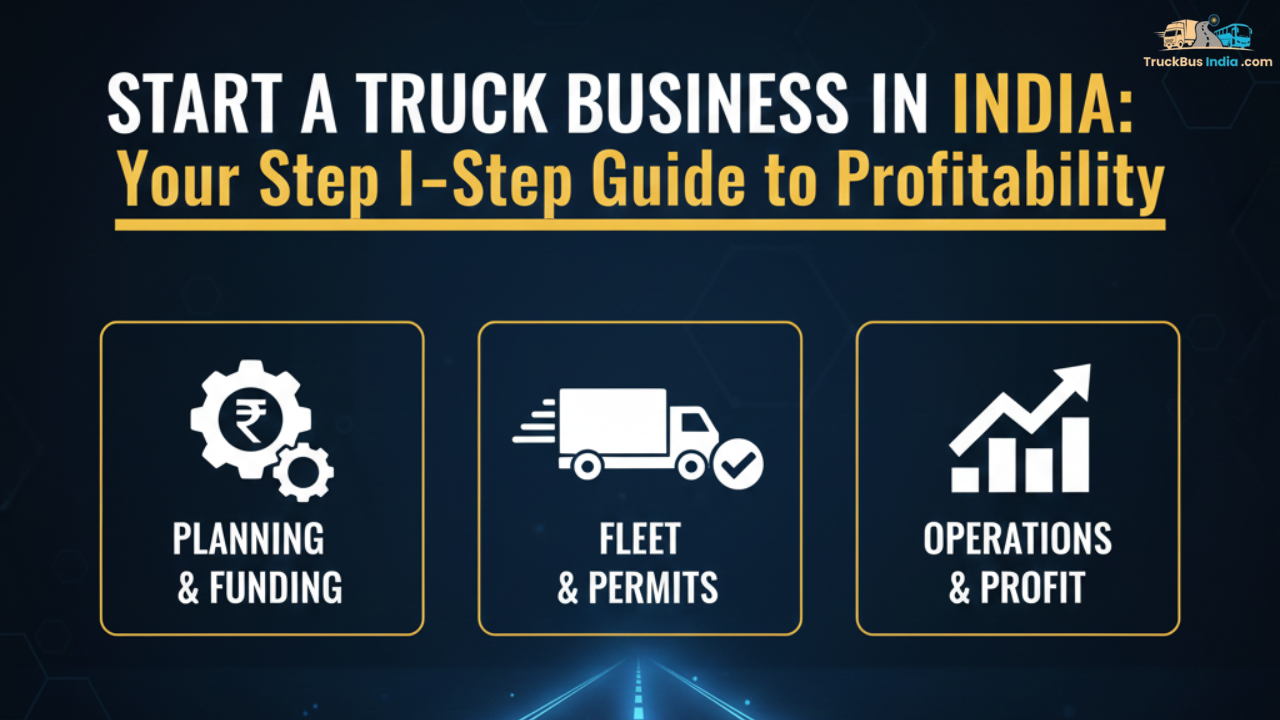
India’s logistics sector is the backbone of its economy, contributing nearly 14 percent to the country’s GDP. With road transport handling over 60 percent of freight movement, the truck business in India continues to offer strong long-term potential. However, rising fuel costs, regulatory compliance, and intense competition mean success now depends on careful planning rather than scale alone.
This guide explains how to start a truck business and make it profitable, step by step.
Understand the Trucking Business Model in India
Before investing, it is important to choose the right business model. The Indian trucking industry largely operates under three formats:
- Single-truck owner-operator model
- Small fleet ownership with 2–10 trucks
- Contract-based logistics services for corporates or aggregators
First-time entrepreneurs usually begin with one or two vehicles and expand gradually. Profitability depends heavily on route selection, load consistency, and operating efficiency.
Choose the Right Truck for Your Business
Selecting the right vehicle is critical for trucking business profitability. The choice depends on cargo type, route length, and budget.
- Light commercial vehicles suit local and last-mile deliveries
- Medium commercial vehicles work for regional transport
- Heavy commercial vehicles are ideal for long-haul logistics
In India, a new truck can cost anywhere between ₹10 lakh and ₹45 lakh depending on size and specifications. Many new entrants opt for financing, with banks typically funding 75–85 percent of the vehicle cost.
Complete Legal Registration and Permits
To legally start a truck business in India, several registrations are mandatory:
- Commercial vehicle registration
- Goods Carrier Permit (state or national)
- GST registration for logistics billing
- Motor vehicle insurance and fitness certification
For long-distance operations, a National Permit is essential. Compliance costs may seem high initially, but operating without proper documentation leads to heavy penalties and downtime.
Plan Operating Costs and Revenue Streams
Understanding cost structure is key to fleet ownership success. Major expenses include:
- Fuel, which accounts for 35–40 percent of operating costs
- Driver wages and allowances
- Maintenance, tyres, and toll charges
- Insurance and annual permits
On average, a well-utilised truck running 8,000–10,000 km per month can generate steady margins if fuel efficiency and load planning are optimised.
Secure Consistent Loads and Contracts
One of the biggest challenges in the logistics business India faces is inconsistent freight availability. New operators should focus on:
- Tying up with local transporters
- Registering on digital freight platforms
- Securing annual or semi-annual contracts with manufacturers
Regular contracts reduce idle time and protect revenue during market slowdowns.
Focus on Fleet Management and Digitisation
Fleet digitisation has become essential for profitability. GPS tracking, fuel monitoring systems, and digital payment tools help control costs and prevent misuse.
Technology also improves driver accountability and delivery timelines. Even small operators benefit from basic fleet management apps, which offer visibility once available only to large logistics firms.
Scale Gradually and Reinvest Profits
Many successful fleet owners grow steadily rather than aggressively. Reinvesting profits into maintenance, better trucks, and trained drivers ensures long-term sustainability.
Expanding without financial discipline often leads to cash flow stress, especially during fuel price fluctuations or freight downturns.
Conclusion
Starting a truck business in India is still a viable and rewarding opportunity, but it requires disciplined execution and operational clarity. From choosing the right truck to managing permits, costs, and technology, profitability depends on informed decisions at every stage.
For aspiring entrepreneurs, the key lesson is simple: trucking is no longer just about owning a vehicle—it is about running a well-managed logistics operation built for efficiency and resilience.