
News List
Five Key Lessons to Learn from the World’s Most Innovative Trucking Startups

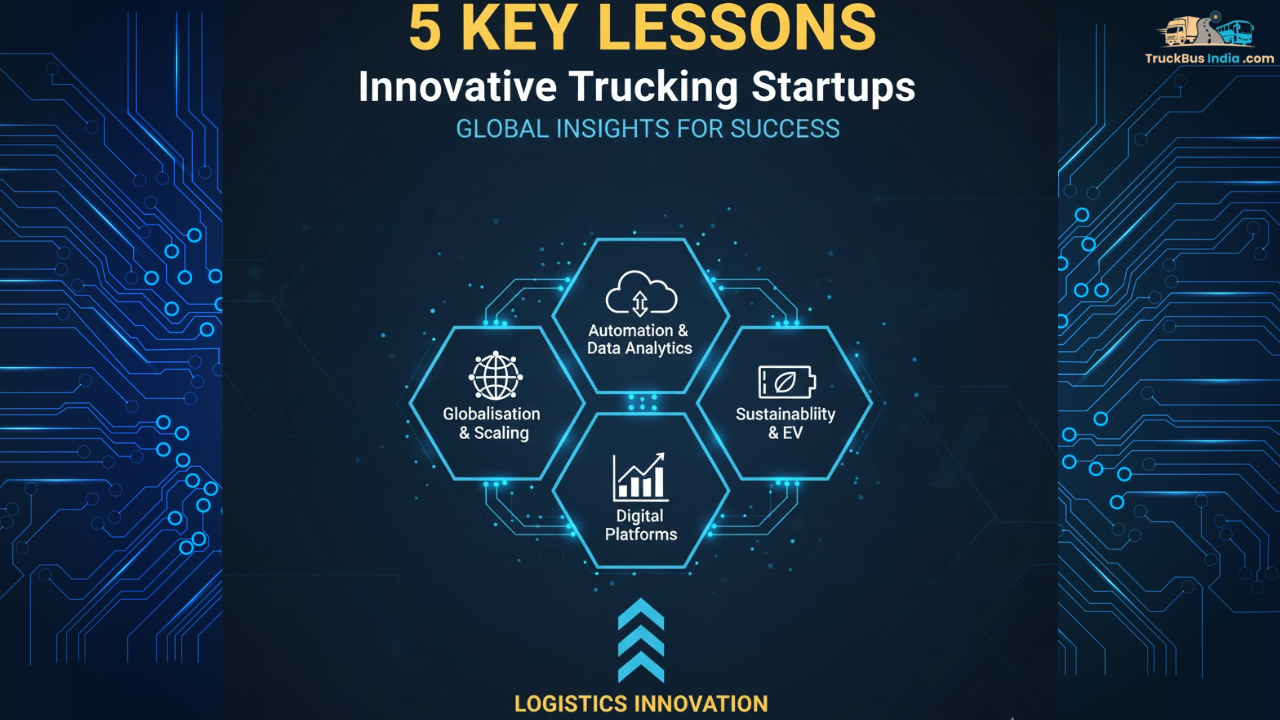
The trucking industry, traditionally driven by asset ownership and operational scale, is undergoing a structural transformation. Across global markets, innovative trucking startups are redefining how freight is moved, managed, and monetised. By combining digital platforms, automation, and sustainability-focused models, these companies are addressing long-standing inefficiencies in logistics.
While many startups have struggled with capital intensity and regulation, the most successful ones offer valuable insights for fleet owners, logistics companies, and policymakers. The following five lessons capture the most important takeaways from global trucking technology pioneers.
Technology Must Sit at the Core of Trucking Operations
Innovative trucking startups have demonstrated that technology is no longer a support function—it is the backbone of logistics. Digital freight platforms such as Convoy and Uber Freight replaced manual brokerage systems with algorithm-driven load matching, dynamic pricing, and real-time shipment visibility.
Industry data indicates that empty miles account for nearly one-third of truck movement in certain markets. By using telematics, GPS tracking, and predictive analytics, fleet digitisation enables better route planning, reduced fuel consumption, and improved vehicle utilisation. Startups that invested early in data infrastructure achieved operational efficiencies that traditional players often struggle to match.
Asset-Light Models Reduce Risk and Improve Scalability
A defining feature of many logistics startups innovation stories is the decision to remain asset-light. Rather than owning large fleets, startups focused on software platforms that connect shippers with independent carriers.
This approach offers several advantages:
- Lower capital exposure
- Faster geographic expansion
- Greater resilience during freight demand cycles
For established logistics companies, this highlights the importance of platform-based partnerships and flexible fleet models over pure asset accumulation.
Sustainability Is Driving Commercial Decisions
Electric and autonomous trucking startups have shown that sustainability is not merely a regulatory obligation but a commercial differentiator. Companies such as Einride integrated electric trucks, energy management systems, and digital freight control towers into a single ecosystem.
Transport accounts for approximately 24 percent of global energy-related carbon emissions, placing trucking under increasing regulatory and customer pressure. Innovative trucking startups that embedded low-emission operations into their value proposition gained access to enterprise clients prioritising ESG compliance and long-term sustainability goals.
Addressing the Driver Crisis Requires Structural Change
Driver shortages continue to disrupt logistics worldwide. Successful trucking startups lessons reveal that solving this challenge requires more than incremental pay increases.
Startups focused on improving driver experience through predictable schedules, transparent earnings, and reduced idle time reported better retention outcomes. Even autonomy-led firms acknowledge that human drivers will remain central to fleet operations for years, making driver-centric operational design a strategic necessity.
Innovation Must Align with Regulatory and Market Reality
Not all startup disruption logistics stories ended successfully. Autonomous trucking companies such as TuSimple encountered setbacks due to safety concerns, regulatory uncertainty, and rising costs.
The key learning is that innovation must progress in parallel with infrastructure readiness and policy frameworks. Startups that worked closely with regulators, piloted technology gradually, and adapted to local market conditions demonstrated greater long-term viability.
Conclusion
The rise of innovative trucking startups has fundamentally reshaped global trucking technology and logistics thinking. Their experiences show that efficiency today is driven by data, sustainability, and operational intelligence—not fleet size alone.
For traditional logistics players, the lesson is clear: adopting innovation selectively and strategically is essential to remain competitive. As global supply chains evolve, those who learn from startup-led disruption will be best positioned to succeed in the next phase of trucking.