
News List
Mahindra Veero vs Tata Intra vs Bada Dost: Which One to Go With?

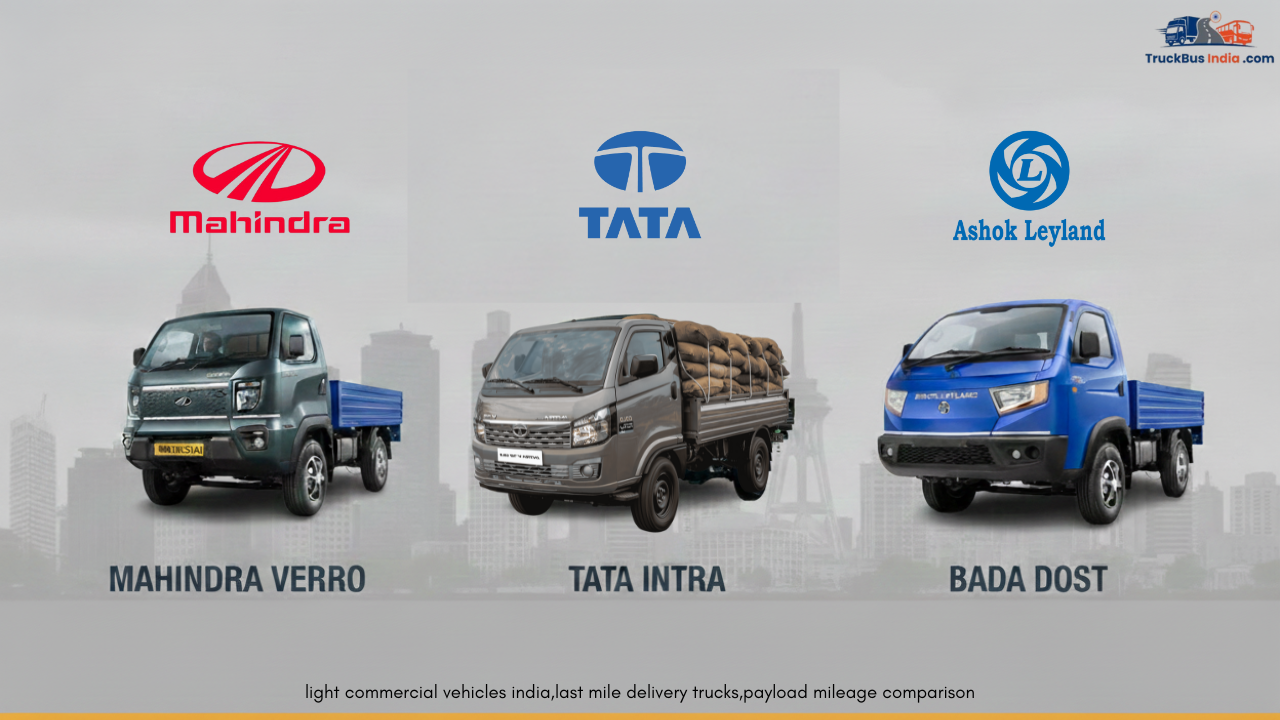
Choosing the right light commercial vehicle (LCV) for your business in India can make a huge difference to profitability — especially for operators focused on last-mile delivery, fuel efficiency and maintenance costs. In this comparison of Mahindra Veero vs Tata Intra vs Bada Dost, we break down real specs, performance, payload and value to help you make a well-informed decision.
Mahindra Veero: A Modern, Multi-Energy LCV
The Mahindra Veero is one of the newest entrants in the sub-3.5-tonne light commercial vehicle market. Built on Mahindra’s Urban Prosper Platform (UPP), Veero is designed to be versatile, fuel efficient and feature rich.
Key Highlights:
- Price: Starts from around ₹7.99 lakh (ex-showroom) for base diesel variants. CNG versions begin around ₹8.99 lakh.
- Power & Mileage: Diesel variant delivers around 18.4 km/l; CNG variant claims about 19.2 km/kg.
- Payload: Up to ~1,600 kg for diesel and ~1,400–1,500 kg for CNG variants.
- Features: Car-like cabin with touchscreen, safety features (airbag, crash safety compliance) and long service intervals.
Pros:
Veero’s fuel efficiency and modular platform make it cost-effective for urban deliveries and mixed fuel usage. The breadth of configurations (diesel and CNG) also helps tailor the vehicle to your cost structure.
Cons:
Costs can be slightly higher on the top trims, and the electric version remains forthcoming.
Tata Intra: Reliable Workhorse for Urban & Rural
The Tata Intra series, particularly the Tata Intra V30, targets businesses needing dependable performance with good fuel economy and robust service support from Tata’s widespread network.
Key Highlights:
- Price: Roughly ₹8.31 lakh to ₹9.21 lakh (ex-showroom).
- Engine & Performance: 1.5-litre diesel engine producing ~70 hp and ~140 Nm torque.
- Mileage: Around 14 km/l in real usage.
- Payload: About 1,300 kg, making it suitable for moderate load conditions.
- Design: Built for both urban deliveries and intercity logistics, with features like gear shift advisor and eco switch for better driver productivity.
Pros:
Intra’s sturdy build and good mileage make it a reliable everyday performer. The truck’s torque and pickup are well-suited for mixed terrain and regular last-mile usage.
Cons:
Compared to Veero and Bada Dost, the payload is slightly lower, which can mean more trips for the same cargo volume.
Ashok Leyland Bada Dost: The Heavy Loader
Ashok Leyland’s Bada Dost i4 stands out when payload capacity and load handling are priorities. This truck is tailored for businesses that need to move heavier goods without moving up to the 3-tonne class.
Key Highlights:
- Price: Around ₹9.54 lakh to ₹9.77 lakh (ex-showroom).
- Power & Torque: ~80 hp with ~190 Nm torque from a 1.5-litre turbo diesel engine.
- Mileage: ~13–15 km/l.
- Payload Capacity: Approximately 1,850–1,860 kg, significantly higher than many competitors.
- GVW: Around 3.49 tonnes, making it one of the more capable mini trucks in this bracket.
Pros:
Its high payload capacity is ideal for heavier cargo operations — reducing the number of trips required and optimizing daily revenue.
Cons:
Fuel economy is slightly lower thanks to the heavier weight and more powerful engine.
Side-By-Side Quick Comparison
| Model | Price (approx) | Payload | Fuel Efficiency | Best For |
| Mahindra Veero | ₹7.99–₹9.39 L | 1400–1600 kg | 18.4 km/l (diesel) / 19.2 km/kg (CNG) | Balanced business use |
| Tata Intra V30 | ₹8.31–₹9.21 L | ~1300 kg | ~14 km/l | Economical urban & regional |
| Ashok Leyland Bada Dost i4 | ₹9.54–₹9.77 L | ~1860 kg | ~13–15 km/l | High payload goods |
Verdict: Which One to Choose?
- Best for balanced performance: Mahindra Veero — strong mileage, modern cabin and flexible fuel options.
- Best for fuel-sensitive buyers: Tata Intra V30, especially for light to moderate load requirements.
- Best for heavy cargo: Ashok Leyland Bada Dost — highest payload and robust diesel performance.
Each truck brings its own strengths — so your choice should align with your cargo weight, operating routes and fuel cost strategy.