
News List
Go Big or Go Home: Why Battery Swapping Is Coming to Electric Trucks

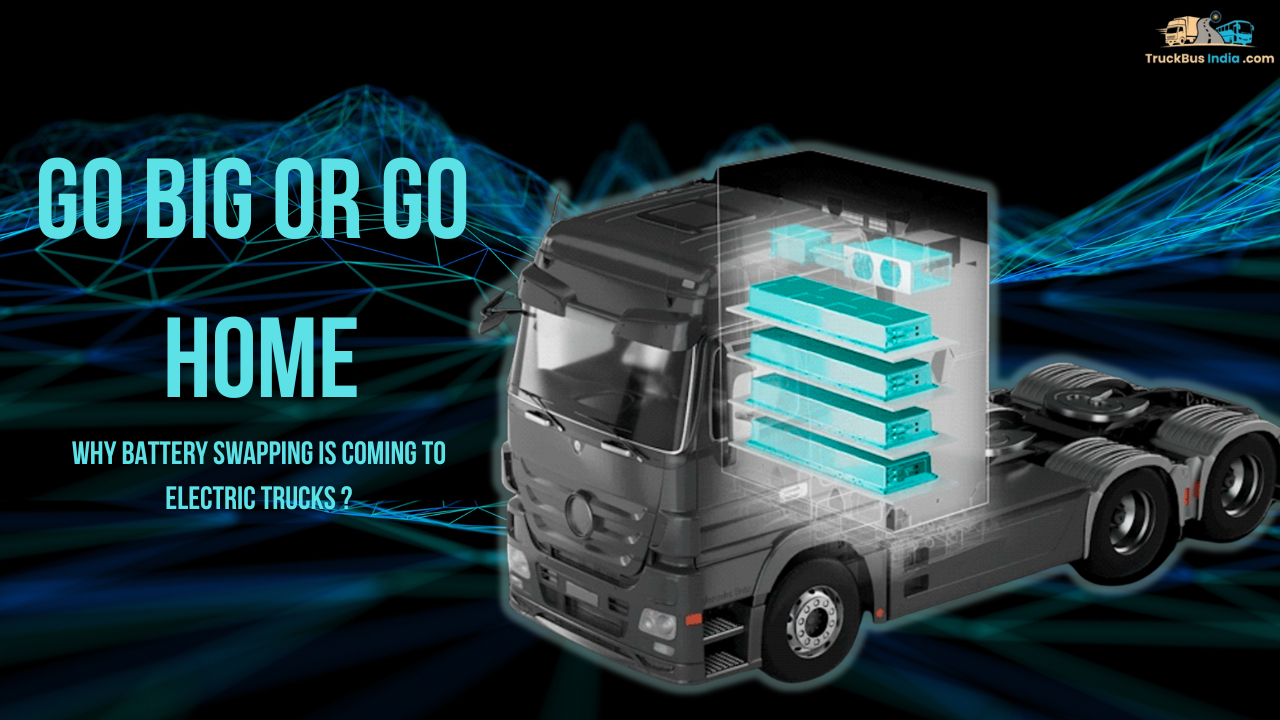
As India pushes toward cleaner freight movement, electric trucks are steadily gaining ground. However, one major roadblock remains: charging downtime. Unlike passenger EVs, commercial trucks operate on tight schedules where every idle hour impacts revenue. This is why battery swapping for electric trucks is increasingly seen as a game-changing solution for India’s logistics ecosystem.
Instead of waiting hours for charging, fleets can swap depleted batteries for charged ones in minutes—keeping trucks moving and businesses profitable.
The Downtime Problem in Electric Trucking
Electric trucks in India are typically deployed for last-mile, mid-mile, and urban freight use. These vehicles often run multiple shifts per day, making long charging breaks impractical. High-capacity batteries needed for heavy loads take longer to charge, even with fast chargers.
For fleet operators evaluating electric trucks India, downtime quickly becomes a cost issue rather than a technical one. Battery swapping directly addresses this concern by decoupling charging time from vehicle usage.
How Battery Swapping Works for Electric Freight Vehicles
Battery swapping stations store fully charged batteries and replace discharged ones using mechanised or semi-automated systems. The process typically takes under 10 minutes.
For electric freight vehicles, this model allows:
- Continuous operations
- Predictable energy costs
- Reduced dependence on high-capacity grid connections at depots
Batteries are charged and monitored centrally, improving safety and lifecycle management.
Real-World Battery Swapping Pilots in India
India already has several early pilots demonstrating the feasibility of EV battery swapping for commercial applications.
In urban logistics, companies like SUN Mobility have partnered with OEMs and fleet operators to deploy battery swapping solutions for electric commercial vehicles. Their modular battery systems are being tested across last-mile delivery and light commercial vehicle operations in cities such as Bengaluru and Delhi.
Log9 Materials has also rolled out battery-swapping-enabled EVs for logistics fleets, focusing on rapid turnaround times for high-utilisation vehicles. These pilots have shown improved vehicle uptime and better cost predictability for operators.
In the e-commerce space, select fleet operators working with food delivery and hyperlocal logistics platforms have adopted swapping models to support multi-shift operations—something conventional charging struggles to support efficiently.
While most pilots today focus on light and medium electric trucks, the same infrastructure logic is now being extended to heavier freight vehicles.
Why Battery Swapping Makes Commercial Sense
One major benefit of battery swapping is cost separation. Fleet operators do not need to own the battery, which significantly lowers upfront vehicle prices. Instead, energy is paid for as a service—similar to fuel.
This model supports faster fleet electrification in India, especially for small and mid-sized logistics players who may not have access to large capital budgets.
Swapping also improves asset utilisation. Trucks spend more time on the road and less time plugged in, which is critical for high-frequency freight routes.
Policy Push and Infrastructure Readiness
The Indian government has acknowledged battery swapping as a viable alternative energy model, particularly for commercial EVs. Draft policies encourage interoperable swapping stations and standardised battery formats.
As commercial EV infrastructure expands along freight corridors, ports, industrial clusters, and urban hubs, battery swapping stations can be strategically placed where truck density is highest.
This aligns closely with India’s sustainable transport goals while reducing pressure on the power grid during peak charging hours.
Challenges That Still Remain
Standardisation across OEMs remains the biggest hurdle. Battery sizes, chemistries, and thermal management systems vary widely—especially for electric trucks.
Battery safety, ownership models, and long-term cost structures will also need clear frameworks. However, advances in battery management systems and data tracking are steadily addressing these concerns.
The Road Ahead
As electric trucking scales up, battery swapping is no longer a “nice-to-have” concept—it is becoming a commercial necessity. For fleets that value uptime, flexibility, and predictable costs, swapping offers a faster path to electrification than plug-in charging alone.
In India’s high-demand freight environment, battery swapping sends a clear message: go big, stay moving, or risk falling behind.