
News List
Rural Demand Is Driving the Construction Equipment Market, Say CASE Construction Top Executives

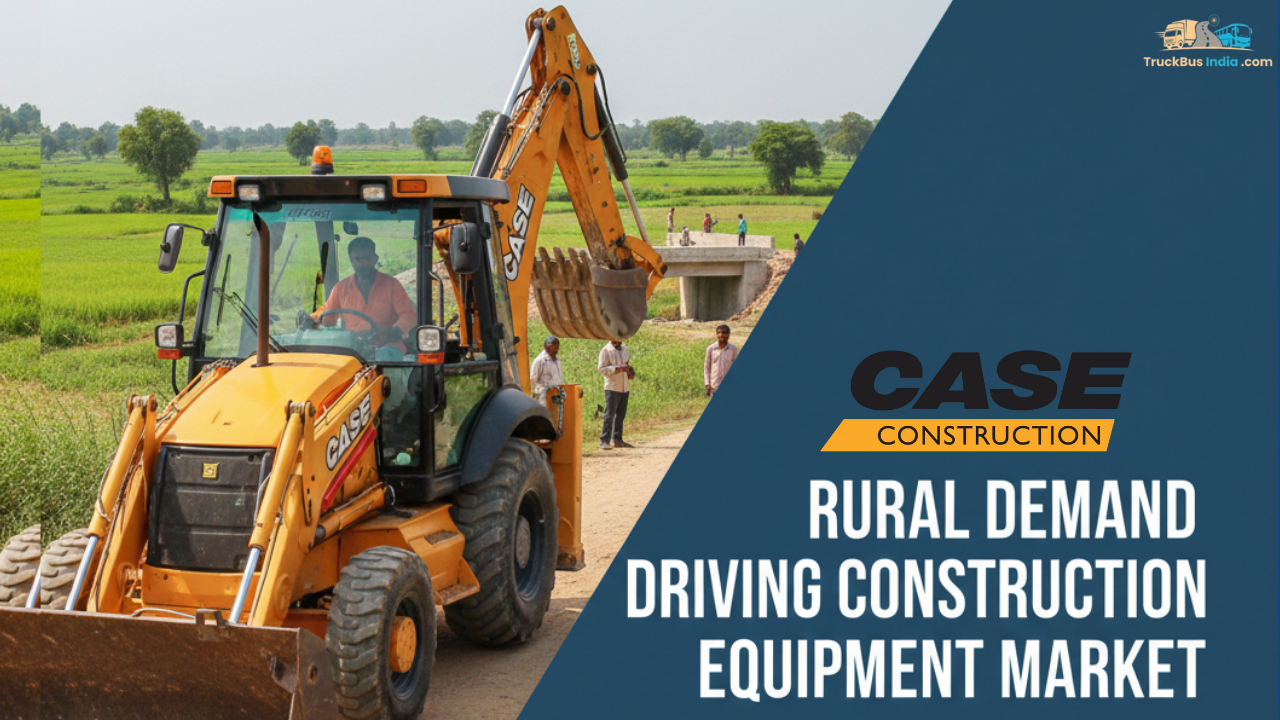
India’s construction equipment sector is experiencing an important shift. High demand is no longer confined to large urban infrastructure projects alone. Instead, a growing wave of rural demand in the construction equipment market is emerging — fuelled by connectivity projects, small local works and expanding ownership among smaller contractors and first‑time buyers. Top executives at CASE Construction Equipment have highlighted this trend, signifying a broader transformation in the construction equipment India landscape.
Rural and Semi‑Urban Projects Expand Demand
According to CASE’s leadership, demand for construction machinery such as vibratory compactors, excavators and loader backhoes is increasingly coming from rural and semi‑urban regions. Historically, rural purchases were largely limited to basic machines like loader backhoes. Now, however, even more sophisticated equipment is being bought by smaller contractors and first‑time buyers focused on local infrastructure work.
Executives pointed to government programmes such as Jal Jeevan Mission and Pradhan Mantri Gram Sadak Yojana (PMGSY) as key catalysts for this shift, driving equipment usage for water supply systems, rural road building, and local construction projects. These initiatives have broadened the market from core cities and large project sites to tier‑2 and tier‑3 towns and beyond.
This decentralisation brings both opportunities and challenges for manufacturers and service providers. On the one hand, increased rural demand boosts total equipment sales and market penetration. On the other hand, it requires companies to extend service networks and customer support into areas where logistical and financing barriers are often greater.
Shifting Ownership and Buying Patterns
CASE executives noted that the patterns of ownership are also transforming. While large fleet buyers and contractors still account for a significant portion of sales, there has been a marked rise in one‑ and two‑machine buyers purchasing equipment for use as a livelihood asset. These smaller buyers are driving demand at local levels, buying machines to undertake or support multiple types of work — from rural road laying to irrigation and local construction tasks.
This shift is accompanied by changes in financing needs. Rural customers often face challenges in accessing traditional credit due to issues with collateral and documentation. To address this, CASE and other manufacturers increasingly collaborate with finance partners and non‑bank lending firms to make equipment more accessible.
Broader Growth Trends in the Construction Equipment Sector
While rural demand is gaining traction, wider industry trends continue to influence the construction equipment market in India:
- Rural infrastructure and government spending: Industry bodies such as the Indian Construction Equipment Manufacturers’ Association (ICEMA) have projected that construction machinery demand could grow significantly as increased rainfall and sustained government infrastructure pushes benefit rural projects. Machines used in rural areas account for a large portion of sales for key manufacturers.
- First‑time buyers and small projects: Reports indicate that more than 65% of construction equipment units are purchased in rural markets, with a significant share going to first‑time buyers for local works like irrigation, pond construction, and rural road connectivity under schemes like PMGSY.
- Domestic market resilience: Despite challenges in certain segments and intermittent slowdowns in heavy equipment sales due to project delays, long‑term forecasts for the construction equipment industry remain positive, with steady demand expected from both infrastructure and rural development activities.
The rising involvement of rural buyers reflects a deeper structural change in how equipment is purchased and utilised across India. This is not just about large urban megaprojects any more. Increasingly, smaller communities, local governments, and micro‑entrepreneurs are contributing to demand, broadening the end‑use base and smoothing seasonal or cyclical fluctuations in equipment sales.
Technological and Service Support in Rural Markets
The shift towards rural demand also highlights the importance of service infrastructure and technology support. CASE executives emphasised that rural users often prioritise on‑site service — preferring machines to be maintained and repaired where they operate rather than taken to distant workshops. As a result, companies are investing in mobile service units and localised dealerships to provide timely support.
Telematics and digital monitoring tools are becoming important even among smaller operators. While larger fleets use telematics for tracking fleet performance and utilisation, rural buyers benefit from basic alerts and reminders that help them manage fuel use and preventative maintenance — critical factors in reducing downtime and long‑term costs.
What This Means for the Industry
The growing rural influence on the construction equipment market signifies:
- Expanded market reach: New customer segments are emerging beyond traditional urban centres.
- Diversified demand drivers: Demand is increasingly tied to local infrastructure, water projects, and community‑level development works.
- Service models evolving: Companies must adapt their service networks and product offerings to meet the unique needs of rural buyers.
For the construction equipment industry, this means long‑term potential for growth that is more inclusive and geographically broader — reflecting how rural infrastructure development is becoming a cornerstone of India’s overall growth story.
Conclusion:
Rural demand is reshaping the construction equipment market in India, with CASE Construction leaders noting that equipment ownership and usage now extend well into rural and semi‑urban areas. Supported by government programmes, first‑time buyers, and decentralised infrastructure projects, this trend is broadening demand and creating new opportunities for manufacturers and service providers alike.