
News List
Barrier-Free Tolling and Road Safety: The Transport Ministry’s 2026 Agenda

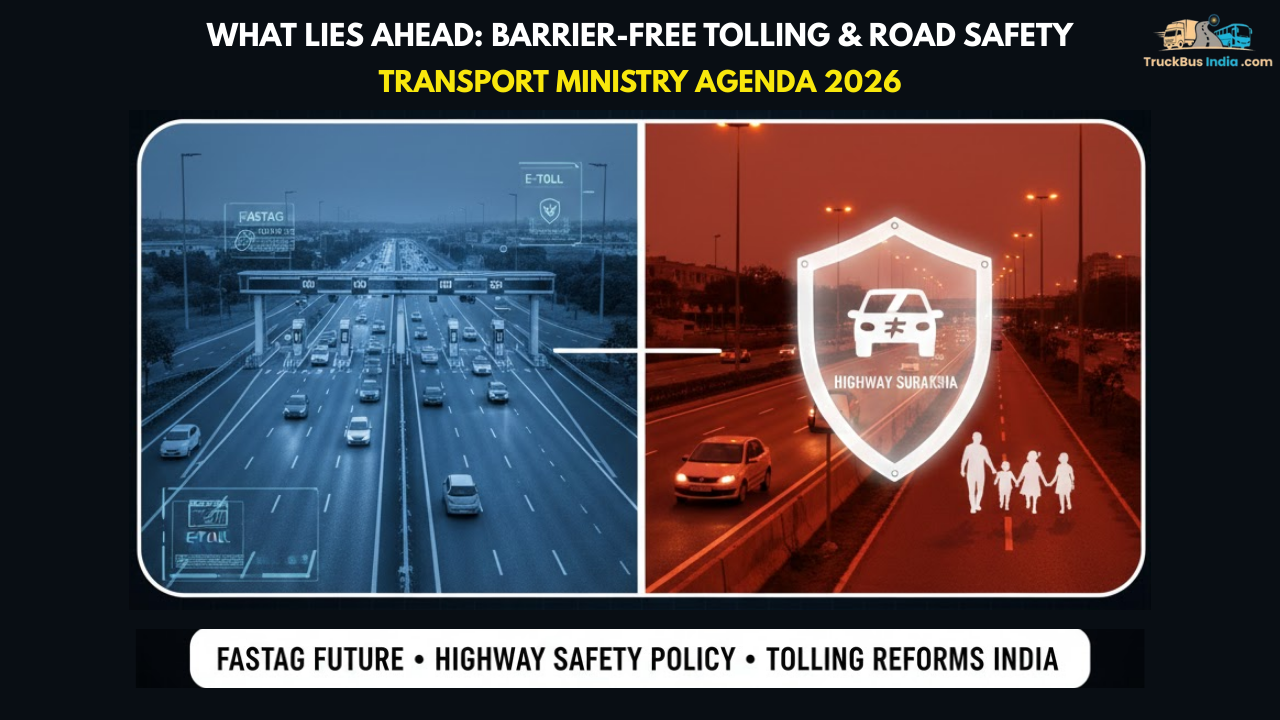
The Transport Ministry of India has set ambitious goals for 2026, focusing on barrier-free tolling, enhanced road safety, and modern highway management policies. These initiatives aim to streamline traffic flow, reduce congestion, and safeguard commuters across the nation’s expanding road networks.
Barrier-Free Tolling: A New Era in Highway Travel
One of the ministry’s key priorities is the implementation of barrier-free tolling on national highways. This approach eliminates traditional toll booths, replacing them with digital Fastag-enabled toll collection systems.
Benefits of barrier-free tolling include:
- Reduced travel time for commuters
- Lower fuel consumption and emissions
- Streamlined logistics for freight operators
- Enhanced transparency and revenue collection
The Fastag system, already adopted on many highways, will see further expansion and integration with state and national tolling networks, enabling seamless travel without stopping at toll plazas.
Road Safety as a Top Priority
Alongside toll reforms, the ministry emphasizes road safety improvements. India’s highways have long faced challenges related to traffic accidents, vehicle collisions, and infrastructure-related hazards. The 2026 agenda includes:
- Implementation of stricter highway safety policies
- Upgradation of road signage, lighting, and crash barriers
- Deployment of advanced traffic monitoring systems
- Awareness campaigns to educate drivers on safe practices
By combining policy reforms with technology-driven solutions, the ministry aims to significantly reduce accident rates and fatalities on highways.
Integration of Technology and Analytics
Modern highway management will increasingly rely on data analytics and AI-driven monitoring tools. These technologies allow for real-time assessment of traffic density, accident hotspots, and toll collection efficiency.
Integration of Intelligent Transport Systems (ITS) with Fastag platforms ensures:
- Automated violation detection
- Dynamic pricing based on traffic conditions
- Faster emergency response through connected systems
This synergy between technology and policy positions India as a global leader in modern highway management.
Impact on Commuters and Logistics
The dual focus on barrier-free tolling and road safety directly benefits both daily commuters and commercial freight operators. Reduced congestion, faster travel times, and safer highways enhance economic efficiency, reduce logistic costs, and improve urban-rural connectivity.
Industry experts note that such reforms encourage investments in highway infrastructure, as smoother and safer roads attract both domestic and foreign businesses.
Future Outlook for 2026
The Transport Ministry’s 2026 roadmap reflects a holistic approach to highway modernization. As India moves towards fully digital tolling and enhanced safety measures, the nation’s transport infrastructure is expected to become more efficient, reliable, and commuter-friendly.
Government officials have indicated that policy enforcement, continuous technological upgrades, and stakeholder engagement will be critical to achieving these ambitious goals.
Conclusion
The Transport Ministry’s 2026 agenda emphasizes the dual pillars of barrier-free tolling and road safety, leveraging Fastag and modern technologies to transform highway travel in India. These initiatives not only promise smoother commutes but also set a benchmark for efficient, safe, and future-ready infrastructure, benefiting commuters, businesses, and the nation’s economy at large.